


Dr Pap’s research is supporting the transition to a net zero, circular economy in the UK water sector
Everything you need to know
-
- Salary range: Over £40k
- Minimum qualifications: PhD
- Skills required: Presenting, communication, decision making, team working, project management, practical and some analytical skills.
- Training required: The role might require training in, for example, project writing and development, communication/collaboration and training on how to use specialist laboratory equipment or software required in research and data analysis.
- Work–life balance: Typical working hours are Monday to Friday 9am–5pm with some flexibility and senior roles might be required to work overtime. In addition to carrying out research, many academic roles involve attending conferences, a teaching element and writing grant applications, plus administrative work.
- Career progression: The next step after research fellow is commonly to progress to senior research fellow which would require oversight of a larger number of people and more responsibility.
What does your role involve?
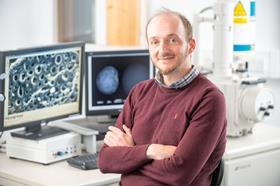
I am a research fellow specialising in water technology. I look at ways to clean and reuse water and waste that are better for the planet. My research focuses on biochar – a charcoal-like material made from natural waste such as wood or agricultural by-products. Biochar can be used to help clean water and support useful processes in biotechnology. I am also engaged in recovering important nutrients like nitrogen and phosphorus from waste, which can be reused in farming and other industries.
What is your typical day like?
My working day is a blend of desk and lab work, collaboration and strategic planning. I focus on improving sustainable ways to treat water. Some days begin with lab work, where I conduct experiments, for example: I make new materials and also test various methods for removing pollutants from water and checking its quality. This hands-on research helps us find new solutions for dealing with pollution and recovering useful nutrients from waste.
Throughout the day, I join meetings with academic collaborators, industry partners and project teams to talk about our progress, troubleshoot challenges and plan next steps. I help write grant and other project proposals, particularly in areas such as the circular economy, phosphorus recovery and turning waste into useful products.
I regularly give presentations at conferences and workshops to share our findings and show how they can be used in real-world situations or influence policy. I also co-write scientific papers so our work can support evidence-based decisions and reach a wider audience.
Beyond research, I actively encourage more people to get involved in STEM (science, technology, engineering and maths). I mentor students and early-career researchers, collaborate through initiatives such as the IBioIC (Industrial Biotechnology Innovation Center) network and take part in projects that connect water, biotechnology and environmental sustainability.
What do you like most about your job?
What I enjoy most about my role is its diversity – no two days are ever the same. My work spans across multiple disciplines and activities, blending hands-on experimentation with knowledge exchange and outreach. Ultimately, it’s the variety in my role – the mix of lab work, writing, mentoring, collaboration and strategic thinking – that keeps me motivated and inspired.
How is your job making the difference?
I focus on creating sustainable ways to treat water, recover useful nutrients and turn waste into something valuable – especially using a material called biochar, which is made from things like sewage sludge and plant waste.
My research supports the transition to a net zero, circular economy in the UK water sector. By turning waste into valuable resources, I help reduce pollution, recover critical nutrients and create low-carbon alternatives to conventional water treatment methods.
Ultimately, my job makes a difference by bridging science and sustainability, transforming waste into opportunity and helping shape a future where water technologies are not only effective but also fair and environmentally responsible.
Who or what inspired you to work in chemical science?
My inspiration to work in water technology stems from a deeply personal experience, growing up in a town affected by arsenic pollution. I witnessed firsthand the consequences of poor drinking water quality on health and society. That early exposure sparked a lifelong commitment to water treatment and a desire to develop tangible solutions to global water challenges. Water is fundamental to life, yet access to clean, safe and sustainable water systems remains one of the most pressing issues of our time. I was drawn to this field by the opportunity to combine scientific innovation with real-world application, where research doesn’t just stay in the lab, but actively contributes to healthier ecosystems and communities.
How did you get into your current role?
I graduated as an environmental chemical engineer in Serbia, where I was born and began my academic journey. After completing my PhD, I realised that to truly grow, both professionally and personally, I needed to step outside my comfort zone and seek new challenges. This led me to explore opportunities abroad, and I successfully secured a postdoctoral research position in Scotland, initially for three years. Now, eight years later, I’m still based in Scotland, where the field of environmental chemical engineering offers a wealth of opportunities for innovation, collaboration and impact. The decision to move was transformative, allowing me to work at the forefront of sustainable water technologies and contribute meaningfully to both research and societal change.
What barriers did you encounter on your journey into your role?
One of the earliest barriers was transitioning from my academic background in Serbia to a research environment in the UK. Moving abroad meant adapting to a new culture, research system and expectations, all while building a professional network from scratch. It was a leap outside my comfort zone but I overcame it by staying open minded, proactive and committed to learning. I sought out mentors, engaged in collaborative projects and gradually built strong relationships within the research community.
How has chemistry opened doors for you?
Stepping into the role of water technologist – research fellow has been a turning point in my career, opening doors to opportunities I hadn’t imagined when I first started. It has allowed me to work at the intersection of science, sustainability and policy, where research directly informs real-world solutions for water treatment, resource recovery and environmental protection. Professionally, this position has given me access to cutting-edge research facilities, interdisciplinary collaborations and national networks such as the Royal Society of Chemistry. These connections have expanded my perspective and enabled me to contribute to high-impact projects that support the UK’s transition to Net Zero and a more circular economy.
What advice would you give to a young person thinking of studying chemistry or considering a career in your field?
If you’re thinking about a career in water technology, my advice is: follow your curiosity, stay open to learning and don’t be afraid to take unconventional paths. This field is incredibly rewarding because it allows you to work on real-world challenges that have a direct impact on people and the planet.
What do you dream about doing further down the line?
Looking ahead, my dream is to help shape a future where water and waste are no longer seen as problems, but as opportunities for innovation, resource recovery and environmental regeneration. Ultimately, I aspire to establish my own company dedicated to delivering affordable, clean water solutions to communities where access is most urgently needed. This vision builds on my research in sustainable water technologies and circular economy principles, and I aim to translate scientific innovation into scalable, real-world impact.
Want to know more?
- Find out about Net Zero and the circular economy on BBC Bitesize.
- Explore the uses of biochar on the RHS website.
- Browse the University of the Highlands and Islands’ (UHI) website.
Dr Szabolcs Pap MRSC, Water Technologist – Research Fellow, Environmental Research Institute, University of the Highlands and Islands