
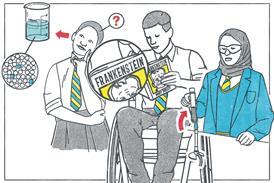

Chilling effects
Declan Fleming delves into spontaneous endothermic reactions
From a thermodynamic perspective, endothermic processes are fighting an uphill battle. So while it’s easy to find plenty of dramatic demonstrations of exothermic reactions, most endothermic reactions don’t leave much of an impression.
However, a dramatic impression might be needed to shake the misconception some students hold that endothermic reactions cannot occur spontaneously. This is where the solid–solid reactions of barium hydroxide with ammonium salts are useful. Here I describe two. The thiocyanate reaction works much faster and is my preferred method, but the chloride salt is more widely stocked and thermodynamic data for it is easier to find.
With an accompanying video, powerpoint slides and technician's notes, Declan Fleming explains the preparation and demonstration of endothermic reactions, and the post demonstration discussion.
This demonstration complements the sodium acetate ‘hot ice’ stalagmite demonstration1 when first introducing the idea of exothermic and endothermic reactions.
Make your lessons pop
Choose an account option to continue exploring our full range of articles and teaching resources