

GenAI is a useful tool for enhancing classroom practicals – but educators say it’s no replacement for hands-on skills and safety awareness
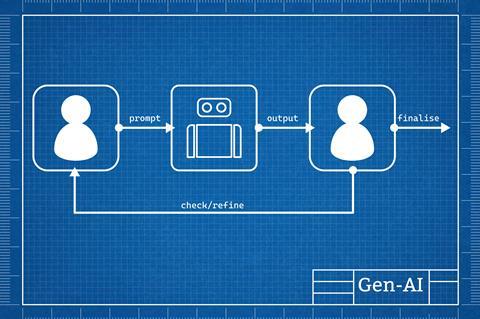
Within just a couple of years, AI has gone from buzzword to classroom reality, according to Teacher Tapp (bit.ly/4svtVRg). Educators are split on the issue, but many agree it’s here to stay. Chemistry teacher Andy Long sums it up: ‘I think it’s really important that we embrace and adapt to this new tool rather than hide from it – or worse – try to ban it.’
Within just a couple of years, AI has gone from buzzword to classroom reality, according to Teacher Tapp. Educators are split on the issue, but many agree it’s here to stay. Chemistry teacher Andy Long sums it up: ‘I think it’s really important that we embrace and adapt to this new tool rather than hide from it – or worse – try to ban it.’
Have you used Generative AI (GenAI) to design chemistry practicals? For researchers in education, this is still new territory, but some teachers are already experimenting. Matthew Gundry, RSC excellence in secondary and further education 2025 prize winner, shares: ‘I don’t rely on it fully, but sometimes it throws something back at me I hadn’t considered.’
And for Aidan Simcock, a recently qualified science teacher, GenAI is a game-changer for accessibility. He uses it to translate practical instructions: ‘Pair the English text with the instructions in the student’s first language and add stepwise images,’ he explains. ‘It perfectly dual codes the instructions for EAL learners while still supporting the rest of the class.’
Know AI’s limits
Be aware, however, that these teachers used time, professional judgement and consultation to tailor prompts and language. When it comes to risk assessments, Matthew says, ‘The key is using AI to structure the document while cross-referencing every detail with the hazard information from organisations like CLEAPSS’. Without that crucial input, AI-generated risk assessments just don’t meet the mark; Bob Worley, chemistry advisor at CLEAPSS, warns, ‘They’re not the risk assessments that UK legislation requires.’ Tim Gabriel, senior chemistry lecturer at Manchester Metropolitan University, adds, ‘What GenAI cannot do is substitute for a student’s understanding of safety-critical work.’ Even with the best prompts, AI might miss hazards or suggest unsuitable activities. As Tim says, ‘Designing risk assessments remains a core professional skill.’
AI needs a helping hand
Be aware, however, that these teachers used time, professional judgement and consultation to tailor prompts and language. When it comes to risk assessments, Matthew says, ‘The key is using AI to structure the document while cross-referencing every detail with the hazard information from organisations like CLEAPSS’ (bit.ly/4urFiM6). Without that crucial input, AI-generated risk assessments just don’t meet the mark; Bob Worley, chemistry advisor at CLEAPSS, warns, ‘They’re not the risk assessments that UK legislation requires.’ Tim Gabriel, senior chemistry lecturer at Manchester Metropolitan University, adds, ‘What GenAI cannot do is substitute for a student’s understanding of safety-critical work.’ Even with the best prompts, AI might miss hazards or suggest unsuitable activities. As Tim says, ‘Designing risk assessments remains a core professional skill.’
Without human intervention, AI can get it wrong. But to stay competitive in modern chemistry research, using it is unavoidable
Elena Mecklenburgh, a chemical engineering undergraduate at Leeds University, reveals, ‘I often find myself using GenAI to help plan out the structure of my lab reports, which can be very helpful, but I also find it can limit your creative thinking.’ Tim adds, ‘GenAI is encouraged as a tool for collaboration and critical thinking, but we strongly discourage its use as a shortcut that bypasses learning.’
The challenge is ensuring everyone understands the chemistry and the risk rather than simply copying AI output. Without human intervention, AI can get it wrong. But to stay competitive in modern chemistry research, using it is unavoidable. Dr David Bray, team leader for chemistry and materials at STFC Hartree Centre, emphasises to me that a public understanding of how science and technology drive environmental impact is crucial, empowering people to become ‘critical consumers’ of AI. He explains that a ‘digital first’ approach supported by AI is much more sustainable than traditional trial-and-error methods.
Self-driving laboratories?
Laboratories of the future
AI is reshaping how industrial laboratories and research operates. Yet this computational power cuts both ways, raising important questions about practical skills and future careers. Will self-driving laboratories represent the future? Bob asks: ‘Does AI have the nuance of fifty-plus years of hands-on experience, and can it invent new techniques?’ The evidence suggests clear limitations. Matthew tells me, ‘I once got GenAI to help me write a method to plan an iodine clock reaction so solutions would change colour at specific times, but the practical failed miserably.’
Will AI-driven, robot-led laboratories come with a cost? Profit could take precedence over people. If we allow technology to advance without safeguards, we risk creating a future where innovation thrives while human expertise is cast aside. Ethical responsibility must keep pace with automation.
Essential skills
Research shows that enabling students to modify procedures, hands-on, develops essential skills: recognising when solutions look ‘off’, troubleshooting equipment, adapting to unexpected results and developing tactile and sensory judgement that comes only from experience. AI excels at pattern recognition and optimisation but struggles with improvisation, sensory awareness and intuitive problem-solving that experienced chemists apply daily. Leaders therefore carry a real responsibility here, protecting space in the curriculum for practical work so that AI’s growing role doesn’t quietly push out the very experiences that build genuine chemical understanding – including the confidence to manage risk.
Futureproof your students
Research shows that enabling students to modify procedures, hands-on, develops essential skills (bit.ly/3NwYneZ). Recognising when solutions look ‘off’, troubleshooting equipment, adapting to unexpected results and developing tactile and sensory judgement are things that come only from experience. AI excels at pattern recognition and optimisation but struggles with improvisation, sensory awareness and intuitive problem-solving that experienced chemists apply daily. Leaders therefore carry a real responsibility here, protecting space in the curriculum for practical work so that AI’s growing role doesn’t quietly push out the very experiences that build genuine chemical understanding – including the confidence to manage risk.
As AI transforms how chemistry is conducted in research and industry, the skills learners will need for their future careers are changing, too. They will need to critically evaluate, interrogate and collaborate with AI tools. So, as we embrace AI in chemistry education, policy makers and educators must maintain rigorous safety standards, preserve the irreplaceable value of practical skills, teach students to be critical consumers of AI-generated information, ensure equity of access and celebrate human creativity alongside what AI makes possible. We cannot afford to let AI replace the unpredictable nature of chemistry; instead, we should use it to sharpen our students’ curiosity, critical thinking and analytical skills.
More resources
- Sign up to Experience AI from the Raspberry Pi Foundation and Google DeepMind, a three-week starter course on AI/ML, ethics and safety.
- If you’re a CLEAPSS member, use their hazcards and resources for developing risk assessments and their self-led Health and safety for science teachers course.
- If you’re a SSERC member, always consult their website for risk assessments and practical advice.
- Explore practical, ethical and innovative ways AI tools can enhance teaching and learning in the chemistry classroom with this free course.
- Share Layla’s job profile with learners to inspire them with an example of AI supporting chemical innovation.



Tech talk
From overhead projectors to AI, our new series explores educational technology and how teachers are using it to their advantage
- 1
- 2
- 3
- 4
- 5
 Currently
reading
Currently
reading
Don’t rely on AI






No comments yet