Discover why this teacher trainer loves mini whiteboards, owns many, many chairs and thinks AI tools should be used with caution

  • Eleanor Mortimer headshot

    Eleanor leads the secondary science PGCE programme at Kingston University. Throughout her 20-year teaching career, she loved mentoring trainee and early career teachers, so initial teacher education felt like a natural next step. She works with 20–30 science trainees across all three sciences, preparing them to teach in schools across London and the Southeast.

    Image source: © David Mortimer

Eleanor leads the secondary science PGCE programme at Kingston University. She started this role in January 2026 after almost 20 years teaching secondary science. Throughout her teaching career, she loved mentoring trainee and early career teachers, so initial teacher education felt like a natural next step. She works with 20–30 science trainees across all three sciences, preparing them to teach in schools across London and the Southeast.

What’s on your bookshelf?

I recently joined a book club, so my bedside table is now dictated by our monthly reading list. This month I’m reading The Storied Life of A J Fikry by Gabrielle Zevin. I’m also a volunteer reader with Bookmark reading charity and I support a nine-year old student who loves stories about princesses, so I’m always on the lookout for books she’ll enjoy just as much as I do.

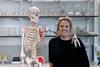
Eleanor Mortimer with a full size model skeleton which has its arm draped casually around her shoulders. They are in a science prep room in front of shelves of glass lab ware.

Source: © David Mortimer

Meet Eleanor, a recent science teacher turned trainer, and her skeletal work bestie

What one teaching resource do you share with all your trainees?

Mini whiteboards. They’re inexpensive, versatile and feature in almost every university session I teach. They allow you to quickly identify misconceptions and adapt your teaching, while giving every learner the opportunity to think, respond and participate.

I also love the confidence mini whiteboards give learners. Instead of worrying about getting something wrong in their books, they can test out their thinking, make mistakes and improve their answers before sharing them.

How do you relax?

At the weekend, you’ll probably find me wandering around an antique centre looking for unique pieces of furniture to restore. I love upholstering old chairs and giving them a new lease of life. My husband tells me that I own more chairs than one house needs but, as I like to remind him, at least he has plenty of choice when deciding where to sit.

Describe an embarrassing moment you’d rather not relive in your classroom or teaching life …

I was convinced that my first whole-cohort lecture to all the trainees was going to become my most embarrassing moment. I was far more nervous than I expected to be, and I remember thinking that if it all went wrong, everyone would know about it. Thankfully, it went much better than I’d imagined. At the end of the session, the trainees unexpectedly gave me a round of applause, which definitely turned my cheeks red.

Don’t aim for the perfect lesson. Aim to be a little better than you were yesterday

Outside of teacher training at your institution, what else are you involved with?

I’ve been involved with the Royal Society of Chemistry (RSC) through its fantastic CPD programme and have interviewed applicants for the RSC teacher training scholarship. More recently, I’ve become a trained facilitator for STEM Learning, which has given me another opportunity to support teachers’ professional development.

I love working with colleagues beyond my own institution and bringing new ideas back to the trainees I work with. One of the things I enjoy most about teacher education is that there are always opportunities to keep learning yourself.

What do you wear to work?

Having recently moved from secondary teaching into higher education, I’m still getting used to the more relaxed dress code. I’m not quite at the stage of arriving at work in trainers, so you’ll usually find me in dresses or skirts paired with boots or ballet pumps.

Get involved

Want to be the next teacher, technician or teacher trainer featured in Meet the … ? Want to suggest a question? Email education@rsc.org today.

Imagine you can only share one piece of advice with your fellow teacher-trainers, what would you say?

Ask for help. Teaching can feel overwhelming at times, but you don’t have to carry those worries on your own. Teaching is one of the most supportive professions I’ve ever been part of. The friendships you make are incredibly special, and there is always someone who can help, offer perspective or help you escalate a concern if needed. A problem shared really is a problem halved, and with a bit of time, you may even find yourself laughing about it one day.

And what’s one piece of advice that you would give to all trainee teachers?

Don’t aim for the perfect lesson. Aim to be a little better than you were yesterday. Listen to feedback, be willing to adapt and remember that every experienced teacher is still learning. Reflection isn’t something you do at the end of training; it’s what will sustain your growth throughout your career.

An outdoor group photo of a range of new teachers pointing to their trainer - Eleanor Mortimer

Source: © James Wright

Thankfully Eleanor not only survived her first lecture to the whole teacher trainee cohort at Kingston University, but is proving to be a big hit with the trainees too

Who’s your hero?

I’d have to say my old university tutor, Ken Robson. I wanted to be a teacher for as long as I can remember. I used to make registers for my toys and create homemade exercise books so I could teach them. Ken believed in me, challenged me and opened doors that ultimately led me into the profession I love.

Many years later, I now find myself in the same role at Kingston University that he once held. It’s a real privilege to inspire and support the next generation of science teachers. I often think about the impact one teacher educator can have, not just on their trainees, but on the thousands of young people those teachers will go on to teach.

Technicians ask teacher trainers

In the last Meet the … article, we asked David Robinson to suggest a question for the next interviewee. He asked:

What is one thing that the students do that is your biggest bugbear?

Use AI to produce work without using it to improve their thinking.

One of the biggest changes I’ve seen in teacher education is the rise of AI. Used well, tools like ChatGPT can save trainees time and help generate ideas, but they are no substitute for professional judgement. The trainees who make the best progress aren’t the ones who produce the most polished lesson resources: they’re the ones who actively seek feedback, reflect honestly on their teaching and use that feedback to improve. AI can support great teaching, but it’s reflective teachers who become exceptional ones.

We asked Eleanor for a question for the next interviewee and she suggested:

Who’s your work bestie, and why?