
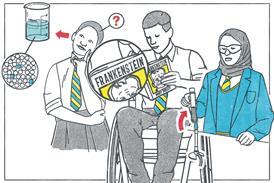
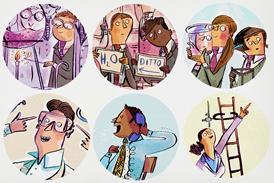
What do we want our students to be?
We need to convert our students from consumers into creators, says David Smith
Do we want them to be well educated? Scientists? Skillful?Global? Successful? And if so what does that mean for our teaching?
In recent times, the UK government has waged war against innovative teaching and promoted traditional practices that pass on knowledge from teacher to student. Continuous and practical assessment methods are viewed as insufficiently rigorous and are being stripped away, leaving written examinations with a heavy emphasis on knowledge and memorisation. Traditionalists will view this as providing a well-educated population. Sadly, this is nonsense. Of course it could be argued that the future of chemistry will be well-served by an education system that provides mastery of scientific concepts and encyclopaedic recall of facts. However, the health of chemistry relies on us producing research chemists, so it is worth reflecting on what they actually do, and what attributes make them successful.
Make your lessons pop
Choose an account option to continue exploring our full range of articles and teaching resources