
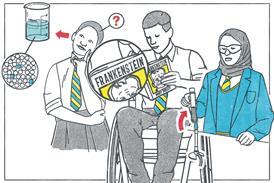


Making memories together outside the classroom can recharge students’ enthusiasm for science – and help you remember why you teach

Most of us can remember a trip from our school days. For me, the one that stands out was a visit some 30 years ago to a large-scale research laboratory working with radioactive materials. I still remember it. We dressed up in full PPE, were fitted with a personal radiation monitor and our visit was haunted by the repetitive electronic ’bip’ of the radiation alarm. We experienced what working in science involved and the radiation badges we had learned about in lessons suddenly had genuine relevance.
Organising a trip has its challenges – risk assessments, balancing the finances and organising transport, for example. But they are matched by its benefits – making links to the curriculum, showcasing future career opportunities or simply enthusing students about science.
Time to invest in science capital
The concept of science capital is now widely recognised. It can be described like a holdall containing every science-related piece of knowledge or experience that you have acquired through life. Add up the accumulated sum of a person’s science-related knowledge, attitudes, skills, experiences and social connections that influence their relationship and engagement with STEM (science, technology, engineering and mathematics). That’s science capital.
Students who struggle in a classroom may flourish in a new setting
The more science capital you have, the more likely you are to feel that STEM subjects are for you. Trips provide a great opportunity to add to that holdall. Students might make new connections with science; they could meet and identify with new role models; or they may simply have fun and bring that positivity back with them to recharge lessons.
A breath of fresh air
See the benefits of educational trips
Exposure to new experiences on a well-planned trip can help build student confidence and independence. This might be the first time that a learner gets an opportunity to explore away from their parents or guardians. Students who struggle in a classroom may flourish in a new setting where learning can be more experiential.
School trips can also greatly enhance student–teacher relationships. Sharing a new experience together or an informal conversation on the coach helps students to feel teachers are more approachable once everyone is back at school. In the post-Covid era attendance continues to be a challenge. Trips provide an excellent opportunity to build strong positive relationships, which are known to help motivate young people to attend school.
It’s not only students who benefit. There is nothing like a school trip for reminding us teachers why we teach and renewing our enthusiasm for our job. A trip can breathe new life into your teaching methods and approaches – perhaps you’ll see a demo that can be repeated in the classroom or encounter a new context to enhance your teaching of a previously dry topic. We often overlook the benefit of strengthened connections with staff outside our own departments or support staff, all of which help to build the sense of community that helps make a successful school.
Overcome barriers to taking trips
Avoiding bumps in the road
One of the biggest challenges for schools when organising trips is the lack of certainty about covering costs. We want trips to be affordable, but budgets for both schools and parents are constantly being squeezed.
If the coach costs £800 and you plan to fill 25 seats, how do you cover the £160 deficit when only 20 students sign up? Finding a grant to cover transport costs can remove all these worries, leaving only entry fees to be covered. You can find grants and funding for educational visits and study trips abroad.
If the coach costs £800 and you plan to fill 25 seats, how do you cover the £160 deficit when only 20 students sign up? Finding a grant to cover transport costs can remove all these worries, leaving only entry fees to be covered. You can find grants and funding for educational visits and study trips abroad (bit.ly/48SymgP).
The increasingly cautious culture in schools and the fear of something going wrong is another big barrier. No one enjoys completing a risk assessment but having written down what to do if the coach breaks down, for example, can help to reduce worry. Most schools have templates for common eventualities and you can easily adapt them. Work with whoever sets the school timetable to ensure staffing is more than adequate so that any last-minute staff absences don’t result in cancelling the trip.
Organising a school trip does require extra commitment but, in my experience, the youthful excitement on the day and the benefits to teaching, learning and students’ attitudes on returning to school far outweigh the downsides. What trip will you organise this year?
Top tips for science trips
- Keep an eye out for national events taking place each year, including The Royal Society Summer Science Exhibition, The Big Bang UK Young Scientists and Engineers Fair and British Science Week.
- Research what is taking place at science museums in your region.
- Contact local universities to find out about outreach events.
- Explore outdoor learning and fieldwork opportunities via the Field Studies Council.
Catherine Smith has been teaching science for 20 years and is chemistry lead at The Hinckley School in Leicestershire









No comments yet