

Over 200 years ago, doctor and writer Percivall Pott made the astute connection between soot and scrotal cancer, known then as the chimney sweep's cancer.
Over 200 years ago, doctor and writer Percivall Pott made the astute connection between soot and scrotal cancer, known then as the chimney sweep's cancer. This led to a chain of inquiry that has opened important insights into the link between cancer and specific chemicals or carcinogens.
Cancer can be traced back to the ancient Egyptians. Some mummies, for instance, show evidence of bone tumours, and the Edwin Smith papyrus of 1600BC describes eight 'ulcers' (cancers) of the breast. The writer recommends cauterisation, with little hope of cure and no understanding of why the ulcers occurred.1 In general, the ancient Egyptians blamed 'hostile powers' for illnesses they could not readily explain. Later, the Greek physician Galen (131-201) extended Hippocrates' concept of a necessary balance between the four presumptive 'humours' for good health - blood, phlegm, yellow bile and black bile - suggesting that an excess of black bile at a given site within the body caused cancer. His views were so influential that it was not until the 16th century that the Flemish anatomist Andreas Versalius (1514-64) challenged this view, since he found no black bile in the cancer-ridden corpses he dissected. In 1700 cancer was characterised by Deshaies Gendron as 'accretions of compact uniform substances, capable of destructive growth'. Although this was confirmed, microscopically, some 140 years later, by Johannes Müller, the cause remained elusive. Müller, in fact, overturned his contemporaries' theory that cancer was caused by 'coagulated lymph'.
Early clues
The first real clues as to the cause of cancer came from epidemiology studies in the 18th century. The Italian doctor, Bernadino Ramazzini noticed that nuns were apparently immune from cervical cancer, yet had a higher than average incidence of breast cancer which he attributed to their celibate life-style. However, the mechanism by which their work in holy orders protected them from one cancer, and increased their risk of developing another, was unclear. It was John Hill, the physician, botanist and medical writer who, in 1761, made the first connection between an 'extraneous substance' and the disease, when he noted a connection between the use of tobacco (as snuff) and cancer:
This unfortunate gentleman, after a long and immoderate use of Snuff, perceived that he breathed with difficulty through one of his nostrils. The complaint gradually increased, 'till he perceived a swelling within, which was hard but without pain. It grew slowly, 'till in the end it filled up that whole nostril and swelled the nose so as to obstruct the breathing at the other [nostril] . The consequence (of scratching it) was a discharge of thin humour, with dreadful pain and all the frightful symptoms of an open cancer. . and he was without hope when I last saw him.2
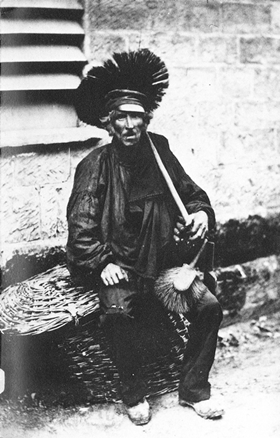
Fourteen years later, Percivall Pott published his crucial account of occupational cancer in chimney sweeps. After drawing attention to well-documented industrial diseases 'to which painters, plummers (sic) and other workers in white lead are liable' he continues:
there is a different disease peculiar to a certain set of people which has not . been publicly noticed. I mean the chimney sweep's cancer. It is a disease which makes its first appearance on the inferior part of the scrotum, where it produces a painful, ragged, ill-looking sore. The trade call it the soot wart. I never saw it under the age of puberty which is, I suppose, one reason why it is generally taken by both patient and surgeon for venereal, and being treated with mercurials. In no great length of time it penetrates the skin ... and seizes the testicle . and when arrived at the abdomen it affects some of the viscera, and becomes painfully destructive. The fate of these people is singularly hard: in their early infancy they are most frequently treated with great brutality and they are almost starved with hunger and cold. They are then thrust up narrow, and sometimes hot, chimneys where they are bruised, burned and almost suffocated; and when they get to puberty, become peculiarly liable to a most noisome, painful and fatal disease.3
As to a cure, Pott held out little hope. He recommended surgical excision if the tumour was confined to the skin, but sounded a bleak note of caution:
After such operations the patient has gone from hospital seemingly well, yet in the space of a few months has returned with the disease in the testicle, or in the glands of the groin . followed by the viscera (and) a painful death.
Pott made the connection between the causative agent - ie soot, lodging in the folds of the scrotal skin - and the disease, but left it to others to consider prevention. A weekly change of working clothes and daily washing of the private parts was the usual advice. In 1788 an Act of Parliament was enacted that gave children some consideration: they were not to be employed under the age of eight years and should be kept clean, and given a bath once per week. However, the effectiveness of the Act, which can only be estimated by statistics collated at the end of the 19th century, was scarcely encouraging:4
- in St Bartholomew's Hospital, London, of the 39 scrotal cancers treated between 1880 and 1890, 29 were in sweeps;
- in 1910-12, 29 per cent of the deaths of chimney sweeps were caused by scrotal cancer.
And the chemicals involved?
By the late 19th century, having established the soot/cancer connection, scientists turned their attention to find the particular chemical(s) responsible. Tar, which formed up to 35 per cent of household soot, was the chief suspect. However, dogs, guinea pigs, and rats painted with tar for several months showed no ill effect. Mice, rats and rabbits treated with tar, soot and 'xylol-paraffin' (dimethylbenzene) were unaffected. In 1913 Eijiro Haga, of the Japanese Society for Cancer Research, applied pitch to rabbits' scrota, again to no avail. Why couldn't they reproduce the sweeps' complaints? There are several reasons.
First, they were experimenting on strains of animals with little genetic predisposition to skin cancer, and they may have applied material with little or no intrinsic carcinogenic potential. But mainly they failed because they didn't apply the substances for long enough. Eventually, in 1915, Japanese workers Katsusaburo Yamagiwa and Koichi Itchikawa reported that after they had applied extracts of coal tar to the skin of 137 rabbits every two or three days for three months, seven of the rabbits developed metastasising cancers at the application sites.5 Three years later, H. Tsutsui was able to induce cancer in mice by prolonged application of tar. This important development led to the screening of the complex mixture of aromatic hydrocarbons and other species that make up soot tar.
In 1920/21 Zurich chemist W. Dreifuss managed to locate one of Pott's cancer-causing chemical(s) in 'the higher boiling fractions (of coal tar) as a neutral compound, free from nitrogen, arsenic and sulphur; was capable of forming a stable complex with picric acid; and probably belonged to the class of cyclic hydrocarbons'.6 More or less simultaneously Leeds professor of pathology R. D. Passey was extracting ether-soluble species from household soot and, after concentrating them and applying them to mice, found that he could produce 'soot warts' in them, of which about 50 per cent eventually proved malignant. The identities of the actual carcinogens were unknown, but echoing with Dreifuss' finding, Passey noted they predominated in the fraction that distilled over in excess of 250°C.
In 1924 Ernest Kennaway, director of the Research Institute of the Cancer Hospital, London, reported the first of his extensive studies of chemical carcinogenesis. He pyrolysed isoprene (2-methylbutadiene) at 820°C and obtained a tar that induced cancer in mice. This success prompted him to convert other species into tars and test the products (Table 1).7 Sometimes the material was pyrolysed 'neat' but in the case of acetylene (ethyne) he used a modification of Berthelot's classic route to benzene. Nicolai Zelinski had recently found the yield of higher molecular mass substances could be increased if the reaction was done in the presence of heated charcoal. In his tar he found (in addition to benzene) toluene (methylbenzene), p -xylene (1,4-dimethylbenzene), styrene (phenylethene), indene, naphthalene, fluorene and anthracene.
Kennaway wondered if the tars were causing the cancers by acting as irritants. He tested his theory by chlorinating the tars to make them more potent irritants. While this gave the animals more distress, the chlorinated products caused fewer cancers. Rather than abandon his notion, he concluded:
It seems, then, that the irritation which causes the cancer must be of a special kind, or act on some special element in the tissues.7
Kennaway hadn't connected cancer-induction with a specific chemical, though he would certainly have been aware that tars were complex mixtures. By 1930 he had made the link.
Perhaps the most obvious method would have been to isolate the tar constituents, one by one, and test each for carcinogenicity, but this would have been extraordinarily time-consuming. He remembered that in 1920 Georg Schroeter had reported that tetralin, (1,2,3,4-tetrahydronaphthalene) when treated with AlCl3, yielded a complex mixture of high boiling hydrocarbons. Tested on mice this caused eight cancers and three papillomas (skin tumours) in a group of 20 mice in 256 days. Schroeter's mixture fluoresced on exposure to uv light, and when the fluorescence was examined by prism spectroscopy, three bands showed up at 400, 418 and 440nm. He went on to obtain as many polycyclic hydrocarbons as possible and tried to match their fluorescence spectra against the peaks obtained with his original mixture. None had a precise match, but some came quite near. And two of these, 1,2,5,6-dibenzanthracene (1) and 1,2,7,8-dibenzanthracene (2), were potent carcinogens, with the latter (after a fairly long exposure time) producing four out of the 10 tumours in mice.
The induction period puzzled him, because the pre-cancerous periods with these compounds were longer than in mice 'painted with a good carcinogenic tar'. This led him to the conclusion:
Apparently neither benzanthracene nor its derivatives has been found, and perhaps not sought for, in coal tar .. It is quite possible that there are, among the many compounds still undiscovered in coal tar, derivatives of benzanthracene which are more powerfully carcinogenic than any known substances.8
This was confirmed some three years later, when biochemist James D. Cook, working at the same institute, began work on a two-tonne sample of pitch provided by the London Gas, Light and Coke Company. He distilled off the hydrocarbon-rich fraction boiling at 260-278°C/3mmHg and further purified it by repeated crystallisations of its picric acid adduct. Finally, he obtained 24g of 1,2-benzpyrene (3) (benzo[α]pyrene), which he reported as 'producing tumours in about half the time of 1,2,5,6-dibenzpyrene, so 1,2-benzpyrene is the most active carcinogen yet known'.9
Thus the chemical cause of the chimney sweep's cancer had been identified. But how does benzo[]pyrene actually cause cancer?
Mechanism
Cancer is a problem of unregulated growth. During development, it is important that the organs of the body grow to the correct size, and then stay at their correct sizes by the appropriate amount of 'maintenance' replacement of worn out cells. These processes happen inside each cell, through the control of that cell's growth by its DNA. In cancer, these processes break down. Something damages the DNA fragments (genes) that control growth and cells start dividing more rapidly.
There are several 'tumour suppressor' genes that can either prevent damaged cells reproducing themselves or even cause the cell to die if the damage is too severe. The best known of these is the p53 gene. This can exist in various forms in different people, and is more active in some people than in others. This may partially account for why some people or families are more vulnerable to cancers than others. If these 'inbuilt' defences are unsuccessful in stopping the growth of pre-cancerous cells, they can go on to become rapidly growing cancers. This rapid growth makes the cancer cells even more vulnerable to further damage from agents promoting cancer (whether carcinogenic chemicals, radiation, or certain viruses) because they are producing lots of new DNA in preparation for each generation of cell division.
So how does benzo[α]pyrene damage the DNA? DNA consists of sequences of four bases - adenine, thymine, cytosine and guanine - bound to a deoxyribonucleic backbone. Scheme 1 demonstrates how benzo[α]pyrene is processed by enzymes in the body to form a highly unstable carbocation which interacts directly with deoxyguanosine of the DNA, damaging it and potentially starting the processes that can lead to cancer.10
So Pott's acute observation (one of several during his career, with which his name is still associated) led to a chain of inquiry that has opened important insights into the causes of cancer. And perhaps Galen was not so far wrong after all. Cancer is caused, at least sometimes, by the collection of the wrong sort of compound at the wrong place - just it isn't called black bile.
Benzo[α]pyrene today
Although the chimney sweep's cancer is a risk of the past - there are much better ways of cleaning chimneys than sending small boys up them with a brush, benzo[]pyrene remains a major hazard in society. Workers in the coking industry are still potentially exposed to high levels of benzo[]pyrene, though strict controls mean that cancer deaths attributed to this hydrocarbon are now rare. This, sadly, is not the case with smokers. Benzo[α]pyrene was established as a constituent in tobacco smoke in 1955 and it is estimated that smoking a packet of 20 cigarettes results in the inhalation of 400ng of this carcinogen. Tiny though this figure is, it is sufficient over time to exert a damaging effect. Lung cancer, mostly attributed to smoking, kills ca 38,000 men and women per year in the UK.
Alan Dronsfield is professor of the history of science in the school of education, health and science at the University of Derby, Derby DE22 1GB. Peter Ellis is professor of psychological medicine at the Wellington School of Medicine and Health Sciences, University of Otago, PO Box 7343, Wellington South, New Zealand.
Acknowledgements: We thank Steve Parker, consultant surgeon to the University Hospitals of Coventry and Warwickshire, for permission to reproduce his biographical details of Percivall Pott.11
Sir Percivall Pott (1714-88)11 - the surgeon and the writer
Percivall Pott was born in Threadneedle Street, London in 1714. His father died when he was only three years old and as a result the family were poorly provided for. However, the Bishop of Rochester, who was related to his mother by a previous marriage, paid for his education. At the age of 15, Pott was apprenticed to Edward Nourse, a surgeon at St Bartholomew's Hospital, London. This cost the sum of £200. One of Pott's duties was to dissect preparations for anatomy demonstrations. He did this at Nourse's house in Aldersgate Street in east London and this is where he probably developed his surgical skill.
At the age of 22 Pott was admitted to the Company of Barber Surgeons and moved into practice in Fenchurch Street where he lived with his mother and stepsister. In 1739 he applied for the post of assistant surgeon at St Bartholomew's Hospital but was unsuccessful. When his former master was made surgeon at that hospital in 1745, Pott became assistant surgeon and was promoted to full surgeon in 1749 where he remained for the next 38 years. His patients included Samuel Johnson, David Garrick and Thomas Gainsborough.
Perhaps the most significant event in Pott's life was in 1756 when he was riding to see a patient in Southwark. He fell from his horse and sustained a compound fracture of his tibia. The surgeon who attended him advised amputation and Pott agreed. However, before the operation was performed, Nourse turned up at his home and suggested reduction of the fracture (essentially bringing the bones into the correct position and then holding them there with a splint. These days a plaster cast would be used). The fracture eventually healed without any further treatment. During his convalescence Pott wrote A treatise on ruptures, which established his reputation as a doctor and writer.
Pott's name is eponymously associated with several conditions, including:
- Pott's disease of the spine. This is caused by tuberculosis. Pott noted that the disease almost always affected the central vertebral bodies, with their core of spongy bone, rather than the denser bone of the articular processes (the 'wings' on either side of the vertebral bodies). He noted that destruction of the vertebrae produced a curvature of the spine and 'a useless state of the limbs', termed by some as Pott's paralysis;
- Pott's fracture of the ankle. This is a fracture dislocation of the ankle;
- Pott's puffy tumour. This is a lump on the head, indicating an underlying abscess inside the skull, caused by untreated severe sinusitis, middle ear infection or sometimes head injury.
References
- For further information, see the American Cancer Society website.
- Quoted in D. E. Redmond, New Eng. J. Med., 1970, 282, 18.
- P. Pott, Chirurgical observations relative to the cataract, the polypus of the nose and cancer of the scrotum. London: T. J. Carnegy, 1775.
- W. C. Hueper, Occupational tumours and allied diseases. Springfield (US): Charles C. Thomas, 1942.
- K. Yamagiwa and K. Itchikawa, Mitt. Med. Fak., 1915, 15, 295.
- Quoted in A. Haddow, Persp. Biol. Med., 1974, 17, 543.
- E. L. Kennaway, Br. Med. J., 1925, 2, 1.
- E. L. Kennaway and I. Hieger, Br. Med. J., 1930, 1, 1044.
- J. W. Cook, C. L. Hewett and I. Hieger, J. Chem. Soc., 1933, 1.
- Adapted from the book Cancer Medicine.
- Adapted from S. J. Parker's biography of Percivall Pott.






1 Reader's comment