
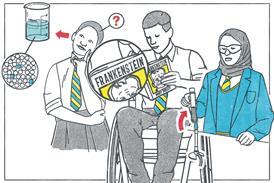
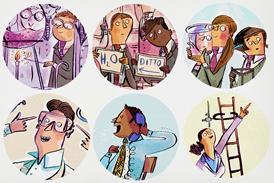
Mike Sutton plots the journey of the scientists who solved the riddle of chemical bonding

The bonds that bind was first published by Chemistry World.
Mike Sutton plots the journey of the scientists who solved the riddle of chemical bonding
The bonds that bind was first published by Chemistry World.
Think about the mixture of elements and compounds in air at three conceptual levels

Secure your learners’ understanding of how elements and compounds are represented in particle diagrams
Use this lesson plan to introduce the properties and behaviour of atoms as the smallest parts of elements

Map skills, sequence curriculums and tackle different terminology and approaches to boost your students’ maths skills in science

Advice and resources to encourage all learners to reach their potential and to think more, while maintaining their mental health

A science teacher shares her experiences and how she’s educating peers and learners to better support others with dyslexic
No comments yet