



How collaborating with teachers in the maths department is helping one school’s learners apply their maths skills in chemistry contexts, starting with ratio
As a student, I loved maths for the clarity, logic and order it brought to every problem. Rearranging an equation or extracting the relevant information from a question came instinctively to me. However, during my years teaching I have realised that the same is not true for all my students. I have found myself reflecting on how we can best support those for whom the numbers do not naturally fall into place.
The calculations that students meet in science aren’t harder than in their maths lessons, yet they often struggle to apply maths skills in a scientific context. Why is this?
I have had many informal discussions about this with colleagues during morning registration or walking along the corridor. Although we always said we will sit down for a proper discussion, we never found the time.
Could we modify the order of teaching in maths to help science out?
Our school’s lead practitioner for maths, Peter Williams has a strong interest in teaching and learning. His appointment and my growing motivation to find out how to best support students with the mathematical aspects of science prompted us to finally formalise these conversations.
Check your spec
Review your specification requirements
The logical first step was to review the mathematical requirements from our science specification. In our initial discussions, we focused on what questions on each skill look like in maths and where the same skills come up in chemistry. We discussed how we could break key skills down for students who find maths less intuitive.
Some interesting differences in terminology immediately became apparent. An anomalous point in science is referred to as an outlier in maths. A quantity such as concentration that combines two or more different measures (mass and volume) is referred to as a compound measure in maths. By simply highlighting the terminology used in maths when introducing these same concepts in science, could we help students better connect the learning?
Map for gaps
Map key skills to spot inconsistencies
There is a unit that we teach in year 9 science that looks at the size of an atom and requires students to be familiar with standard form. However, over the years, we have realised that not all students have covered standard form in maths by this point. Mapping the maths skills needed for science with where the same skill is taught in maths allowed us to spot other inconsistencies.
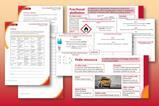
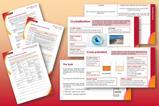
Boost your learners skills and confidence using maths in science lessons with our maths skills for chemistry resources.
Although determining the slope of a line is a key stage 3 maths topic, drawing a tangent to a curve is only taught at higher tier in GCSE maths and not until the end of year 11. However, in chemistry higher tier GCSE students need this skill earlier when analysing graphs showing rate of reaction. Could we modify the order of teaching in maths to help science out? This also highlighted that there could potentially be students entered for higher tier science but foundation tier maths. Do we know who these students are and how can we support them?
Focus on one skill
Focus on one skill to start
As our meeting time was limited, Peter and I decided to initially focus on just one skill – ratio. Ratio, or proportional reasoning as it is called in maths, features in several chemistry topics; working with concentrations, surface area to volume ratio, empirical formula and in reacting mass calculations. Although numerically simple, I have previously found it difficult to scaffold these calculations.
Between meetings, I collated examples of each type of calculation students might see in chemistry that required an understanding of proportionality, along with a worked solution to show how I’d typically approach the question. Peter then answered the questions but from a mathematical perspective. For example:
Question:
N2 + 3H2 ⇌ 2NH3
28 g of nitrogen reacts with 6 g of hydrogen to form 34 g of ammonia.
What mass of ammonia is formed from the reaction of 7 g of nitrogen?
Chemistry approach:
| N2 | + | 3H2 | 2NH3 | ||
|---|---|---|---|---|---|
| Info from Q | 28 g | 6 g | 34 g | ||
| Scale down to 1 g | 1 g | 6 / 28 g | 34 / 28 g | ||
| Scale up to 7g | 7 g | (6 / 28) x 7 = 1.5 g | (34 / 28) x 7 = 8.5 g |
Maths approach:
N2 : NH3
28 : 34
7 : ?
This simple activity instantly highlighted the importance of using a colon and simplifying the problem to just four numbers.
The numbers in the question are direct multiples from times tables, as is often the case at foundation tier. By removing all extraneous information and presenting the key numbers in a format familiar from maths lessons, students can quickly make the link to known skills and find the answer.
What are we doing next?
Next steps
This short collaboration has already highlighted a number of easy wins. Our next steps are to set aside department time for Peter to share approaches to science questions that incorporate a wider range of maths skills, and the maths department will look to add practice questions set in a scientific context to their resources. Ultimately, we hope that collaboration between the two departments will help refine our teaching approaches and better support students to succeed in both maths and science.
More tips for cross-department collaboration
- Why you need to collaborate with English and maths teachers to boost student outcomes.
- More ways to share skills with your colleagues in the maths department.
- Discover tips for effective collaboration.
More tips for working together
- Why you need to collaborate with English and maths teachers to boost student outcomes: rsc.li/4etZcPT
- More ways to share skills with your colleagues in the maths department: rsc.li/4s0LJVr
- Tips for effective collaboration: rsc.li/4yH33Bf
Catherine Smith is chemistry lead at a secondary school in Leicestershire







No comments yet