











Use these spreadsheets to help create your own chemistry Su Dukos
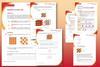
Whenever there is a list of related facts that you want your students to learn, a Su Doku puzzle may be an appropriate tool to help. For example, it could be used for learning the formulas of a list of named compounds, the uses of the fractions of crude oil or the test for ions. You may want to generate new chemistry Su Doku puzzles and this spreadsheet makes that quick and easy.
How to use this resource
To generate new Su Doku puzzles you need to open the Excel file DIY Su Doku spreadsheet.
To create puzzles that contain alternative entries within the grid
- Go to the third tab (alternative reference data) and copy one of the tables of data (9x9 cells) – eg for the table with columns material, property and use, copy from ‘glass’ (top left-hand cell) to ‘tyres’ (bottom right-hand cell).
- Go to the first tab (3 columns of data puzzle) and paste the copied table of data onto the 9x9 cell table entitled Reference data (top right-hand table). The new puzzle will appear in the table to the left of the Reference data table.
- To generate the solutions, go to the second tab (3 columns of data solution) and paste the same copied table onto the 9x9 cell Reference data table (top right-hand table). The solutions will appear in the table to the right of the Reference data table.
To rearrange the same entries within a grid
- Go to the fourth tab (alternative number Su Doku) and copy one of the 9x9 cell ‘puzzle’ tables (at the top of the spreadsheet).
- Go to the first tab (3 columns of data puzzle) and paste the copied table onto the top 9x9 cell table of numbers. The new puzzle will appear in the table above the number table.
- To generate the solutions, return to the fourth tab (alternative number Su Doku) and copy the corresponding 9x9 cell ‘solution’ table (below the chosen ‘puzzle’ table).
- Go to the second tab (3 columns of data solution) and paste the copied ‘solutions’ table onto the top 9x9 cell table of numbers. The solutions will appear in the table above the numbers table.
To produce a 2x9 cell table
The Reference data table needs three columns of data. If you wish to use two columns of related data (rather than three):
- Produce a 2x9 cell table, with the two related variables in columns 1 and 2 respectively.
- Paste the information from column 1 into column 3 to complete the 3x9 cells (i.e. columns 1 and 3 will contain the same data). For an example, see the top left-hand table in the third tab (alternative reference data).
- Follow the steps above.
To write your own Su Doku entries
If you wish to write your own Su Doku entries, follow the format on the third tab (alternative reference data) to create your data table, then follow the procedures above.
Ionic Su Doku
The Excel spreadsheet DIY ionic Su Doku spreadsheet makes it quick and easy to generate different or further ionic Su Doku puzzles.
To create puzzles that contain alternative entries of your choice within the grid
- Go to the first tab (template) and replace the data in the cells of the Reference data table (9x9 cells) with your chosen alternative data. The new puzzle will to appear to the left of the Reference data table.
- To generate the solutions, copy the new Reference data table (9x9 cells) in the first tab (template).
- Paste the copied table onto the 9x9 Reference data table in the second tab (answer sheet). The solutions will appear to the left of the Reference data table.
Note: You may find that formatting the formulae (for the Reference data table) is easiest in Word.
To rearrange the same entries within a grid
- Go to the third tab (alternative number Su Doku) and copy one of the 9x9 cell ‘puzzle’ tables (at the top of the spreadsheet).
- Go to the first tab (template) and paste the copied table onto the 9x9 cell table of numbers. The new puzzle will appear in the table above the number table.
- To generate the solutions, return to the third tab (alternative number Su Doku) and copy the corresponding 9x9 cell ‘solution’ table (below the chosen ‘puzzle’ table).
- Go to the second tab (answer sheet) and paste the copied ‘solutions’ table onto the 9x9cell table of numbers. The solutions will appear in the table above the numbers table.
Share with your learners
Once you have produced your puzzle and solutions table, copy and paste them into new Excel spreadsheets, ready to print for your students.
Downloads
DIY Su Doku spreadsheet
Handout | Excel, Size 42 kbDIY ionic Su Doku spreadsheet
Handout | Excel, Size 34 kb
Additional information
This resource was originally published in the book Chemistry for the Gifted and Talented by Tim Jolliff. The book is no longer available for purchase. However, you can find all the resources on our website.



No comments yet