








Try this class practical or demonstration to extract food-grade metallic iron from breakfast cereals using powerful magnets
Learners will complete a practical to extract and compare the amounts of iron contained in different breakfast cereals. The follow-up questions relate to why iron is important for haemoglobin production in the blood and the importance of dietary iron. The final question focusses on genetic conditions which impact haemoglobin production.
-
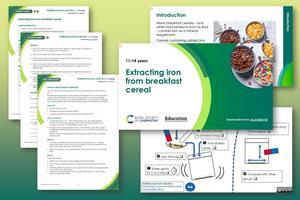
Download this
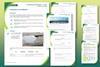
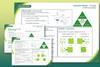
A ready-to-go practical lesson with classroom slides, scaffolded and unscaffolded student worksheets and teacher guidance, including full technical notes and answers to all questions.
Discover more resources from the Nuffield practical collection
This activity and the follow-up questions have cross-curricular links to biology, including nutrition and the role of iron in haemoglobin.
Learning objectives
- Extract iron from different breakfast cereals.
- Compare the amounts of iron in different breakfast cereals.
- Explain the importance of iron in our diets.
Scaffolding
Scaffolded (✪) and unscaffolded (✪✪) worksheets are provided with varying levels of support in the follow-up questions.
Question 5c is a research-based question which you can differentiate if necessary, (e.g. in the selection of pairings, offering suggested resources such as the NHS website to use when researching and/or completing this as a collaborative discussion task.)
You may need to provide additional support during the practical. Integrated instructions are included on the lesson slides.
Technician notes
Read our standard health and safety guidance and carry out a risk assessment before running any live practical.
Class practical
Equipment
Apparatus
- Safety glasses
- Pestle and mortar
- Sealable plastic sandwich bag (zip-lock types work best)
- A strong magnet (neodymium magnets are most effective)
Chemicals
- Distilled water
- Breakfast cereals to be tested
Safety and hazards
- Neodymium magnets are available from science education equipment suppliers. Care is required when handling these powerful magnets.
Method
- Place a few flakes of cereal in the mortar. Hold the magnet close to the flakes to see if they stick to the magnet or are moved by it.
- Crush the dry flakes into a fine powder with the pestle.
- Transfer the powder into the sandwich bag. Add enough distilled water to cover the powder. Carefully seal the bag.
- Allow the cereal to soften and gently shake the contents for a few minutes. If the mixture has absorbed too much water and appears too dry, add some more distilled water.
- Place the magnet on the outside of the bag. Move the magnet backwards and forwards over the mixture.
- Carefully turn the bag over, keeping the magnet touching the bag. Squeeze the bag slightly to lift the magnet above the cereal mixture to see what has been collected. You should see tiny iron particles.
- Compare the amount of iron you have collected with groups who used a different cereal brand.
Teacher demonstration (optional)
You may wish to extend the practical to test the grey deposit to confirm that it is iron.
This optional teacher demonstration explores the reaction of iron with hydrochloric acid and the identification of iron(III) ions using potassium hexacyanoferrate(III), which produces a strong colour change (Prussian Blue). Use a sample of iron(III) ions (e.g. iron(III) sulfate) to show learners the expected outcome of this test in advance.
Equipment
- Hydrochloric acid (1 M)
- Potassium hexacyanoferrate(III) solution
- A sample of iron(III) ions (e.g. iron(III) sulfate or similar) to test
Safety and hazards
- Hydrochloric acid (1 M) – LOW HAZARD below 2 M, wear safety glasses. Refer to CLEAPSS Hazcard HC047a and CLEAPSS Recipe Book RB043, refer to SSERC or contact your local safety advisory body.
- Potassium hexacyanoferrate(III) solution – LOW HAZARD, wear safety glasses. Do not add concentrated acids or heat in contact with acids – toxic gases are produced. Refer to CLEAPSS Hazcard HC079, refer to SSERC or contact your local safety advisory body.
Disposal
- Neutralise and dilute the hydrochloric acid by adding slowly to 1 M sodium carbonate solution until the mixture is just alkaline. Pour the neutralised mixture down a foul-water drain with further dilution.
- Dilute the potassium hexacyanoferrate(III) solution and pour down a foul-water drain.
Method
Wear safety glasses.
- Collect the iron particles using a magnet covered in cling film
- Place the iron-coated magnet into a small test tube containing hydrochloric acid
- Carefully agitate the mixture to encourage the iron to react. Encourage learners to note down any observations.
- Add a few drops of potassium hexacyanoferrate(III) solution to the test tube –note down any observations.
Questions
Questions linking the practical experiment to quantitative chemistry topics can be found in the student worksheets. The scaffolded sheet offers more support to allow learners to access the questions. Hints are provided after some of the questions to support learners and guide their answers.
Answers
Answers to the questions in both levels of student sheets and on the lesson slides can be found in the teacher notes.
Further information
- Alternative approaches to this experiment are described on a number of websites, mainly from the USA. See, for example, this video on iron in breakfast cereal by Steve Spangler from Sick Science!.
- The Information Center for Sickle Cell and Thalassemic Disorders at Harvard University provided a detailed review of the process involved in iron absorption by the body.
Downloads
Extracting iron scaffolded student sheet
Handout | PDF, Size 0.17 mbExtracting iron unscaffolded student sheet
Handout | PDF, Size 0.15 mbExtracting iron slides
Handout | PDF, Size 1.11 mbExtracting iron teacher notes
Handout | PDF, Size 0.26 mbExtracting iron student unscaffolded student sheet
Editable handout | Word, Size 0.51 mbExtracting iron scaffolded student sheet
Editable handout | Word, Size 0.51 mbExtracting iron slides
Editable handout | PowerPoint, Size 5.71 mbExtracting iron teacher notes
Editable handout | Word, Size 0.43 mb
Additional information
This is a resource from the Practical Chemistry project, developed by the Nuffield Foundation and the Royal Society of Chemistry. This collection of over 200 practical activities demonstrates a wide range of chemical concepts and processes. Each activity contains comprehensive information for teachers and technicians, including full technical notes and step-by-step procedures. Practical Chemistry activities accompany Practical Physics and Practical Biology.
The supporting resources were updated in 2026 by Louise Glynn.
© Nuffield Foundation and the Royal Society of Chemistry
- Prepare(7)
 Opinion
Making science teaching more inclusive
Let’s introduce more representative examples in our chemistry classrooms
 Ideas
IdeasHow sign language can help all learners
Use British sign language’s descriptive nature to boost understanding in your science lessons
 Ideas
Ideas5 ways to teach paper chromatography
Brush up on your chromatography teaching skills with these teacher-tested tips

 CPD article
Evaporation, filtration and crystallisation | Teaching practical science
How to add variety and context to lessons while getting students familiar with apparatus
 CPD article
Practical distillation
How to develop your students’ distillation knowledge and practical skills
 CPD article
Practical chromatography | Teaching practical science
Ideas for enhancing practical chromatography work for your 11–16 learners
- Deliver(6)
 Resource
Filtration | Developing understanding | 11–14 years
Support learners to develop secure mental models of how filtration can be used to separate mixtures
 Resource
Filtering muddy water | Johnstone’s triangle | 11–14 years
Use Johnstone’s triangle to explain how filtration can be used to separate mixtures
 Resource
Separating mixtures | Structure strip | 11–14 years
Use scaffolded prompts to support learners to write about separating mixtures with confidence
currently reading
 Class experiment
Extracting iron from breakfast cereal
Investigate the iron content of breakfast cereals with this class practical, teacher demonstration and follow-up questions
 Practical video
Simple distillation | practical videos | 14–16 years
Video and resources showing how to separate water from a coloured solution
 Class experiment
Chromatography of sweets | 11–14 years
Try this class practical to carry out chromatography using dye from different coloured M&M’s®. Includes kit list and safety instructions.
- Literacy(2)
 Resource
Elements, compounds and mixtures | Key terms support | 11–14
Language support pack for elements, compounds and mixtures, with key terms list, accessible glossary, Frayer models and unscrambling definitions
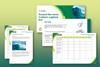 Resource
Elements, compounds and mixtures | Reading comprehension | 11–14 years
Practise reading comprehension skills with a science research article about the benefits of carbon capture from the oceans
- Enrich(2)
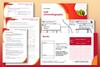 Class experiment
Leaf chromatography | 14–16 years
Investigate leaves using paper chromatography with this classroom experiment and follow-up questions
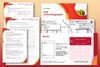
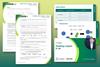
 Resource
Is the secretary guilty? | 14–16 years
In this practical, your learners become chemical detectives by carrying out an investigation using separation techniques

No comments yet