
- Home
- I am a …
- Resources
- Collections
- Starters for ten
- Screen experiments
- Assessment for learning
- Microscale chemistry
- Faces of chemistry
- Classic chemistry experiments
- Nuffield practical collection
- Anecdotes for chemistry teachers
- Literacy in science teaching
- Maths skills for chemistry
- More …
- Climate change and sustainability
- Alchemy
- On this day in chemistry
- Global experiments
- PhET interactive simulations
- Chemistry vignettes
- Context and problem based learning
- Journal of the month
- Chemistry and art
- Classic chemistry demonstrations
- In search of solutions
- In search of more solutions
- Creative problem-solving in chemistry
- Solar spark
- Chemistry for non-specialists
- Health and safety in higher education
- Analytical chemistry introductions
- Exhibition chemistry
- Introductory maths for higher education
- Commercial skills for chemists
- Kitchen chemistry
- Journals how to guides
- Chemistry in health
- Chemistry in sport
- Chemistry in your cupboard
- Chocolate chemistry
- Adnoddau addysgu cemeg Cymraeg
- The chemistry of fireworks
- Festive chemistry
- Collections
- Education in Chemistry
- Teach Chemistry
- Events
- Teacher PD
- Enrichment
- Our work
- More navigation items




Digital skills for chemistry teaching
Discover the tools and knowledge you need to enhance your teaching, save time and improve learner outcomes
This course will give you the confidence to integrate digital tools into your teaching in ways that are pedagogically grounded, chemistry specific and immediately usable in the classroom.
Digital skills for chemistry teaching is designed for educators across a wide range of confidence levels, from those who need a solid foundation in everyday platforms to those seeking to use software and open data resources to strengthen their practice, improve teaching effectiveness, and make learning more relevant and engaging.
Throughout the course you will explore tools you can apply to your teaching practice. You will build your confidence at your own pace, with questions, practical activities and discussion threads to share your ideas with other course participants.
This course is available in the UK, EU and other selected countries. If you’re a teacher in the UK or Ireland, make sure you’ve claimed your fully funded Teach Chemistry membership: benefits include discounts to our professional development courses.
At a glance
- Format: self-led online learning
- Cost: £150 + VAT
- Total length: approx 7 hours
- Available in: UK, EU and other selected countries
Course objectives
The course will help you to:
- develop confidence in essential digital tools for teaching and learning, in the context of your own school’s platform and infrastructure.
- gain skills in both foundational and chemistry-specific digital competencies, including data analysis, molecular modelling, simulations and open chemistry data resources.
- prepare learners for higher education and scientific careers, while making practical teaching more efficient and engaging across ages 11 to 19.
- model responsible digital practice, including the critical evaluation of online scientific sources and the safe use of digital platforms with students.
Course modules
Digital safety, safeguarding and professional online presence
Model responsible digital behaviour and how to critically evaluate online scientific information.
Foundational tools (Microsoft 365 or Google workspace)
Navigate and effectively use core applications; choose the route most relevant to you.
Assessment and feedback
Save time creating and marking digital assessments to measure progress and identify common chemistry misconceptions.
Data logging, analysis and graphing tools
Use data loggers and spreadsheet software to collect, analyse and present experimental data.
Molecular modelling and visualisation
Help students understand three-dimensional molecular structures from two-dimensional representations using free tools.
Interactive simulations and virtual labs
Strengthen learners’ understanding of concepts, techniques and experimental design alongside hands-on practical work.
Data repositories and open resources
Discover open chemistry resources used in industry and curriculum-aligned, free tools.
Digital science communication
Develop your skills in creating educational visual content to communicate concepts effectively.
Working with and advocating for digital infrastructure
Use the digital resources available to you effectively and make a case for improvements.
Ready to enrol?
Your journey towards delivering better lessons and improving learner outcomes starts whenever you’re ready.
FAQs
Who is the course for?
This course is suitable for teachers at any career stage looking to develop their understanding, confidence and capability to use digital skills to support their teaching practice.
Do I need to have specific digital tools or subscriptions?
No, we’ve designed the course for you to complete with a range of free tools. However, we mention some that require subscriptions for their premium features or that your school may already subscribe to (e.g. Module 2 | Foundational tools (Microsoft 365 or Google workspace).
Will I receive a certificate?
You will receive a certificate of course completion once you complete all modules and all required tasks.
What if I don’t want to complete all modules?
You can take whichever modules you are interested in, but you will only receive a certificate of course completion once you have completed all of the modules and required tasks. You have access to the course for six months so you can return to it at any time in that period.
Which countries is the course available in?
This course is currently available in the following countries: Australia, Austria, Bahamas, Bangladesh, Belgium, Brazil, Bulgaria, Cambodia, Canada, China, Croatia, Cyprus, Czechia, Denmark, Egypt, Estonia, Fiji, Finland, France, Germany, Ghana, Greece, Guernsey, Hong Kong S.A.R. China, Hungary, Iceland, India, Indonesia, Ireland, Isle of Man, Italy, Japan, Jersey, Jordan, Kuwait, Latvia, Lebanon, Lithuania, Luxembourg, Macao S.A.R. China, Malaysia, Malta, Mauritius, Netherlands, New Zealand, Norway, Pakistan, Philippines, Poland, Portugal, Qatar, Romania, Singapore, Slovakia, Slovenia, South Africa, South Korea, Spain, Sweden, Switzerland, Taiwan, Thailand, Uganda, United Kingdom, United States.
Our course author

Wendy Winnard
Wendy spent 38 years teaching chemistry in a wide range of schools and sixth form colleges, including four years in an international school in Milan. In 2023, Wendy was honoured to accept the Royal Society of Chemistry’s Excellence in Secondary and Further Education prize, and is now based at the Hartree Centre, where she trains technology and science industry professionals in teaching skills.
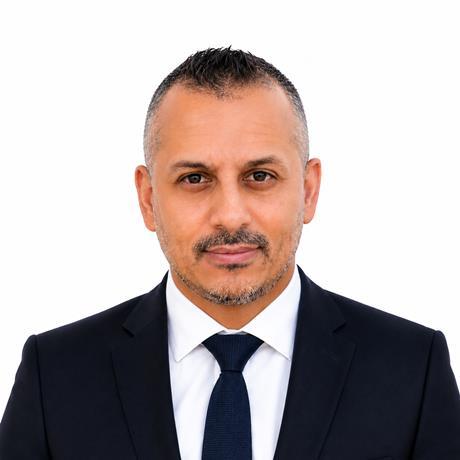
Faisal Khan
Faisal Khan is an Oxford University graduate with over 20 years of teaching experience as an advanced skills teacher, assistant principal and deputy head. As head of department, he was the award winner of the British Science Week secondary school event of the year, and is currently teaching at an international school in Riyadh, Saudi Arabia.