






All Earth science articles – Page 2
-
 Resource
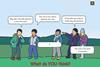
Science Concept Cartoons: Acid rain
Spark discussion and stimulate thinking about acid rain in a way that encourages pupils to share their ideas
-

-
 Resource
The life of water
Get hands on with H2O, changing states of matter and the water cycle. These experiments and investigations involve water in the context of space
-
 Resource
Plant science practicals
A collection of experiments that cover a number of topics that help students learn and understand the physical and chemical processes that occur in plants. Such as, how water is taken up by plants; how cellulose facilitates passive transport; and the how changes in the concentrations of nutrients in soil, affects plant growth.
-
 News
NewsMild method turns common mineral into fertiliser
Process could cut transportation costs and save farmers money
-
 Feature
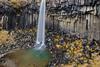
Carbon dioxide gets stoned
Locking Earth’s excess carbon dioxide away by turning it into rock
-
 Resource
Found in the ground
Give your pupils the knowledge and the opportunity to classify materials according to rocks, minerals and fossils.
-
 Resource
Virtual rock kit
A collection of common sedimentary, metamorphic and igneous rocks. Each rock has images showing particle arrangements, the rock after weathering, hand sized specimens and the rock in use.
-
-
 Resource
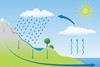
The water cycle: That’s Chemistry!
The ‘water cycle’ chapter from That’s Chemistry! This chapter looks at key ideas and activities that can be used to help students learn how different liquids evaporate at different rates, and the factors that affect these rates.
-
 Resource
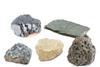
Rocks and soils: That’s Chemistry!
The ‘rocks and soils’ chapter from That’s Chemistry! This chapter looks at key ideas and activities that can be used to help students learn that different types of rocks and soils have different properties.
-
 Resource
If rocks could talk
A series of ‘interviews’ with different rocks. From these ‘interviews’ students learn about different types of rocks, how and where in the rock cycle they are formed as well as their defining features. Clicking on key words reveals further information, images and quiz questions. This resource has been developed by ...
-
 Resource
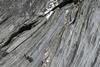
Modelling sedimentary rocks
Students use syringes to make samples of sedimentary rock from sand both with and without cementing agents.
-
 Resource
Weathering and erosion
Examine the ways in which water can weather rocks, by solution and by freeze-thaw.
-
 Resource
Making a volcano
Simulate ways in which both extrusive and intrusive igneous rocks may form
-
 Resource
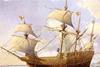
Wood conservation - the Mary Rose
The Mary Rose is a wooden Tudor warship that sank off Portsmouth in 1545. While on the sea bed, most of her hull became covered in silt, which effectively sealed it and the artefacts it contained in anaerobic (air-free) conditions and preserved them from decay.
-

-
 Resource
The Victorians: science ideas webs
A web of suggested ideas for linking science with the topic the Victorians. You can learn history and science together with activities for different age groups.
-
 Resource
The Stone Age: science ideas webs
A web of suggested ideas for linking science with the topic the stone age. You can learn history and science together with activities for different age groups.
-
 Resource
Ancient Egypt: science ideas webs
A web of suggested ideas for linking science with the topic Ancient Egypt. You can learn history and science together with activities for different age groups.
- Previous Page
- Page1
- Page2
- Page3
- Page4
- Next Page