

That’s May’s summary of her first weeks of teacher training. She shares what it’s like to be learning to teach and to be in front of her first class of 11 year-olds
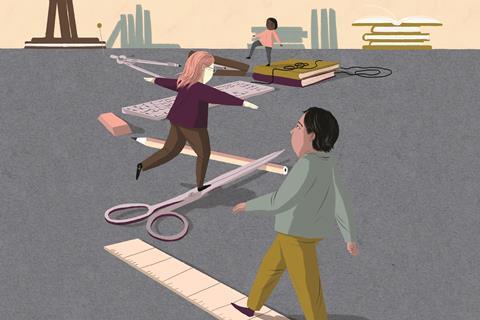
Seven weeks into teacher training, and I’m still catching my breath. It astonishes me how quickly time has passed, while I feel like I’ve lived a year’s worth of experiences. From learning teaching theories to navigating a school, how to approach lesson planning and critical writing for PGCE essays, the tidal wave of information has been both exhilarating and overwhelming. Most of the time, it feels like you are doing everything you can just to hang on.
How was there ever a world in which I didn’t know about Rosenshine’s principles of instruction?
Teacher training is a world of extremes and contradictions. There are moments of pure joy – like the buzz after a successful lesson – followed by relief that a difficult period is over. Just a brief time to reflect and then you need to refocus as your next lesson is just around the corner. I’m constantly aware of the pressure not to waste a moment with my learners as there’s so much content to cover and you don’t want them to miss out. Yet, there’s comfort in knowing that every lesson is a new opportunity for all of us to try, learn and improve.
Learning to teach
Back to the classroom
From my first half term, a few things will stick with me – how a year 7 class can be so excited by their first taste of discussing science at secondary school; how independent and mature the year 12 and 13 students are. But on the other hand (and maybe most importantly) is that uncomfortable feeling when a lesson didn’t go as planned. It’s something I’m going to have to get better at dealing with. After all, we say to our learners that’s the best way to improve. However, as a career changer, it’s genuinely hard to go back to not knowing what you are doing anymore. All my previous work experience feels like it’s been put on hold, perhaps to be picked up again sometime in the distant future. My fellow SCITT (school-centred initial teacher training) tutees are amazing and I’m so grateful to have them there to laugh (and cry!) with. We already lean on each other heavily, especially at those times when it all feels like a lot.
Surprisingly (to me at least), I’ve found the theory side of the course practical and useful. How was there ever a world in which I didn’t know about Rosenshine’s principles of instruction? The PGCE work takes you out of the school environment into a more academic one, but as a social science it’s different from the chemistry research environment that is more familiar to me (Harvard referencing anyone …?).
New to teaching?
We’ve plenty of articles and resources for you. You could start with the Early career conversations between a student teacher and their mentor, or maybe the Classroom ideas articles for teacher-tested tips on everything from acids and bases to electrolysis.
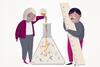
Schools are dynamic places, demanding flexibility and quick thinking. The solid foundations we’re taught to establish with learners are slowly taking shape. My placement school, mentor and colleagues have been incredibly supportive, and my form group are so funny and switched on. I’m only beginning to imagine how rewarding it will be when I can really get to know my students. One moment that stands out was trying the whoosh bottle experiment with a class. I’m so glad my tutor encouraged me to give it a go and helped me practise and set it up. The reaction from the class was just brilliant. It’s why we love chemistry after all. One of my tutors even shared that they do it three times with their class at the beginning of the year, because the learners just want to see more.
Managing cognitive load
Information overload
Most trainees admit that managing behaviour is the area they feel least confident about. We had an intensive training week on this early on for that reason, which I think gave us a boost before entering the classroom for real. I know I’m lucky with my placement school as behaviour is good, but I’m aware harder times are ahead in my teaching career. For now, I’m shielded from some of the tougher realities, yet already I’m starting to see how much the support outside the classroom matters.
A real contradiction as a trainee is the cognitive overload we experience, while we’re taught how to manage (and avoid) overloading our learners. It’s a running joke among trainees. The sheer amount of advice and support available is overwhelming. We’re hit with so much new information every day. I’m hopeful that, with time, I’ll figure out what works best for me. And I’m certainly learning to carefully choose which pieces of advice to hold onto and which will hopefully become the cornerstones of my teaching.
As PGCE assignments ramp up and new responsibilities come my way – like preparing examples and evidence for my own assessment this term and teaching new classes – it’s easy to feel swamped. I’m proud of how far I’ve come, and so try to focus on the next task, the next lesson. I’m excited (and a little nervous) for what comes in the run-up to Christmas, but for now, I have to keep reminding myself of how much I have already achieved.
More resources
- Check out this collection of articles on managing behaviour, written by experienced teachers and teacher trainers.
- Discover articles on cognitive load; they’re full of ideas, tips and research evidence.
- Read about Barak Rosenshine and his principles of instruction.
- Learn from expert teachers as they answer trainee and early career teachers’ questions in our Classroom questions.
Read the next instalment of May’s teacher training diary as she starts her second school placement.
Find this article on the Education in Chemistry website and discover resources and more articles to help you in your classroom: rsc.li/4psW8qi. And check the website in February for the next instalment of May’s teacher training diary.







No comments yet