






All Key stage 2: topic C4b articles
-
 Lesson plan
What happens when a substance changes state? | Lesson plan | 11–14 years
Use this lesson plan, complete with scaffolded and unscaffolded student sheets, to secure learners’ understanding of changes of state
-
 Resource
Science concept cartoons: condensation
Show this concept cartoon to your class to get them talking and thinking about condensation in new ways.
-
 Resource
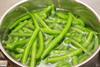
Should beans be cooked with the lid on or off?
An investigation into whether having the lid on or off affects the colour of green vegetables.
-
 Resource
Use of salt in cooking, part 1
In this activity students devise and carry out experiments to test possible reasons for adding salt when cooking vegetables.
-
 Resource
The life of water
Get hands on with H2O, changing states of matter and the water cycle. These experiments and investigations involve water in the context of space
-
 Resource
Solids | Primary science video demonstrations
Display some exciting solid properties to primary learners: including biscuit bashing, dissolving and heavy sugar.
-
 Resource
Gases | Primary science video demonstrations
Showing the properties of gases to primary learners, with examples from: the leaky bottle and the sticky cups
-
 Resource
Liquids | Primary science video demonstrations
Demonstrate the properties of liquids to primary learners, including: suspended ice, heavy sugar and the particle disco.
-
 Resource
Water sports and solutions
Life is in aqueous solution - and so is much of sport. Find out why the properties of water are vital to the sports men and women who compete in, on, and around water.
-
 Class experiment
Chromatography: how black is a black pen?
Black never goes out of style, and with this experiment learners can explore what colours go into making black ink with chromatography
-
-
 Resource
Water for survival | 11-16 years
Practical problem-solving investigation including filtration, distillation and temperature. Includes kit list and safety instructions.
-
 Resource
Desert survival | 9-14 years
Discover more about evaporation and condensation with this practical, that gives learners a chance to test their skills in a survival setting. Includes kit list and safety instructios.
-
-
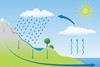 Resource
The water cycle: That’s Chemistry!
The ‘water cycle’ chapter from That’s Chemistry! This chapter looks at key ideas and activities that can be used to help students learn how different liquids evaporate at different rates, and the factors that affect these rates.
-
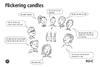 Resource
The nature of science: Concept Cartoons
The nature of science resources try to give students an awareness of science as a changing body of knowledge. This resource uses concept cartoons to help students engage with difficult scientific concepts.
-
 Resource
The Mpemba effect
Help discover why warm water freezes quicker than cold water. The Royal Society of Chemistry offered £1000 for the best and most creative explanation of this phenomenon, known as the Mpemba effect. View the winning entry, try the experiment for yourself, or read the original paper.
-
 Resource
Solids, liquids and gases: That’s Chemistry!
The ‘solids, liquids and gases’ chapter from That’s Chemistry! This chapter looks at key ideas and activities that can be used to help students learn about solids, liquids and gases, and understand that some materials change state when they are heated or cooled.
-
 Resource
Solids, Liquids and Gases
Cartoon animations that explain in simple terms why different materials have different properties and how they change on heating and cooling. Other animations cover separating solids from liquids and show what happens to a solid when it dissolves in a liquid. Courtesy of the ABPI.
-
 Class experiment
Crime scene chromatography
Using three different black pens, learners can put their scientific curiosity to use and explore chromatography