
News & analysis – Page 50
-
 News
NewsC:TNG to offer Chemistry at Work events
An RSC Chemistry at Work event for 14-19-year olds, held in November, marked the launch of a two-year project to expand these events in England
-
 News
NewsHE science centre opens
In November London Metropolitan University opened the doors of its new £30 million science centre which is home to the Superlab, a state-of-the-art teaching lab with room for 280 students
-
 News
NewsKeeping pace with technology
Sara Hennessy of Cambridge University has looked at ways that teachers can integrate ICT into their teaching of science
-
 News
NewsRSC teaching awards 2007
The Royal Society of Chemistry (RSC) is inviting nominations for the 2007 round of its two annual teaching awards
-
 News
NewsScottish Parliament looks ahead
Over 300 people came together in Edinburgh, in November, to discuss and debate the key scientific issues that will face the next Scottish Parliament and Scottish Executive from May 2007 to 2011
-
 News
NewsA little selenium goes a long way
Despite being one of the rarest elements on Earth, selenium is an essential nutrient. But our diets contain less selenium now than ever before. Does this put our health at risk?
-
 News
NewsAnthrax detector
Swiss researchers have developed a detector for deadly anthrax spores based on a monoclonal antibody that recognises a specific sugar on the bacterium
-
 News
NewsDrug discovery at a snail's pace
A new toxin isolated from the sea-dwelling cone snail by US researchers could lead to new drugs to treat psychiatric and brain diseases, such as Parkinson's disease and depression
-

-
 News
NewsWaste bacteria build designer nanocatalysts
Bacteria could be the key to improving metal catalysts for the chemical industry, according to research in Germany
-
 News
NewsForum for science learning doctors
Science teachers are invited to join a web-based discussion forum on the 'science learning doctors' approach to science teaching
-
 News
NewsRolls-Royce prize to reward teamwork
Enter the Rolls-Royce Science Prize competition for the chance to win up to £20,000 to invest in science education
-
 News
NewsRSC calls for more cash for schools
In its recent submission to the Government's 2007 Comprehensive Spending Review, the RSC has again made the case for increased investment in chemistry education in schools, colleges and HE
-
 News
NewsSET award for Durham chemist
Lisa Murphy has won the ICI-sponsored Top Chemistry Student award at this year's Science, Engineering and Technology (SET) Student of the Year awards
-
 News
NewsTeaching award for Brighton chemist
Bristol University's Dr Hal Sosabowski is the latest chemist to join the ranks of the National Teaching Fellowship Scheme
-

-
 News
NewsAssessment of practical work
Researchers at Durham University have been investigating different techniques to measure key aspects of practical performance with a view to producing test items that are more reliable than those currently used
-
 News
NewsBoring science
Terry Lyons from the University of New England, Australia has looked at studies of secondary students' attitudes towards science to find out what makes school science boring.
-
 News
NewsFirst look at A-level alternative
This month UK independent and international schools will receive drafts of a new post-16 qualification that will be available in 2008 as an alternative to A-levels and the IB
-
 News
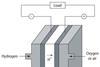
NewsNovel materials for fuel cells
Fuel cells will be used to power everything from laptops, through cars and buses, to hospital electrical systems. Finding materials that are lightweight and can soak up H2 gas like a sponge will be key to this technology