








All Primary collection: earth science articles
-
 Resource
Science Concept Cartoons: Acid rain
Spark discussion and stimulate thinking about acid rain in a way that encourages pupils to share their ideas
-
 Resource
Chemistry and Sport - weightlifting
Find out why chalk is as important in weightlifting as it is in tennis, rock climbing, and even fire-fighting.
-
 Resource
Found in the ground
Give your pupils the knowledge and the opportunity to classify materials according to rocks, minerals and fossils.
-
 Resource
Virtual rock kit
A collection of common sedimentary, metamorphic and igneous rocks. Each rock has images showing particle arrangements, the rock after weathering, hand sized specimens and the rock in use.
-
-
 Resource
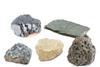
Rocks and soils: That’s Chemistry!
The ‘rocks and soils’ chapter from That’s Chemistry! This chapter looks at key ideas and activities that can be used to help students learn that different types of rocks and soils have different properties.
-
 Class experiment
Science festivals
This set of handouts can be used to inspire people of all ages to take up chemistry in their own home! Racing raisins, cornflour gloop, erupting volcanoes, reaction times and iron from breakfast cereal are all covered here
-
 Resource
Modelling sedimentary rocks
Students use syringes to make samples of sedimentary rock from sand both with and without cementing agents.
-
 Resource
Weathering and erosion
Examine the ways in which water can weather rocks, by solution and by freeze-thaw.
-
 Resource
Limestone weathering
This activity is designed for students aged 11-14. It can be used to reinforce work on the reactions of carbonates with acids as well as the chemical weathering of rock.
-
 Resource
Making a volcano
Simulate ways in which both extrusive and intrusive igneous rocks may form
-
 Resource
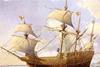
Wood conservation - the Mary Rose
The Mary Rose is a wooden Tudor warship that sank off Portsmouth in 1545. While on the sea bed, most of her hull became covered in silt, which effectively sealed it and the artefacts it contained in anaerobic (air-free) conditions and preserved them from decay.
-

-
 Resource
Experiment with the Vikings
A comprehensive collection of activities to incorporate science into your Vikings lessons. Topics include everyday life; weapons and warfare; travel and trade; and how modern day archaeologists use science to investigate Viking life.
-
 Lesson plan
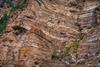
Why do sediments form layers? | 11-14 years
Explore the layered formation of sedimentary rocks using this lesson plan and set of downloadable activities for 11–14 year olds.
-
 Lesson plan
What is the rock cycle? | 11-14 years
Try this lesson plan and set of downloadable activities to help teach 11-14 year olds about sedimentary, metamorphic and igneous rocks and the rock cycle.
-
 Lesson plan
What happens to weathered pieces of rock? | 11-14 years
Investigate how rock fragments are transported and deposited by water currents using this lesson plan and downloadable activity for 11–14 year olds.
-
 Lesson plan
What are the effects of acid rain? | 11-14 years
Try this lesson plan for 11–14 year olds to investigate the effects of acid rain on metals and carbonate rocks through field work and an experiment.
-
 Lesson plan
Investigating the composition of limestone | 11-14 years
Use this lesson plan for 11–14 year olds to help your students plan, implement and evaluate a practical investigation to determine if all limestone is the same.