
- Home
- I am a …
- Resources
- Collections
- Starters for ten
- Screen experiments
- Assessment for learning
- Microscale chemistry
- Faces of chemistry
- Classic chemistry experiments
- Nuffield practical collection
- Anecdotes for chemistry teachers
- Literacy in science teaching
- Maths skills for chemistry
- More …
- Climate change and sustainability
- Alchemy
- On this day in chemistry
- Global experiments
- PhET interactive simulations
- Chemistry vignettes
- Context and problem based learning
- Journal of the month
- Chemistry and art
- Classic chemistry demonstrations
- In search of solutions
- In search of more solutions
- Creative problem-solving in chemistry
- Solar spark
- Chemistry for non-specialists
- Health and safety in higher education
- Analytical chemistry introductions
- Exhibition chemistry
- Introductory maths for higher education
- Commercial skills for chemists
- Kitchen chemistry
- Journals how to guides
- Chemistry in health
- Chemistry in sport
- Chemistry in your cupboard
- Chocolate chemistry
- Adnoddau addysgu cemeg Cymraeg
- The chemistry of fireworks
- Festive chemistry
- Collections
- Education in Chemistry
- Teach Chemistry
- Events
- Teacher PD
- Enrichment
- Our work
- More navigation items






Organic chemistry
Develop the knowledge and strategies you need to build your students’ understanding of organic compounds, reactions and mechanisms
Organic chemistry is an extensive topic in science, yet one where learners often develop misconceptions. This course will help you secure your understanding and refine your teaching. Across the course, which is available in three versions, you’ll deepen your subject knowledge and explore effective strategies to support learners aged 14+ and 16+ to develop a strong understanding of the topic.
Build your confidence at your own pace, with videos, multiple choice questions, discussion threads and activities to help you apply what you learn in your own classroom.
At a glance
- Format: self-led online learning
- Cost: from £100 + VAT
- Total length: 4–11 hours
- Available in: UK, EU and other selected countries
Save on our combined course, or choose the age range most relevant to you
Ages 14+ and 16+
Four modules covering the topics you’ll teach to 14+ and 16+ learners.
Key details
- Cost: £225 + VAT
- Total length: approx 11 hours
Ages 14+
Two modules introducing organic compounds and reactions at 14+.
Key details
- Cost: £100 + VAT
- Total length: approx 4 hours
Ages 16+
Two modules exploring organic chemistry at 16+, including reaction mechanisms.
Key details
- Cost: £150 + VAT
- Total length: approx 7 hours
Ages 14+ and 16+
Approx 11 hours | £225 + VAT
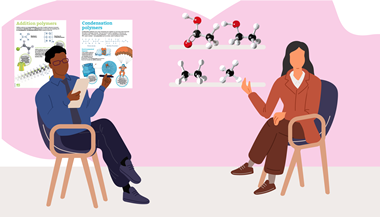
Save 10% on the combined cost of our Organic chemistry courses for learners aged 14+ and 16+. Cover everything you’ll teach across both age ranges, from the basics of organic compounds and reactions to mechanisms and curly arrow notation.
Course objectives
This course will help you to:
- strengthen your subject knowledge of organic chemistry, focusing on the models and explanations required for teaching learners aged 14+ and 16+.
- improve your pedagogical content knowledge, equipping you with the best ways to enhance learner understanding.
- identify and challenge common misconceptions related to organic compounds, reactions and mechanisms.
Crude oil (14+)
- Fractional distillation
- Properties of hydrocarbons
- Cracking
- Polymers/addition polymerisation
Organic compounds and reactions (14+)
- Alcohols
- Carboxylic acids
- Condensation polymerisation and amino acids
Organic chemistry I (16+)
- The basics: nomenclature and types of formulas
- Structural isomerism and stereoisomerism
- Alkanes and fuels
- Halogenoalkanes
- Alkenes
- Polymers
- Alcohols
- Aldehydes and ketones
Organic chemistry II (16+)
- Carboxylic acids and derivatives
- Aromatic compounds
- Amines
- Organic analysis
- Condensation polymers
- Amino acids, proteins and DNA
- Organic synthesis
Ready to enrol?
Your journey towards delivering better lessons and improving learner outcomes starts whenever you’re ready.
Ages 14+
Approx 4 hours | £100 + VAT
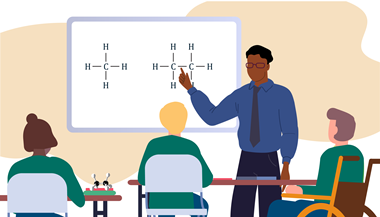
Focus on organic chemistry for learners aged 14+, including fractional distillation, cracking, polymerisation and organic compounds such as hydrocarbons, alcohols and carboxylic acids.
Course objectives
This course will help you to:
- strengthen your subject knowledge of organic chemistry, focusing on the models and explanations required for teaching learners aged 14+.
- improve your pedagogical content knowledge, equipping you with strategies to effectively introduce organic chemistry.
- identify and challenge common misconceptions related to organic compounds and reactions.
Crude oil (14+)
- Fractional distillation
- Properties of hydrocarbons
- Cracking
- Polymers/addition polymerisation
Organic compounds and reactions (14+)
- Alcohols
- Carboxylic acids
- Condensation polymerisation and amino acids
Ready to enrol?
Your journey towards delivering better lessons and improving learner outcomes starts whenever you’re ready.
Ages 16+
Approx 7 hours | £150 + VAT
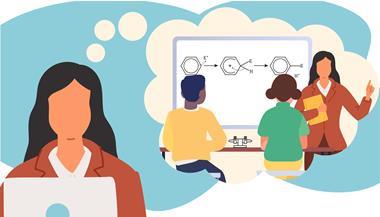
Teach organic chemistry to learners aged 16+ with confidence, including key organic compounds, reaction mechanisms, isomerism, organic analysis and more.
Course objectives
This course will help you to:
- strengthen your subject knowledge of organic chemistry, focusing on the models and explanations required for teaching learners aged 16+.
- improve your pedagogical content knowledge, including how to effectively explain curly arrow notation.
- identify and challenge common misconceptions related to organic compounds, reactions and mechanisms.
Organic chemistry I (16+)
- The basics: nomenclature and types of formulas
- Structural isomerism and stereoisomerism
- Alkanes and fuels
- Halogenoalkanes
- Alkenes
- Polymers
- Alcohols
- Aldehydes and ketones
Organic chemistry II (16+)
- Carboxylic acids and derivatives
- Aromatic compounds
- Amines
- Organic analysis
- Condensation polymers
- Amino acids, proteins and DNA
- Organic synthesis
Ready to enrol?
Your journey towards delivering better lessons and improving learner outcomes starts whenever you’re ready.
FAQs
Who is this course for?
This course is suitable for teachers at any career stage looking to develop their own understanding, teaching practice and confidence.
Will I receive a certificate?
For any version of the course, you will receive a certificate for each completed module, plus a certificate of course completion if you complete all modules in the course. To qualify for the certificates, you must complete all required tasks.
What if I don’t want to complete all modules?
You can take whichever modules you are interested in, but you will only receive a certificate of course completion once you have completed all of the modules and required tasks.
Which countries are these courses available in?
This course is currently available in the following countries: Australia, Austria, Bahamas, Bangladesh, Belgium, Brazil, Bulgaria, Cambodia, Canada, China, Croatia, Cyprus, Czechia, Denmark, Egypt, Estonia, Fiji, Finland, France, Germany, Ghana, Greece, Guernsey, Hong Kong S.A.R. China, Hungary, Iceland, India, Indonesia, Ireland, Isle of Man, Italy, Japan, Jersey, Jordan, Kuwait, Latvia, Lebanon, Lithuania, Luxembourg, Macao S.A.R. China, Malaysia, Malta, Mauritius, Netherlands, New Zealand, Norway, Pakistan, Philippines, Poland, Portugal, Qatar, Romania, Singapore, Slovakia, Slovenia, South Africa, South Korea, Spain, Sweden, Switzerland, Taiwan, Thailand, Uganda, United Kingdom, United States.
Our course authors
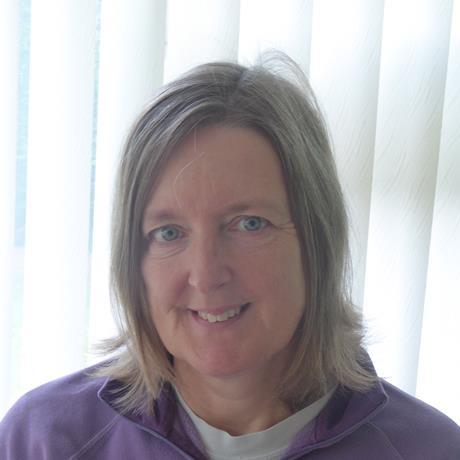
Dr Dorothy Warren
Dorothy is an independent science education consultant based in the UK.
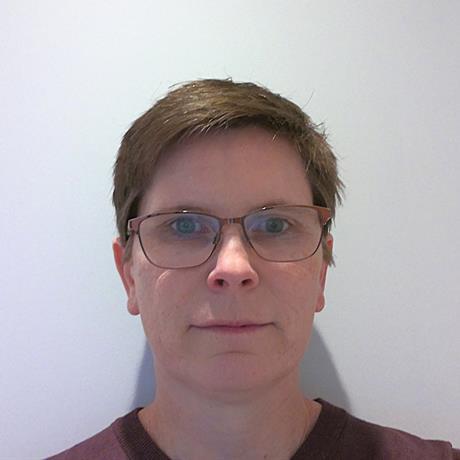
Dr Catherine Smith
Catherine is chemistry lead at The Hinckley School, an 11–18 academy in Leicestershire.

Dr Colin McGill
Colin is an associate professor in education and is responsible for subject-specific development.