

Slow down discovery to speed up chemistry learning by examining how teaching sequence, cognitive load and long-term memory affect learning
There is a commonly held belief that education should focus on the development of competences like creativity, critical thinking and communication skills rather than rote memorisation of facts. However, data from the Programme for International Student Assessment (PISA) over the past decade demonstrates that science performance in countries such as Scotland, where I’m based, is dropping. While this trend is likely due to multiple factors, it raises an important question: what if our assumptions about the best way to teach science are flawed?
There is a commonly held belief that education should focus on the development of competences like creativity, critical thinking and communication skills rather than rote memorisation of facts. However, data from the Programme for International Student Assessment (PISA) over the past decade demonstrates that science performance in countries such as Scotland, where I’m based, is dropping. While this trend is likely due to multiple factors, it raises an important question: what if our assumptions about the best way to teach science are flawed?
We all want our students to be creative critical thinkers with excellent communication skills, but I don’t think the dichotomy between methods of developing competences and teaching key knowledge is helpful.
Why knowledge matters
I’ve heard more than a few times that our students don’t need to remember anything anymore because all they’ll ever need is on a phone in their pocket. There’s a major flaw in this logic, though. Skills like creativity and critical thinking can’t be developed in a vacuum; they require the direct application of knowledge. You can’t think critically about climate change or battery technology without having some understanding of the topic – because of how our brains work.
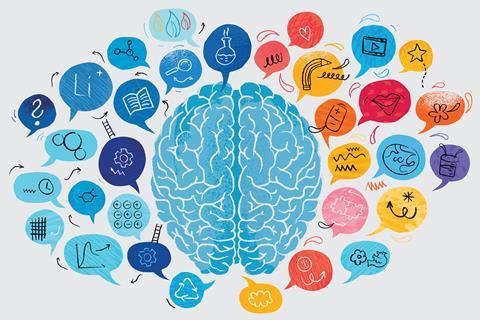
Our working memory, which processes new information, has limited capacity and gets overloaded easily when juggling multiple new ideas. Information stored in our long-term memory, however, can be accessed almost effortlessly. When a student has knowledge stored in their long-term memory, their working memory is freed up to focus on higher-order tasks like critical thinking and being creative. Without foundational knowledge, a student’s brain is simply too busy trying to process the basics to engage in any meaningful higher-order thinking.
Our working memory, which processes new information, has limited capacity and gets overloaded easily when juggling multiple new ideas (rsc.li/4s0n3LN). Information stored in our long-term memory, however, can be accessed almost effortlessly. When a student has knowledge stored in their long-term memory, their working memory is freed up to focus on higher-order tasks like critical thinking and being creative. Without foundational knowledge, a student’s brain is simply too busy trying to process the basics to engage in any meaningful higher-order thinking.
Discovery has boundaries
We need a curriculum that ensures our students develop key knowledge and understanding, but that also helps them to apply it meaningfully. So, how do we approach this? The pervasive belief is that student-led, enquiry-based learning – the idea that students better understand scientific concepts through self-discovery – is the best way to learn.
Here, again, research does not support this. For novice learners, discovery-based methods can be an inefficient way to learn new concepts. The very process of conducting an enquiry – following steps, measuring variables and recording data – can overwhelm a student’s limited working memory. This leaves very little mental bandwidth to grasp the underlying scientific principle.
This doesn’t mean we should abolish enquiry-based projects – but we should think about how we sequence teaching approaches. Researchers make a strong argument that enquiry methods work best after a student has gained expertise through teacher-led instruction.
This doesn’t mean we should abolish enquiry-based projects – but we should think about how we sequence teaching approaches (rsc.li/4lCKt7X). Researchers make a strong argument that enquiry methods work best after a student has gained expertise through teacher-led instruction.
Teacher-led is best
A study of PISA assessment data explored the relationship between teaching approach and science scores across six countries. The results showed a positive correlation between teacher-led instruction and PISA performance.
In light of this evidence, we should clarify a common misconception: teacher-led does not mean a teacher droning on at the front of a silent classroom. Effective teacher-led instruction is a highly interactive process where the teacher actively guides students through new material. This approach engages students, ensuring they build a solid understanding without overloading working memory.
A study of PISA assessment data explored the relationship between teaching approach and science scores across six countries. The results showed a positive correlation between teacher-led instruction and PISA performance (rsc.li/4s1dVa0).
In light of this evidence, we should clarify a common misconception: teacher-led does not mean a teacher droning on at the front of a silent classroom. Effective teacher-led instruction is a highly interactive process where the teacher actively guides students through new material. This approach engages students, ensuring they build a solid understanding without overloading working memory (rsc.li/4cynqIM).
What does this look like?
Effective teacher-led instruction:
- sets clear goals
- builds on prior knowledge
- models new skills
- provides guided and independent practice
- uses ongoing checks for understanding with feedback to support and challenge all students.
Teacher-led instruction helps students build a strong knowledge foundation in long-term memory. When that knowledge is secure, they can then apply it in more complex, enquiry-based projects.
Colin McGill









No comments yet