







All Primary collection: reversible/irreversible change articles – Page 3
-
 Resource
Magic sand
Putting the magic in magic sand this resource explores hydrophobic substances and how they work
-
 Resource
Irreversible changes: That’s Chemistry!
The ‘irreversible changes- chemical reactions’ chapter from That’s Chemistry! This chapter looks at key ideas and activities that can be used to help students learn how non-reversible changes result in the formation of new materials.
-
 Resource
Mixing and dissolving materials: That’s Chemistry!
The ‘mixing and dissolving materials’ chapter from That’s Chemistry! This chapter looks at key ideas and activities that can be used to help students learn that mixtures are made up of more than one substance and that some mixtures can be separated.
-
 Resource
Heating and cooling materials: That’s Chemistry!
The ‘heating and cooling materials’ chapter from That’s Chemistry! This chapter looks at key ideas and activities that can be used to help students learn how the properties of some materials change when they are heated, and that some of these changes are irreversible.
-
 Class experiment
Chemistry in your shopping basket
Demonstrate the diversity of chemistry in our day-to-day lives with this collection of experiments. Includes kit list and safety instructions for five practicals
-
 Resource
Cracking Chemistry!
Work your way through these fun chemistry practicals developed by National Science & Engineering Week.
-
 Resource
Burning: That’s Chemistry!
The ‘burning’ chapter from That’s Chemistry! This chapter looks at key ideas and activities that can be used to help students learn that when materials are burned new materials are formed, and that this process in not reversible.
-
 Class experiment
Acid or alkali? Acidic or alkaline? A litmus paper test
Test a variety of substances to see if they are acidic or alkaline, using litmus paper as the indicator. Includes kit list and safety instructions.
-
 Class experiment
Separating sand and salt by filtering and evaporation
Try this class experiment to practise manipulating mixtures of soluble and insoluble materials by separating sand and salt. Includes kit list and safety instructions.
-
 Class experiment
Science festivals
This set of handouts can be used to inspire people of all ages to take up chemistry in their own home! Racing raisins, cornflour gloop, erupting volcanoes, reaction times and iron from breakfast cereal are all covered here
-
 Resource
Modelling sedimentary rocks
Students use syringes to make samples of sedimentary rock from sand both with and without cementing agents.
-
 Resource
Weathering and erosion
Examine the ways in which water can weather rocks, by solution and by freeze-thaw.
-
 Resource
Hand warmers
Use these student activities and teacher guide to investigate reusable and disposable hand warmers. You will compare reusable variants made with sodium acetate vs disposable handwarmers. You can also try making your own hand warmers. These activities may work well as a project on class topics like ‘winter’ or ‘body ...
-
 Resource
Limestone weathering
This activity is designed for students aged 11-14. It can be used to reinforce work on the reactions of carbonates with acids as well as the chemical weathering of rock.
-
 Resource
Making a volcano
Simulate ways in which both extrusive and intrusive igneous rocks may form
-
 Class experiment
Colour chemistry
A variety of experiments that explore colour changing, so learners can experience a comprehensive look into the brighter side of chemistry
-
 Resource
Wood conservation - the Mary Rose
The Mary Rose is a wooden Tudor warship that sank off Portsmouth in 1545. While on the sea bed, most of her hull became covered in silt, which effectively sealed it and the artefacts it contained in anaerobic (air-free) conditions and preserved them from decay.
-

-
 Resource
Experiment with the Vikings
A comprehensive collection of activities to incorporate science into your Vikings lessons. Topics include everyday life; weapons and warfare; travel and trade; and how modern day archaeologists use science to investigate Viking life.
-
 Lesson plan
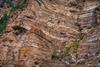
Why do sediments form layers? | 11-14 years
Explore the layered formation of sedimentary rocks using this lesson plan and set of downloadable activities for 11–14 year olds.
- Previous Page
- Page1
- Page2
- Page3
- Page4
- Next Page