








All Atomic structure articles
-
 Question sheet
Atomic structure | Review my learning worksheets | 14–16 years
Identify learning gaps and misconceptions with this set of worksheets offering three levels of support
-
 Question sheet
Adeiledd atomig | Taflenni gwaith Adolygu fy nysgu | 14–16 oed
Defnyddiwch y set hon o daflenni gwaith, sy’n cynnig tair lefel o gefnogaeth, i ddod o hyd i fylchau yn y dysgu a chamsyniadau
-
 Resource
Atoms and ions | Review my learning worksheets | 14–16 years
Identify learning gaps and misconceptions with this set of worksheets offering three levels of support
-
 Resource
Atomau ac ïonau | Taflenni gwaith Adolygu fy nysgu | 14–16 oed
Defnyddiwch y set hon o daflenni gwaith, sy’n cynnig tair lefel o gefnogaeth, i ddod o hyd i fylchau yn y dysgu a chamsyniadau
-
 Lesson plan
Light and electrons in energy levels | Fundamentals of chemistry | 16–18 years
Use this flipped learning worksheet and student sheet to revise atomic models and then move on to electromagnetic radiation
-
 Lesson plan
Modelling radioactive decay | Fundamentals of chemistry | 16–18 years
Use this flipped learning worksheet and student sheet to revise fusion and nuclear equations and introduce decay
-
 Lesson plan
Nuclear fusion | Fundamentals of chemistry | 16–18 years
Use this flipped learning worksheet and student sheet to revise subatomic particles and introduce nuclear fusion
-
 Lesson plan
Counting protons, neutrons and electrons | Fundamentals of chemistry | 16–18 years
Use this flipped learning worksheet and student sheet to revise and develop understanding of subatomic particles
-
 Lesson plan
Developing a model of the atom | Fundamentals of chemistry | 16–18 years
Use this flipped learning worksheet and student sheet to revise and develop understanding of atomic structure and how it is represented in chemistry
-
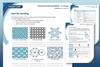 Resource
Chemical misconceptions II: Spot the bonding | 16–18 years
This activity explores learners knowledge of different bonding types through 18 diagrams
-
 Ideas
IdeasWays to teach atoms and ions
Use these six approaches to ensure learners master ion formation at 14–16
-
 Games and puzzles
Atoms, molecules and ions 4-in-a-line
Match the symbol or the particle diagram to the type of particle it represents. Get 4-in-a-line to win!
-
 Games and puzzles
4-mewn-llinell atomau, moleciwlau ac ïonau
Parwch y symbol neu’r diagram gronynnau â’r math o ronyn y mae’n ei gynrychioli. Y cyntaf i gael 4-mewn-llinell fydd yn ennill!
-
 Poster
Popeth sydd ei angen arnoch i addysgu adeiledd yr atom
Drwy ddefnyddio’r poster a’r daflen ffeithiau, bydd eich dysgwyr 14–16 oed yn gwybod y gwahaniaeth rhwng electronau a phrotonau mewn dim o dro
-
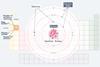 Poster
Everything you need to teach the structure of the atom
With this poster and fact sheet, your 14–16 learners will soon know their electrons from their protons
-
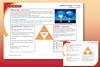 Resource
Isotopes of hydrogen | Johnstone’s triangle | 14–16 years
Use this worksheet to develop learners’ understanding of atoms and isotopes by considering ‘heavy water’ ice cubes
-
 Resource
Atoms and isotopes | Developing understanding | 14–16 years
Encourage learners to deepen their understanding of isotopes from the macroscopic to sub-microscopic level
-
 Resource
Atoms and ions | Developing understanding | 14–16 years
Encourage learners to think about how atoms and ions are represented and what this means at the sub-microscopic level
-
 Resource
Atoms and ions of copper | Johnstone’s triangle worksheets | 14–16 years
Use these worksheets to develop learners’ understanding of atoms and ions, including a demonstration of a metal displacement reaction
-
 Resource
Atomic structure | Developing understanding | 14–16 years
Encourage learners to think about how the atomic structure is represented and what this means at the sub-microscopic level