









All Atomic structure articles – Page 7
-

-
 Resource
On This Day – Aug 02 : Discovery of positrons
He was examining chamber photographs of cosmic rays when he realised that the tracks orientation revealed the existence of positively charged particles too small to be protons. These sub-atomic particles have the same mass as an electron, but with a positive charge.
-
 Resource
On This Day - May 03 : George Thomson was born
Thomson shared the Nobel Prize in Physics in 1937 with Clinton Davisson for their discovery of the wave properties of electrons when diffracted by crystals. He was the son of Nobel laureate Joseph John Thompson.
-
 Resource
On This Day - Oct 04 : Kenichi Fukui was born
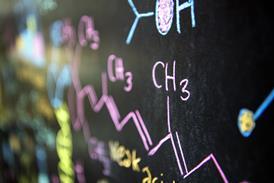
His career was devoted to explaining the nature of chemical reactions. He shared the 1981 Nobel Prize in Chemistry for his investigation into the mechanisms of chemical reactions. Specifically, this was for his work on the role of frontier orbitals, which have loosely bonded electrons.
-
 Resource
On This Day - Mar 07 : The atomic nucleus revealed
The New Zealand chemist explained that when firing alpha particles at a thin sheet of gold, some particles bounced back. From this he deduced an atom has a hard, dense, positively charged centre: the nucleus. Related resources: Understanding how atoms are made up Royal Institution Christmas Lectures® 2012: ...
-
 Resource
On This Day - Jun 07 : Robert Mulliken was born
He won the 1966 Nobel Prize in Chemistry for developing the molecular orbital theory. Mulliken carried out the “fundamental work concerning chemical bonds and the electronic structure” used to determine the molecular structure of a compound.
-
 Resource
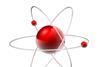
On This Day - Oct 07: Niels Bohr atom
He described the atom as a miniature solar system with electrons revolving around a heavy nucleus. He received the 1922 Nobel Prize in Physics for “his services in the investigation of the structure of atoms and of the radiation emanating from them.”
-
 Resource
On This Day - Jul 09 : Ben Mottelson was born
Together with Aage N. Bohr and James Rainwater, Mottelson developed models of the atomic nucleus that considered the effects of internal structure on properties such as charge distribution. The trio won the 1975 Nobel Prize in Physics.
-
 Resource
On This Day – Sep 19 : Chemical structure defined
Chemical structure refers to the way atoms are arranged within molecules. Butlerov realised that chemical compounds are not a random cluster of atoms and functional groups, but structures with definite order.
-
 Resource
On This Day - Oct 20 : James Chadwick was born
By bombarding the element beryllium (Be) with alpha particles, he discovered a neutral particle in the atom’s nucleus - the neutron. Chadwick subsequently led the UK’s research team investigating the atomic bomb in World War II.
-
 Resource
On This Day – Jul 24 : Sir James Chadwick died
He received the Nobel Prize in Physics 1935 for his discovery of the neutron, a subatomic particle with zero electrical charge. Neutrons are found in the nucleus of all elements (except hydrogen) along with protons, which carry a positive charge.
-
 Resource
On This Day - Apr 25 : Wolfgang Pauli was born
He is most famous for the Pauli “exclusion principle”, which states that in an atom no two electrons can occupy the same quantum state simultaneously. He was awarded the Nobel Prize in Physics in 1945 for his work.
-
 Resource
On This Day - Feb 29 : Bohr issued bowl of balls
Danish physicist Niels Henrik David Bohr made fundamental contributions to the understanding of atomic structure and quantum mechanics, for which he received the Nobel Prize in Physics in 1922.
-
 Resource
On This Day - Apr 30 : Discovery of the electron
Thomson was studying the properties of cathode rays, and found that they were over 1,000 times lighter than the hydrogen (H) atom and that they were the same mass irrespective of the parent atom. He called these particles “corpuscules”, but scientists later dubbed them “electrons”.
-
 Resource
On This Day - Oct 31 : Robert Mulliken died
He was awarded the 1966 Nobel Prize in Chemistry for his work on chemical bonds and describing the electronic structure of molecules using the molecular orbital method. His research still leads this field.
-
 Resource
28 chemistry puzzles for 14-16 years
Use these sudoku-inspired puzzles with printable worksheets and answers to help 14–16 year olds consolidate their understanding of key chemical concepts.
-
 Resource
28 o bosau cemeg i fyfyrwyr 14–16 oed
Defnyddiwch y posau hyn, sydd wedi’u hysbrydoli gan sudoku, ynghyd â’r taflenni gwaith a’r atebion y gallwch eu hargraffu, i helpu pobl ifanc 14–16 oed i gyfnerthu eu dealltwriaeth o gysyniadau cemegol allweddol.
-
 Resource
45 chemistry puzzles for 16-18 years
Try these chemistry puzzles based on sudoku to help 16–18 year old students consolidate their knowledge about key topics, with printable worksheets and answers.
-
 Feature
Chemical Bonding
A masterclass in teaching the topic of bonding, basing chemical explanation on physical forces
-
 Feature
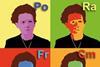
Four Curie centennial elements
The four Curie elements provide us with an interesting tour of the bottom of the periodic table