









Use scaffolded prompts to support learners to write about cracking
-
Download this
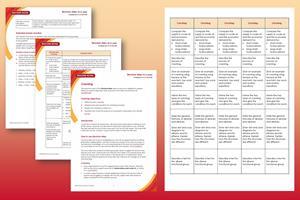
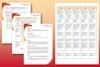
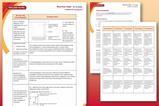
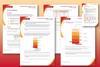
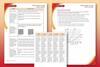
Stick these structure strips into the margin of a page to support learners to find or retrieve information and write independently about cracking. The resource includes editable writing prompts, an extension question and example answers.
View and download more Structure strips
Learning objectives
- Define the term cracking.
- Interpret and write equations for cracking processes.
- Explain why cracking is carried out.
- Describe how to test the products of cracking for unsaturation (C=C double bonds).
Introduction
Crude oil is a mixture of compounds, with long-chain hydrocarbons making up most of this mixture. However, the demand for long-chain hydrocarbons is low, whereas the high demand for short-chain molecules is not met by their supply. The long-chain molecules can be ‘cracked’ to give shorter chains to meet this demand.
How to use structure strips
Structure strips are a type of scaffolding you can use to support learners to retrieve information independently. Use them to take an overview at the start of the topic, to activate prior knowledge, or to summarise learning at the end of a teaching topic. For more ideas on how to use structure strips with your learners, visit 5 ways to scaffold learning with structure strips. If you need convincing to give them a try, read Why you should use structure strips.
Structure strips have sections containing prompts, sized to suggest the amount that learners must write. Learners glue the strips into the margin of an exercise book and write their answers next to the sections, in full sentences. When learners have finished using the structure strip, they should have an A4 page set of notes and examples.
The strips are printed five to a page and will need to be trimmed to size. Find them on the second page of the student sheet.
This resource is part of our support for literacy in science teaching, designed to embed literacy into your curriculum and develop learners’ skills in reading, writing and talking about science and their understanding of scientific language.
Scaffolding
- Encourage learners to use the suggested keywords in their answers. These link with our key terms support resources for hydrocarbons and crude oil.
- To further support learners, include additional prompts in the structure strip. If learners are struggling to engage with the task, supply them with sentence starters created from the example answers.
- As learners grow in confidence, ask them to attempt the extension question first and then use the structure strip to improve or self-assess their answers.
Keywords
Catalytic cracking, steam cracking, alkane, alkene, saturated, unsaturated, hydrocarbon.
Metacognition
This resource supports learners to develop their metacognitive skills in three key areas.
- Planning: the strips provide scaffolding to plan the written response. Learners will decide where to gather information from (textbooks, own notes, revision websites). Ask learners: is the source of information you are using reliable?
- Monitoring: learners are prompted by the questions in the structure strip and can check their own answers against the prompts. Ask learners: have you covered all of the prompts in the space provided? Do you need to change anything to complete the task?
- Evaluation: learners can self-assess or ask a peer to check their work against the answers. Ask learners: did you achieve what you meant to achieve? What will you do differently another time?
Answers
Suggested answers for the structure strip activity are given in the downloadable teacher notes.
Answer to extension question
Learners are asked several questions about octane. Example answers are provided in the downloadable teacher notes.
Downloads
Cracking structure strip student sheet
Handout | PDF, Size 0.18 mbCracking structure strip teacher notes
Handout | PDF, Size 0.25 mbCracking structure strip student sheet
Editable handout | Word, Size 0.44 mbCracking structure strip teacher notes
Editable handout | Word, Size 0.46 mb
- Prepare(1)
 Ideas
Tie sustainable industry into your chemistry topics
Complement your teaching of reaction kinetics, catalysts and equilibrium with UN sustainable development goal 9
- Deliver(4)
currently reading
 Resource
Cracking | Structure strip | 14–16 years
Use scaffolded prompts to support learners to write about cracking with confidence
 Class experiment
Microscale simple cracking
Use this microscale experiment to illustrate hydrocarbon cracking. Includes integrated instructions, discussion questions and full technician notes
 Resource
Cracking alkanes | Johnstone’s triangle | 14–16 years
Secure learners understanding of the process of cracking paraffin at macroscopic, sub-microscopic and symbolic levels

- Literacy(2)
 Resource
Crude oil | Reading comprehension | 14–16
Practise reading comprehension skills with a science research article about turning waste into fuel
 Resource
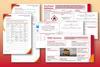
Hydrocarbons and crude oil | Key terms support | 14–16
Language support pack for introductory organic chemistry topics, including fractional distillation, properties of hydrocarbons, cracking and addition polymers
- Assess(2)
 Resource
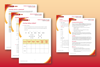
Cracking | Review my learning worksheets | 14–16 years
Identify learning gaps and misconceptions with this set of worksheets offering three levels of support
 Resource
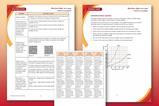
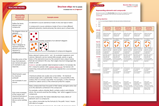
Cracking hydrocarbons – organic chemistry worksheets | 14–16
Student worksheets at foundation and higher level. Apply knowledge in context and assess learning with questions that explore cracking hydrocarbons, including an experiment with liquid paraffin.
- Enrich(2)
 News
Nanocrystals could help hydrogen fuel go mainstream
Connect ideas about nanoparticles and catalysis to emerging hydrogen technologies
 Job profile
Project leader in enhanced experimentation, oil & gas
Stuart brings good ideas to business faster by finding better tools and methods for researchers.

No comments yet