



Could increasing ocean acidity mean sharks lose their bite?
-
Download this
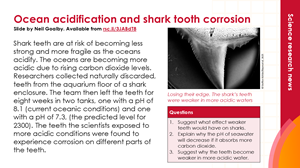
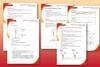
Use this story and the accompanying summary slide for a real-world context when teaching climate change and acids at 14–16.
Download the story as MS Word or PDF and the summary slide as MS PowerPoint or PDF.
Shark teeth are at risk of becoming more fragile as the oceans acidify due to rising carbon dioxide levels.
Researchers at Heinrich Heine University Düsseldorf made the discovery when they collected naturally discarded, intact teeth from the aquarium floor of a blacktip reef shark enclosure at Sea Life Oberhausen. They incubated the teeth for eight weeks in two separate tanks, one with a pH of 8.1 representing current oceanic conditions and one with a pH of 7.3, corresponding to the predicted conditions for 2300.
The loss of the serrations is particularly concerning, as sharks need these to bite into their prey and break it down into smaller pieces for swallowing
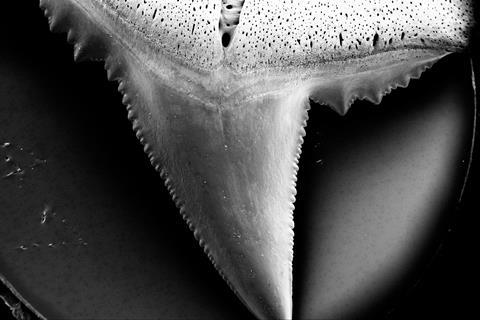
The researchers found the teeth they exposed to more acidic conditions experienced corrosion on the root, crown and serrations – compromising the teeth’s overall strength and causing them to break more easily. The loss of the serrations is particularly concerning, as sharks need these to bite into their prey and break it down into smaller pieces for swallowing.
Climate change and an uncertain future
You’re gonna need a bigger dataset
However, the scientists say that these laboratory results may not reflect what will actually happen in living sharks, as nature can sometimes adapt to changing conditions. Previous studies, for example, have shown that some shark species increase fluoride content in teeth in response to ocean acidification, which can help to protect teeth. Further research is needed on how increasingly acidic waters affect living blacktip reef sharks’ teeth.
The acidity of oceans is increasing as a direct consequence of rising carbon dioxide levels in the atmosphere. Carbon dioxide from the atmosphere dissolves in oceans making the water more acidic. Scientists estimate that the oceans have taken up more than 30% of the carbon dioxide released from burning fossil fuels and deforestation since the industrial revolution.
This article is adapted from Mariana Kneppers’ in Chemistry World.
Nina Notman
Reference
M Baum et al, Front. Mar. Sci., 2025, doi.org/10.3389/fmars.2025.1597592
Download this
Summary slide with questions and the article for context when teaching 14–16 lessons on climate change and acids: rsc.li/3JH6L9U
Downloads
Ocean acidification could cause shark tooth corrosion student sheet
Handout | PDF, Size 0.34 mbOcean acidification could cause shark tooth corrosion summary slide
Presentation | PDF, Size 0.93 mbOcean acidification could cause shark tooth corrosion student sheet
Editable handout | Word, Size 0.56 mbOcean acidification could cause shark tooth corrosion summary slide
Presentation | PowerPoint, Size 2.22 mb
References
M Baum et al, Front. Mar. Sci., 2025, doi.org/10.3389/fmars.2025.1597592





No comments yet