









All Acids and bases articles – Page 7
-
 Class experiment
Equilibria involving carbon dioxide in aqueous solution
Use this demonstration or class practical to illustrate changes to equilibria in carbonated soda water. Includes kit list and safety instructions.
-
 Resource
Invisible inks
In this experiment, students test a variety of substances to see if they can be used as an invisible ink.
-
 Demonstration
What makes a substance acidic?
Try these experiments to investigate acidity and learn how the acidic properties of some substances require water. Includes kit list and safety instructions.
-
 Exhibition chemistry
Alkali metal roulette
Declan Fleming takes the reactions of alkali metals in water a step further
-
 Demonstration
Investigating the role of water in acidity
Try this practical or demonstration to explore the importance of water for acidity using hydrogen chloride and methylbenzene. Includes kit list and safety instructions.
-
 Demonstration
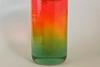
Universal indicator ‘rainbow’
Try this demonstration to create a rainbow effect using universal indicator, hydrochloric acid and sodium hydroxide. Includes kit list and safety instructions.
-
 Class experiment
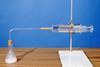
The rate of reaction of magnesium with hydrochloric acid
A class practical on reacting magnesium with hydrochloric acid and how to measure the rate of reaction. Includes kit list and safety instructions.
-
 Resource
Chemistry stinks - olfactory indicators experiment
Chemicals that change colour with pH are frequently used as indictors for acid-base titrations. The aim of this experiment it to determine the concentration of an unknown base using garlic powder as an olfactory indicator. Chemistry stinks – olfactory indicators experiment Class practical Chemicals that change colour with pH ...
-
 Class experiment
The acidic reactions of ethanoic acid
Explore the properties of ethanoic acid as a weak organic acid in this class experiment. Includes kit list and safety instructions.
-
 Class experiment
Reactions of metals with acids producing salts
Explore the production of hydrogen gas and salts when metals react with acids in this class experiment. Includes kit list and safety instructions
-
 Opinion
Five ideas in chemical education that must die: pH 7 is neutral
Eric Scerri takes on the idea that pH 7 and neutral always coincide, and explains why it doesn't necessarily tell the whole story
-
 Opinion
Five ideas in chemical education that must die
Eric Scerri explores outdated chemical concepts
-
 Class experiment
Testing the pH of oxides
Use this class practical to investigate the pH of different metal and non-metal oxides using a universal indicator. Includes kit list and safety instructions.
-
 Demonstration
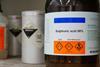
Sulfuric acid as a dehydrating agent
Try these two demonstrations to illustrate the difference between dehydration and drying using sulfuric acid. Includes kit list and safety instructions.
-
 Class experiment
The properties of alcohols
Ethanol and propan-1-ol are tested for pH, reaction with sodium, combustion and oxidation with acidified dichromate(VI) solution. Includes kit list and safety instructions.
-
 Class experiment
Reacting copper(II) oxide with sulfuric acid
Illustrate the reaction of an insoluble metal oxide with a dilute acid to produce crystals of a soluble salt in this class practical. Includes kit list and safety instructions.
-
 Resource
Problem based practical activities
Discover how chemistry can relate to real world problems, so students can put their science knowledge into context.
-
 Resource
Universal indicators
This activity develops understanding of universal indicators and single indicators. The students build up their understanding by mixing two indicators. They also develop an awareness that the observed colour may be due to a mixture of colours.
-
 Class experiment
A thermometric titration
Use this class practical to practise locating end-points in titration by measuring temperature during the reaction. Includes kit list and safety instructions.
-
 Class experiment
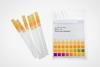
Neutralising an acidic solution
Use this simple practical to illustrate the pH and temperature changes as an acidic solution is neutralised. Includes kit list and safety instructions.