



All Compounds and mixtures articles – Page 5
-
 Resource
Colourful food: kitchen science podcasts
Introduce your students to colours in food with this short podcast.
-
 Resource
Mixing and changing: primary science podcasts
Introduce your students to mixing and separating mixtures, and investigating reversible and irreversible changes with this short podcast.
-
 Resource
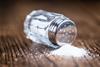
Salt: primary science podcasts
Join Kareena and her superhero friend K-mistry for this short podcast introducing children to dissolving.
-
 Resource
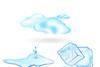
Solids, liquids and gases: That’s Chemistry!
The ‘solids, liquids and gases’ chapter from That’s Chemistry! This chapter looks at key ideas and activities that can be used to help students learn about solids, liquids and gases, and understand that some materials change state when they are heated or cooled.
-
 Resource
Separating mixtures: That’s Chemistry!
The ‘separating mixtures’ chapter from That’s Chemistry! This chapter looks at key ideas and activities that can be used to help students learn how sieving can separate particles of different sizes and other methods used for separating mixtures.
-
 Resource
Irreversible changes: That’s Chemistry!
The ‘irreversible changes- chemical reactions’ chapter from That’s Chemistry! This chapter looks at key ideas and activities that can be used to help students learn how non-reversible changes result in the formation of new materials.
-
 Resource
Mixing and dissolving materials: That’s Chemistry!
The ‘mixing and dissolving materials’ chapter from That’s Chemistry! This chapter looks at key ideas and activities that can be used to help students learn that mixtures are made up of more than one substance and that some mixtures can be separated.
-
 Resource
Heating and cooling materials: That’s Chemistry!
The ‘heating and cooling materials’ chapter from That’s Chemistry! This chapter looks at key ideas and activities that can be used to help students learn how the properties of some materials change when they are heated, and that some of these changes are irreversible.
-
 Resource
Cracking Chemistry!
Work your way through these fun chemistry practicals developed by National Science & Engineering Week.
-
 Class experiment
Separating sand and salt by filtering and evaporation
Try this class experiment to practise manipulating mixtures of soluble and insoluble materials by separating sand and salt. Includes kit list and safety instructions.
-
 Resource
Chemistry in your cupboard: Calgon
Link the post-16 topics of group 2 elements, acids and bases and polymerisation to the topic of hardness of water.
-
 Resource
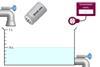
Concentration simulation
Explore concentration with this interactive simulation. Add different solutes to water and adjust the controls to change their concentration:
-
 Demonstration
Sodium ethanoate ‘stalagmite’
Quickly grow your own ‘stalagmite’ from a supersaturated solution of sodium ethanoate in this demonstration. Includes kit list and safety instructions.
-
 Resource
Maya and Aztecs: science ideas webs
A web of suggested ideas for linking science with the topic the Maya and Aztecs. You can learn history and science together with activities for different age groups.
-
 Class experiment
Purifying an impure solid
Purify alum as an example of obtaining a pure chemical from an impure sample in this class practical. Includes kit list and safety instructions.
-
 Class experiment
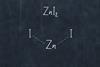
Exothermic redox reaction of zinc with iodine
Using an exothermic redox reaction between zinc and iodine, student will make zinc iodide. This can be reversed using electrolysis to decompose the compound.
-
 Class experiment
Displacement reactions of non-metals
Investigate a displacement series of non-metals using oxygen and chlorine in this class practical or demonstration. Includes kit list and safety instructions.
-
 Demonstration
Recovering water from a solution using a condenser
Use this demonstration to show how pure water can be recovered from copper sulfate solution using a condenser. Includes kit list and safety instructions.
-
 Resource
Making concrete
In this experiment, students determine how different sized materials with binder increase the stability and strength of mortar and concrete. Also, students can test how altering the proportions of cement, water and different aggregates affects concrete’s properties.
-
 Class experiment
What ions cause hardness in water?
Investigate how different cations and anions in dissolved salts affect the formation of a lather in this experiment. Includes kit list and safety instructions.