










Support your learners to develop mental models and deepen their understanding of alkanes and their boiling points
Developing understanding is a series of resources that encourages learners to connect their thinking at the macroscopic, sub-microscopic and symbolic levels.
-
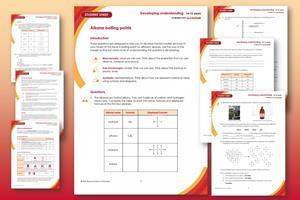
Download this
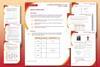
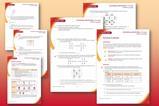
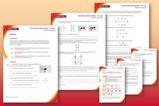
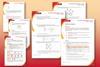
A ramped worksheet to help learners with their understanding of the boiling points of alkanes. With icons to indicate the conceptual level/s of each question.
View and download more Developing understanding worksheets
Learning objectives
- Write the formula and displayed formula of any of the first four alkanes.
- Determine the state of an alkane at a given temperature from boiling point and melting point data.
- Explain why the alkanes have different boiling points.
- Explain the trend in boiling point of the alkanes.
How to use this resource
This resource aims to develop learners’ understanding of the different boiling points of alkanes. The questions encourage learners to think at the macroscopic, sub-microscopic and symbolic levels about why different alkanes have different boiling points and the trend in boiling points. As a result, learners should develop more secure mental models to support their thinking about this topic.
- When to use? Use after initial teaching or discussion of this topic to develop ideas further. You can also use as a revision activity.
- Group size? Suitable for independent work either in class or at home. Or use the questions for group or class discussions.
- How long? 15–30 mins
Johnstone’s triangle
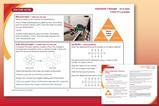
Johnstone’s triangle is a model of the three different conceptual levels in chemistry: macroscopic, sub-microscopic and symbolic. You can use Johnstone’s triangle to build a secure understanding of chemical ideas for your learners.
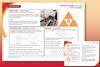
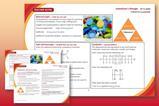
Introduce learners to Johnstone’s triangle with our Alkane boiling points Johnstone’s triangle worksheet which guides learners to connect their understanding of the macroscopic properties of octane and butane with their symbolic representations.
Further reading
Read more about how to use Johnstone’s triangle in your teaching with these articles:
- Develop deeper understanding with models
- Improve students’ understanding with Johnstone’s triangle
- Practical ideas for using Johnstone’s triangle
Norman Reid’s book The Johnstone triangle: the key to understanding chemistry provides an more in-depth overview; the first chapter is available to read online.
Johnstone’s triangle and this resource
The icons in the margin indicate which level of understanding each question is developing so as to help prompt learners in their thinking.
- Macroscopic: what we can see. Think about the properties that we can observe, measure and record.
- Sub-microscopic: smaller than we can see. Think about the particle or atomic level.
- Symbolic: representations. Think about how we represent chemical ideas using symbols and diagrams.
The levels are interrelated; for example, learners need visual representation of the sub-microscopic in order to develop mental models of the particle or atomic level. Our approach has been to apply icons to questions based on what the learners should be thinking about.
Questions may be marked with two or all three icons, indicating that learners will be thinking at more than one level. However, individual parts of the question may require learners to think about only one or two specific levels at a time.
Support
This worksheet is ramped so that the earlier questions are more accessible. The activity becomes more challenging in the later questions, so you may want to give extra explanations for these. If completing the worksheet as an in-class activity, it is best to pause and check understanding at intervals, as often one question builds on the previous one.
Give learners physical models to use and manipulate, such as Molymod kits.
Additional support may be needed for any learners still lacking in confidence in the required symbolic representation, for example, by sharing and explaining a diagram or a simulation that can show movement of the particles.
Answers and guidance
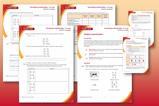
There are four multi-part questions in the student worksheet. Answers can be found in the teacher notes.
In the first question, learners build understanding of the representation of the first four alkanes with a chemical formula or displayed formula (symbolic understanding). This question also consolidates their understanding of the alkane molecules consisting of carbon and hydrogen atoms only (sub-microscopic understanding).
The second question develops learners’ understanding of how to use melting and boiling points to determine the state of a substance at a given temperature (macroscopic understanding).
Question three develops learners’ understanding of how different alkanes are in different states at room temperature (macroscopic understanding) and of why this is in terms of differences in forces of attraction between molecules (sub-microscopic understanding).
In the fourth question, learners’ understanding of the trend in boiling points of the alkanes (macroscopic understanding) and of why this occurs in terms of the connection between the length of the molecules and the strength of the forces of attraction between them (sub-microscopic understanding).
Downloads
Alkane boiling points developing understanding student sheet
Handout | PDF, Size 0.34 mbAlkane boiling points developing understanding teacher notes and answers
Handout | PDF, Size 0.28 mbAlkane boiling points developing understanding student sheet
Editable handout | Word, Size 0.65 mbAlkane boiling points developing understanding teacher notes and answers
Editable handout | Word, Size 0.55 mb
- Deliver(2)
currently reading
 Resource
Alkane boiling points | Developing understanding | 14–16 years
Including teacher notes and a student worksheet, this resource aims to help learners understand the trend in boiling points for different alkanes
 Resource
Alkane boiling points | Johnstone’s triangle | 14–16 years
Connect learners’ thinking about the alkanes octane and butane and their boiling points at different conceptual levels


No comments yet