








All Class experiment articles – Page 9
-
 Class experiment
Sherbet and popping candy: edible experiments
What makes sherbet fizz, and what makes popping candy pop? Discover the importance of chemistry in everyday eating experiences with this edible experiment
-
 Class experiment
Colourful chemistry
Get colourful with chemistry with these experiments, perfect for learners to explore density and liquids
-
 Class experiment
Chromatography: how black is a black pen?
Black never goes out of style, and with this experiment learners can explore what colours go into making black ink with chromatography
-
 Class experiment
Crystal chemistry
A fun experiment to grow your own crystals using everyday items in your learning space, great to get learners interacting with science
-
 Class experiment
Crime scene chromatography
Using three different black pens, learners can put their scientific curiosity to use and explore chromatography
-
 Class experiment
Chemistry in your shopping basket
Demonstrate the diversity of chemistry in our day-to-day lives with this collection of experiments. Includes kit list and safety instructions for five practicals
-
 Class experiment
Acid or alkali? Acidic or alkaline? A litmus paper test
Test a variety of substances to see if they are acidic or alkaline, using litmus paper as the indicator. Includes kit list and safety instructions.
-
 Class experiment
Separating sand and salt by filtering and evaporation
Try this class experiment to practise manipulating mixtures of soluble and insoluble materials by separating sand and salt. Includes kit list and safety instructions.
-
 Class experiment
Science festivals
This set of handouts can be used to inspire people of all ages to take up chemistry in their own home! Racing raisins, cornflour gloop, erupting volcanoes, reaction times and iron from breakfast cereal are all covered here
-
 Class experiment
Colour chemistry
A variety of experiments that explore colour changing, so learners can experience a comprehensive look into the brighter side of chemistry
-
 Class experiment
Chemiluminescence of luminol: a cold light experiment
Show how the energy of a chemical reaction can be given out as light. Includes kit list and safety instructions.
-
 Class experiment
Flame colours: a demonstration
Explore how different elements rect when exposed to a flame, and discuss how alkali metals, alkaline earth metals, and metal salts change the colour of fire.
-
 Class experiment
Microscale extraction of copper
Try this practical to reduce copper(II) oxide to copper using hydrogen, revealing their positions in the reactivity series. Includes kit list and safety instructions.
-
 Class experiment
Investigating the solubility of lead halides
Encourage students to make and test predictions about the pattern of solubility among lead halides in this practical. Includes kit list and safety instructions.
-
 Class experiment
Extraction of iron on a match head
Try this practical as a small scale example of metal extraction, reducing iron(III) oxide with carbon on a match head. Includes kit list and safety instructions.
-
 Class experiment
Colourimetric determination of copper ore
Use this practical to introduce students to the determination of copper ore by colourimetry using copper(II) sulfate. Includes kit list and safety instructions.
-
 Class experiment
Purifying an impure solid
Purify alum as an example of obtaining a pure chemical from an impure sample in this class practical. Includes kit list and safety instructions.
-
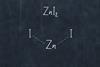 Class experiment
Exothermic redox reaction of zinc with iodine
Using an exothermic redox reaction between zinc and iodine, student will make zinc iodide. This can be reversed using electrolysis to decompose the compound.
-
 Class experiment
Solubility trends of metal halides
Investigate patterns in the solubility of halides of silver and some Group 1 and 2 metals in this microscale practical. Includes kit list and safety instructions.
-
 Class experiment
Solubility patterns of halogen anions
Try this microscale practical to identify and explain patterns in the solubility of fluoride, chloride, bromide and iodide anions. Includes kit list and safety instructions.