








All articles by Helen Harden
-
 Resource
Bioethanol | Johnstone’s triangle | 11–14 years
Connect understanding about the macroscopic properties of elements and compounds at a sub-microscopic and symbolic level
-
 Resource
Filtration | Developing understanding | 11–14 years
Support learners to develop secure mental models of how filtration can be used to separate mixtures
-
 Resource
Filtering muddy water | Johnstone’s triangle | 11–14 years
Use Johnstone’s triangle to explain how filtration can be used to separate mixtures
-
 Resource
Limiting and excess reactants: quantitative | Developing understanding | 14–16 years
Develop learners quantitative understanding of limiting and excess reactants with the support of bar diagrams
-
 Resource
Bondio ïonig | Datblygu dealltwriaeth | 14–16 oed
Datblygu dealltwriaeth y dysgwyr o ddellt ïonig drwy gymharu cynrychioliadau 2D a 3D
-
 Resource
Decomposition of calcium carbonate | Johnstone’s triangle worksheets | 14–16 years
Think about reacting masses and gas volumes in the context of a decomposition reaction
-
 Resource
C, O and Co | Johnstone’s triangle | 11–14 years
Develop your learners’ understanding of symbols and formulas at different conceptual levels by comparing the symbolic representations of carbon monoxide and cobalt
-
 Resource
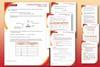
Reacting ratios: gas volumes | Developing understanding | 14–16 years
Connect learners’ ideas about balanced equations, the ratio of atoms and moles and the volume of reactants and products
-
 Resource
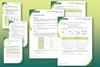
Symbols and formulas | Developing understanding | 11–14 years
Develop your learners’ understanding of what is represented by symbols and chemical formulas
-
 Resource
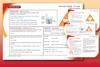
Excess copper oxide | Johnstone’s triangle worksheets | 14–16 years
Explore the reaction of sulfuric acid with excess reactant copper oxide at three conceptual levels with Johnstone’s triangle
-
 Resource
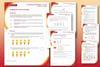
Limiting and excess reactants (qualitative) | Developing understanding | 14–16 years
Introduce limiting and excess reactants using an analogy of ice cream and ice cream cones
-
 Resource
Determining unknown concentration | Johnstone’s triangle worksheets | 14–16 years
Guide learners to connect their thinking about calculating unknown concentrations following a titration
-
 Resource
Concentration of acids | Johnstone’s triangle worksheets | 14–16 years
Learners connect their understanding of dissolved ions, concentration and how chemicals are labelled with this single-page worksheet
-
 Resource
Concentration and moles | Developing understanding | 14–16 years
Support learners to develop secure mental models of how concentration is measured and calculated in mol/dm3
-
 Resource
Word equations | Developing understanding | 11–14 years
Use this worksheet to improve your learners’ understanding of writing and interpreting word equations
-
 Resource
Relative atomic mass of boron | Johnstone’s triangle worksheets | 14–16 years
Use Johnstone’s triangle to help learners think about relative atomic mass and the abundance of different isotopes
-
 Resource
Màs atomig cymharol boron | Taflenni gwaith triongl Johnstone | 14–16 oed
Defnyddiwch driongl Johnstone i helpu’r dysgwyr i feddwl am fàs atomig cymharol boron
-
 Resource
Fertiliser yield | Johnstone’s triangle worksheets | 14–16 years
Help learners calculate the actual and theoretical yield of ammonium sulfate using Johnstone’s triangle
-
 Resource
Yield | Developing understanding | 14–16 years
Part of the Johnstone’s triangle series, this resource includes teacher notes and a student worksheet to help learners understand the difference between actual and theoretical yield
-
 Resource
Sodium and chlorine reaction | Johnstone’s triangle | 11–14 years
Strengthen learners’ understanding of the connection between word equations and chemical reactions