








All articles by Helen Harden – Page 2
-
 Ideas
IdeasBuild stronger particle understanding
Three simple strategies to minimise misconceptions and solidify learners’ understanding of the particle model
-
 Resource
Interpreting chemical equations for ionic compounds | Developing understanding | 14–16
Help your learners develop mental models of what is represented in balanced chemical equation for ionic compounds with this resource, including teacher notes and a student worksheet
-
 Resource
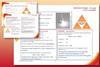
Balancing chemical equations using magnesium and oxygen | Johnstone’s triangle worksheets | 14–16 years
Introduce Johnstone’s triangle with these teacher notes and a student worksheet to help learners gain a deeper understanding of balancing chemical equations
-
 Resource
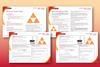
Moles of xenon | Johnstone’s triangle worksheets | 14–16 years
Introduce Johnstone’s triangle as a method of calculating the number of moles of xenon from a given volume of gas
-
 Resource
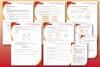
Moles and volume | Developing understanding | 14–16 years
Deepen your learners’ understanding of the idea that equal volumes of gases contain an equal number of molecules with this worksheet
-
 Resource
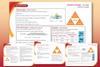
Moles of gold | Johnstone’s triangle worksheets | 14–16 years
Connect macroscopic, sub-microscopic and symbolic understanding of calculations involving moles and mass with Johnstone’s triangle
-
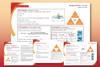 Resource
Molau o aur | Taflenni gwaith triongl Johnstone | 14–16 oed
Cysylltu dealltwriaeth facrosgopig, is-ficrosgopig a symbolaidd o gyfrifiadau sy’n cynnwys molau a màs â thriongl Johnstone
-
 Resource
Moles and mass | Developing understanding | 14–16 years
Develop understanding of the relationship between the mass of one mole, the number of moles and the mass of a substance
-
 Resource
Molau a màs | Datblygu dealltwriaeth | 14–16 oed
Datblygu dealltwriaeth o’r berthynas rhwng màs un môl, nifer y molau a màs sylwedd
-
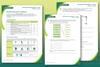 Resource
Reactant and product substances | Developing understanding | 11–14
Use these worksheets to secure and deepen your learners’ understanding of reactants and products in chemical changes
-
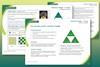 Resource
Iron and sulfur reaction | Johnstone’s triangle | 11–14 years
Develop understanding of reactants and products at different conceptual levels using an iron and sulfur reaction as an example
-
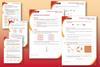 Resource
Interpreting chemical equations | Developing understanding | 14–16 years
Deepen learners’ understanding of interpreting chemical equations by exploring the topic at different conceptual levels
-
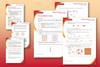 Resource
Dehongli hafaliadau cemegol | Datblygu dealltwriaeth | 14–16 oed
Dyfnhau dealltwriaeth dysgwyr o ddehongli hafaliadau cemegol drwy archwilio’r pwnc ar wahanol lefelau cysyniadol
-
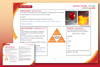 Resource
Balancing chemical equations using hydrogen and oxygen | Johnstone’s triangle worksheets | 14–16 years
Introduce Johnstone’s triangle to help learners gain a deeper understanding of balancing chemical equations
-
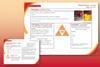 Resource
Cydbwyso hafaliadau cemegol sy’n defnyddio hydrogen ac ocsigen | Taflenni gwaith triongl Johnstone | 14-16 oed
Cyflwyno triongl Johnstone i helpu’r dysgwyr i ddyfnhau eu dealltwriaeth o gydbwyso hafaliadau cemegol
-
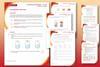 Resource
Concentration and mass | Developing understanding | 14–16 years
Encourage learners to deepen their understanding of concentration and mass from the macroscopic to sub-microscopic level
-
 Resource
Crynodiad a màs | Datblygu dealltwriaeth | 14–16 oed
Annog y dysgwyr i ddyfnhau eu dealltwriaeth o grynodiad a màs o’r lefel facrosgopig i’r lefel is-ficrosgopig
-
 Resource
Crynodiad sodiwm hydrocsid | Taflenni gwaith triongl Johnstone | 14–16 oed
Meddwl am hydoddiant sodiwm hydrocsid (NaOH) ar lefel facrosgopig, is-ficrosgopig a symbolaidd
-
 Resource
Concentration of sodium hydroxide | Johnstone’s triangle worksheets | 14–16 years
Think about sodium hydroxide (NaOH) solution at a macroscopic, sub-microscopic and symbolic level
-
 Resource
Reacting ratios: masses | Developing understanding | 14–16 years
Develop learners’ understanding of the ratio of the very large number of atoms or molecules in balanced chemical equations
- Previous Page
- Page1
- Page2
- Page3
- Page4
- Next Page