










Filtration is a separation technique which allows undissolved materials to be separated according to particle size
Developing understanding is a series of resources that encourages learners to connect their thinking at the macroscopic, sub-microscopic and symbolic levels.
-
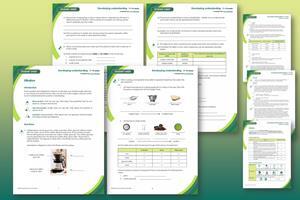
Download this
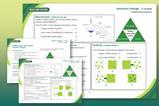
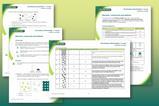
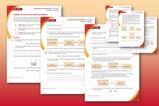
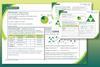
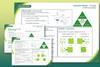
A ramped worksheet to help learners develop their mental models of filtration. With icons to indicate the conceptual level/s of each question.
View and download more Developing understanding worksheets
Learning objectives
- Recall key vocabulary relating to the process of filtration.
- Recognise that kitchen equipment can separate different foods from water due to the relative size of the holes in the equipment and the smallest pieces of the food.
- Explain why mixtures of some substances with water can be separated using filter paper and why some substances cannot.
- Identify whether a mixture of an unfamiliar substance with water can be separated, based on information on whether that substance is soluble or insoluble.
- Name the residue and filtrate when a given mixture is poured through filter paper.
- Recognise that filtration cannot remove dissolved impurities.
How to use this resource
This resource aims to develop learners’ understanding of filtration. The questions encourage learners to think about the relative size of the holes in filter paper compared with visible small pieces of undissolved material and invisible particles. As a result, learners should develop more secure mental models to support their thinking about this topic.
- When to use? Use after initial teaching or discussion of this topic to develop ideas further. You can also use as a revision activity.
- Group size? Suitable for independent work either in class or at home. Or use the questions for group or class discussions.
- How long? 15–30 mins
Johnstone’s triangle
Johnstone’s triangle is a model of the three different conceptual levels in chemistry: macroscopic, symbolic and sub-microscopic. You can use Johnstone’s triangle to build a secure understanding of chemical ideas for your learners.
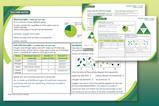
Introduce learners to Johnstone’s triangle with our Filtering muddy water Johnstone’s triangle worksheet which guides learners to think about separating mixtures of dissolved and undissolved substances in the context of filtering muddy mineral water.
Further reading
Read more about how to use Johnstone’s triangle in your teaching with these articles:
- Develop deeper understanding with models
- Improve students’ understanding with Johnstone’s triangle
- Practical ideas for using Johnstone’s triangle
Norman Reid’s book The Johnstone triangle: the key to understanding chemistry provides a more in-depth overview, the first chapter is available to read online.
Johnstone’s triangle and this resource
The icons in the margin indicate which level of understanding each question is developing to help prompt learners in their thinking.
- Macroscopic: what we can see. Think about the properties that we can observe, measure and record.
- Sub-microscopic: smaller than we can see. Think about the particle or atomic level.
- Symbolic: representations. Think about how we represent chemical ideas including symbols and diagrams.
The levels are interrelated, for example, learners need visual representation of the sub-microscopic in order to develop mental models of the particle or atomic level. Our approach has been to apply icons to questions based on what the learners should be thinking about.
Questions may be marked with two or all three icons, indicating that learners will be thinking at more than one level. However, individual parts of the question may require learners to think about only one or two specific levels at a time.
Support
This worksheet is ramped so that the earlier questions are more accessible. The activity becomes more challenging in the later questions. You can give extra explanations for the more challenging questions. If completing this worksheet as an in-class activity, it is best to pause and check understanding at intervals, as often one question builds on the previous one.
Answers and guidance
There are five multi-part questions in the student worksheet. The answers can be found in the teacher notes.
The first question develops learners’ understanding of filtration in connection with a real-life example (macroscopic understanding).
The second question develops learners’ understanding of how filtration works by considering the relative size of holes in kitchen separation equipment compared with the size of pieces that will or will not pass through (macroscopic understanding). The question also includes the idea that water is made up of particles which are smaller than the holes in all the examples, including filter paper (sub-microscopic understanding).
The third question develops learners’ understanding of the difference in size of observable specks of materials such as mud compared with particles of water or dissolved substances (macroscopic and sub-microscopic understanding). The question then relates these sizes to the size of holes in filter paper to support student understanding of how filtering works as a separation technique. Please note that the word ‘particle’ has been specifically avoided when referring to tiny pieces of undissolved substances such as powdered chalk. Whilst this is common in everyday language there is a risk of confusing students as in chemistry particle is a word used to refer to atoms or molecules.
The fourth question develops learners’ understanding of typical laboratory equipment used for filtering and the expected observations following the filtering of mixtures of soluble or insoluble substances with water (macroscopic understanding).
The final question develops learners’ understanding of filtration by considering more deeply what passes through a filter when muddy lake water is filtered (macroscopic understanding). Learners also recap that water contains dissolved minerals (sub-microscopic understanding). The idea of microorganisms may also be included to support an understanding of scale.
Downloads
Filtration developing understanding student sheet
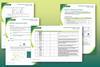
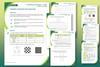
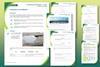
Handout | PDF, Size 0.33 mbFiltration developing understanding teacher notes and answers
Handout | PDF, Size 0.18 mbFiltration developing understanding student sheet
Editable handout | Word, Size 1.98 mbFiltration developing understanding teacher notes and answers
Editable handout | Word, Size 0.5 mb
- Prepare(7)
 Opinion
Making science teaching more inclusive
Let’s introduce more representative examples in our chemistry classrooms
 Ideas
IdeasHow sign language can help all learners
Use British sign language’s descriptive nature to boost understanding in your science lessons
 Ideas
Ideas5 ways to teach paper chromatography
Brush up on your chromatography teaching skills with these teacher-tested tips

 CPD article
Evaporation, filtration and crystallisation | Teaching practical science
How to add variety and context to lessons while getting students familiar with apparatus
 CPD article
Practical distillation
How to develop your students’ distillation knowledge and practical skills
 CPD article
Practical chromatography | Teaching practical science
Ideas for enhancing practical chromatography work for your 11–16 learners
- Deliver(6)
currently reading
 Resource
Filtration | Developing understanding | 11–14 years
Support learners to develop secure mental models of how filtration can be used to separate mixtures
 Resource
Filtering muddy water | Johnstone’s triangle | 11–14 years
Use Johnstone’s triangle to explain how filtration can be used to separate mixtures
 Resource
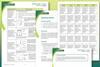
Separating mixtures | Structure strip | 11–14 years
Use scaffolded prompts to support learners to write about separating mixtures with confidence
 Class experiment
Extracting iron from breakfast cereal
Investigate the iron content of breakfast cereals with this class practical, teacher demonstration and follow-up questions
 Practical video
Simple distillation | practical videos | 14–16 years
Video and resources showing how to separate water from a coloured solution
 Class experiment
Chromatography of sweets | 11–14 years
Try this class practical to carry out chromatography using dye from different coloured M&M’s®. Includes kit list and safety instructions.
- Literacy(2)
 Resource
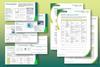
Elements, compounds and mixtures | Key terms support | 11–14
Language support pack for elements, compounds and mixtures, with key terms list, accessible glossary, Frayer models and unscrambling definitions
 Resource
Elements, compounds and mixtures | Reading comprehension | 11–14 years
Practise reading comprehension skills with a science research article about the benefits of carbon capture from the oceans
- Enrich(2)
 Class experiment
Leaf chromatography | 14–16 years
Investigate leaves using paper chromatography with this classroom experiment and follow-up questions
 Resource
Is the secretary guilty? | 14–16 years
In this practical, your learners become chemical detectives by carrying out an investigation using separation techniques


No comments yet