








All Johnstone's model articles
-
 Resource
Decomposition of calcium carbonate | Johnstone’s triangle worksheets | 14–16 years
Think about reacting masses and gas volumes in the context of a decomposition reaction
-
 Resource
Excess copper oxide | Johnstone’s triangle worksheets | 14–16 years
Explore the reaction of sulfuric acid with excess reactant copper oxide at three conceptual levels with Johnstone’s triangle
-
 Resource
Determining unknown concentration | Johnstone’s triangle worksheets | 14–16 years
Guide learners to connect their thinking about calculating unknown concentrations following a titration
-
 Resource
Concentration of acids | Johnstone’s triangle worksheets | 14–16 years
Learners connect their understanding of dissolved ions, concentration and how chemicals are labelled with this single-page worksheet
-
 Resource
Concentration and moles | Developing understanding | 14–16 years
Support learners to develop secure mental models of how concentration is measured and calculated in mol/dm3
-
 Resource
Relative atomic mass of boron | Johnstone’s triangle worksheets | 14–16 years
Use Johnstone’s triangle to help learners think about relative atomic mass and the abundance of different isotopes
-
 Resource
Fertiliser yield | Johnstone’s triangle worksheets | 14–16 years
Help learners calculate the actual and theoretical yield of ammonium sulfate using Johnstone’s triangle
-
 Resource
Sodium and chlorine reaction | Johnstone’s triangle | 11–14 years
Strengthen learners’ understanding of the connection between word equations and chemical reactions
-
 Resource
Balancing chemical equations using magnesium and oxygen | Johnstone’s triangle worksheets | 14–16 years
Introduce Johnstone’s triangle with these teacher notes and a student worksheet to help learners gain a deeper understanding of balancing chemical equations
-
 Resource
Moles of xenon | Johnstone’s triangle worksheets | 14–16 years
Introduce Johnstone’s triangle as a method of calculating the number of moles of xenon from a given volume of gas
-
 Resource
Moles of gold | Johnstone’s triangle worksheets | 14–16 years
Connect macroscopic, sub-microscopic and symbolic understanding of calculations involving moles and mass with Johnstone’s triangle
-
 Resource
Iron and sulfur reaction | Johnstone’s triangle | 11–14 years
Develop understanding of reactants and products at different conceptual levels using an iron and sulfur reaction as an example
-
 Resource
Balancing chemical equations using hydrogen and oxygen | Johnstone’s triangle worksheets | 14–16 years
Introduce Johnstone’s triangle to help learners gain a deeper understanding of balancing chemical equations
-
 Resource
Concentration of sodium hydroxide | Johnstone’s triangle worksheets | 14–16 years
Think about sodium hydroxide (NaOH) solution at a macroscopic, sub-microscopic and symbolic level
-
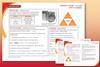 Resource
Extracting tin from tin oxide | Johnstone’s triangle worksheets | 14–16 years
Introduce calculations using reacting masses in the context of extracting tin from tin oxide
-
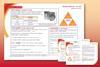 Resource
Echdynnu tun o dun ocsid | Taflenni gwaith triongl Johnstone | 14–16 oed
Cyflwyno cyfrifiadau gan ddefnyddio masau sy’n adweithio yng nghyd-destun echdynnu tun o dun ocsid
-
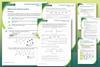 Resource
Diffusion and chemical reactions | Developing understanding | 11–14 years
Use this worksheet to deepen understanding of diffusion and chemical reactions and how these processes are represented
-
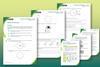 Resource
Diffusion and dissolving | Developing understanding | 11–14 years
Deepen learners’ understanding of diffusion and dissolving with this worksheet exploring different conceptual levels of thinking
-
 Resource
Diffusion of colour in water | Johnstone’s triangle worksheets | 11–14 years
Use this worksheet to develop learners’ understanding of diffusion as they observe coloured dyes diffusing in water
-
 Resource
Melting and boiling | Johnstone’s triangle worksheets | 11–14 years
Develop learners’ understanding of melting and boiling with this worksheet, including a teacher demonstration for learners to observe