








All Johnstone's model articles – Page 2
-
 Resource
Melting and boiling points | Developing understanding | 11–14 years
Deepen understanding of melting and boiling points and how these are represented at different conceptual levels of thinking
-
 Resource
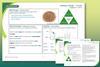
Dissolving salt | Johnstone’s triangle worksheets | 11–14 years
Use this worksheet to develop learners’ understanding of solutions as they observe how salt and sand behave in water
-
 Resource
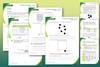
Solutions | Developing understanding | 11–14 years
Encourage learners to deepen their understanding of solutions and how they are represented at different conceptual levels of thinking
-
 Resource
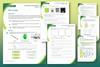
States of matter | Developing understanding | 11–14 years
Encourage learners to deepen their understanding of states of matter and how they are represented at different conceptual levels of thinking
-
 Resource
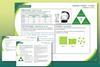
States of matter | Johnstone’s triangle worksheets | 11–14 years
Use this worksheet to develop learners’ understanding of states of matter, including a teacher demonstration
-
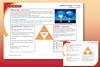 Resource
Isotopes of hydrogen | Johnstone’s triangle | 14–16 years
Use this worksheet to develop learners’ understanding of atoms and isotopes by considering ‘heavy water’ ice cubes
-
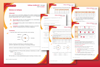 Resource
Atomau ac isotopau | Datblygu dealltwriaeth | 14–16 oed
Anogwch y dysgwyr i ddyfnhau eu dealltwriaeth o isotopau o’r lefel facrosgopig i’r lefel is-ficrosgopig
-
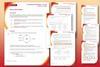 Resource
Atoms and isotopes | Developing understanding | 14–16 years
Encourage learners to deepen their understanding of isotopes from the macroscopic to sub-microscopic level
-
 Resource
Atoms and ions | Developing understanding | 14–16 years
Encourage learners to think about how atoms and ions are represented and what this means at the sub-microscopic level
-
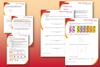 Resource
Atomau ac ïonau | Datblygu dealltwriaeth | 14–16 oed
Anogwch y dysgwyr i feddwl am sut mae atomau ac ionau’n cael eu cynrychioli a beth mae hyn yn ei olygu ar y lefel is-ficrosgopig
-
 Resource
Atoms and ions of copper | Johnstone’s triangle worksheets | 14–16 years
Use these worksheets to develop learners’ understanding of atoms and ions, including a demonstration of a metal displacement reaction
-
 Resource
Atomau ac ïonau copr | Taflenni gwaith triongl Johnstone | 14–16 oed
Defnyddiwch y taflenni gwaith hyn i ddatblygu dealltwriaeth y dysgwyr o atomau ac ïonau, gan gynnwys arddangosiad o adwaith dadleoli metel
-
 Resource
Atomic structure of lithium | Johnstone’s triangle worksheets | 14–16 years
Use these worksheets to develop learners’ understanding of atomic structure, using the example of lithium
-
 Resource
Atomic structure | Developing understanding | 14–16 years
Encourage learners to think about how the atomic structure is represented and what this means at the sub-microscopic level
-
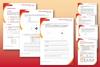 Resource
Adeiledd atomig | Datblygu dealltwriaeth | 14–16 oed
Anogwch y dysgwyr i feddwl am sut mae adeiledd atomig yn cael ei gynrychioli a beth mae hyn yn ei olygu ar y lefel is-ficrosgopig
-
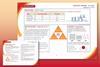 Resource
Particle diagrams of water | Johnstone’s triangle worksheets | 14–16 years
Use these worksheets to develop learners’ understanding of particle diagrams of water in the solid, liquid and gas state
-
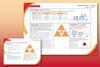 Resource
Diagramau gronynnau o ddŵr | Taflenni gwaith Triongl Johnstone | 14–16 oed
Defnyddiwch y taflenni gwaith hyn i ddatblygu dealltwriaeth y dysgwyr o ddiagramau gronynnau o ddŵr mewn cyflwr solet, hylifol a nwyol
-
 CPD article
Teaching conservation of mass at 14–16
Help learners master the concept of conservation of mass with these hands-on teaching ideas
-
 Resource
Bondio cofalent | Datblygu dealltwriaeth | 14–16 oed
Datblygu dealltwriaeth y dysgwyr o faint a siâp adeileddau cofalent drwy ddehongli amrywiaeth o ddiagramau a modelau
-
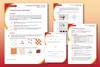 Resource
Covalent bonding | Developing understanding | 14–16 years
Develop learners’ understanding of the size and shape of covalent structures by interpreting a range of diagrams and models
- Previous Page
- Page1
- Page2
- Page3
- Page4
- Next Page