




All Matter articles – Page 4
-
 Resource
Separating mixtures: That’s Chemistry!
The ‘separating mixtures’ chapter from That’s Chemistry! This chapter looks at key ideas and activities that can be used to help students learn how sieving can separate particles of different sizes and other methods used for separating mixtures.
-
 Resource
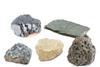
Rocks and soils: That’s Chemistry!
The ‘rocks and soils’ chapter from That’s Chemistry! This chapter looks at key ideas and activities that can be used to help students learn that different types of rocks and soils have different properties.
-
 Resource
Thermochromic materials
A hidden use of chemistry in everyday life includes thermochromic materials that change colour when exposed to heat or cold
-
 Resource
Magic sand
Putting the magic in magic sand this resource explores hydrophobic substances and how they work
-
 Resource
Mixing and dissolving materials: That’s Chemistry!
The ‘mixing and dissolving materials’ chapter from That’s Chemistry! This chapter looks at key ideas and activities that can be used to help students learn that mixtures are made up of more than one substance and that some mixtures can be separated.
-
 Resource
Heating and cooling materials: That’s Chemistry!
The ‘heating and cooling materials’ chapter from That’s Chemistry! This chapter looks at key ideas and activities that can be used to help students learn how the properties of some materials change when they are heated, and that some of these changes are irreversible.
-
 Resource
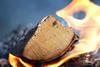
Burning: That’s Chemistry!
The ‘burning’ chapter from That’s Chemistry! This chapter looks at key ideas and activities that can be used to help students learn that when materials are burned new materials are formed, and that this process in not reversible.
-
 Resource
Hand warmers
Use these student activities and teacher guide to investigate reusable and disposable hand warmers. You will compare reusable variants made with sodium acetate vs disposable handwarmers. You can also try making your own hand warmers. These activities may work well as a project on class topics like ‘winter’ or ‘body ...
-
 Resource
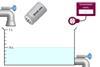
Concentration simulation
Explore concentration with this interactive simulation. Add different solutes to water and adjust the controls to change their concentration:
-
 Demonstration
Ammonia fountain demonstration
Try this experiment to make a miniature chemical fountain using only soluble ammonia and atmospheric pressure. Includes kit list and safety instructions.
-
 Demonstration
Electrolysis of molten zinc chloride
Try this demonstration to show how an ionic salt will conduct electricity when molten but not when solid. Includes kit list, video and safety instructions.
-
 Demonstration
Floating and sinking bubbles
Make bubbles of carbon dioxide, hydrogen or methane in this demonstration exploring density, diffusion and solubility. Includes kit list and safety instructions.
-
 Demonstration
Sodium ethanoate ‘stalagmite’
Quickly grow your own ‘stalagmite’ from a supersaturated solution of sodium ethanoate in this demonstration. Includes kit list and safety instructions.
-
-
 Resource
Space: science ideas webs
A web of suggested ideas for linking science with the topic space. You can learn history and science together with activities for different age groups.
-
 Resource
The Victorians: science ideas webs
A web of suggested ideas for linking science with the topic the Victorians. You can learn history and science together with activities for different age groups.
-
 Resource
The Stone Age: science ideas webs
A web of suggested ideas for linking science with the topic the stone age. You can learn history and science together with activities for different age groups.
-
 Resource
Maya and Aztecs: science ideas webs
A web of suggested ideas for linking science with the topic the Maya and Aztecs. You can learn history and science together with activities for different age groups.
-
 Resource
The Romans: science ideas webs
A web of suggested ideas for linking science with the topic the Romans. You can learn history and science together with activities for different age groups.
-
 Resource
Ancient Egypt: science ideas webs
A web of suggested ideas for linking science with the topic Ancient Egypt. You can learn history and science together with activities for different age groups.