






All RSC Education articles in Non-EiC content – Page 16
-
 Resource
On This Day - May 23 : John Bardeen was born
He co-invented the transistor, a device that can switch and modulate electrical current. Transistors have transformed the world of electronics, and have allowed us to build smaller and lighter computers.
-
 Resource
On This Day - Jun 23 : Etienne-Louis Malus born
He discovered that light waves could be polarised (made to vibrate in a single plane) by reflecting them off a non-metallic surface. This phenomenon is responsible for the ‘glare’ seen when light shines on glass or water.
-
 Resource
On This Day – Sep 23 : Richard Zsigmondy died
He was awarded the 1925 Nobel Prize in Chemistry for his research into colloids, which are substances microscopically dispersed throughout another substance. Examples include foams (gas dispersed through liquid), aerosols (liquid through gas) and emulsions (liquid through liquid).
-
 Resource
On This Day - Dec 23 : Axel Cronstedt was born
He discovered the element nickel (Ni) in 1751, describing the metal as “kupfernickel” – the Devil’s copper (Cu). He is one of the founders of modern mineralogy and developed a procedure involving the use of blowpipes for analysing the composition of minerals.
-
 Resource
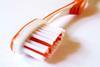
On This Day - Feb 24 : Nylon commercially produced
Nylon was first used in toothbrush bristles for the Miracle Tuft Toothbrush. Before this, the world relied on toothbrush bristles made from the neck hairs of wild pigs from Siberia, Poland and China.
-
 Resource
On This Day - Apr 24 : Roger Kornberg was born
He was awarded the Nobel Prize in Chemistry in 2006 for his “studies of the molecular basis of eukaryotic transcription” – the process where genetic information is copied from DNA to RNA.
-
 Resource
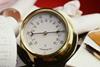
On This Day - May 24 : Daniel Fahrenheit was born
He invented the alcohol thermometer (1709) and mercury thermometer (1714). He also developed the Fahrenheit temperature scale by reference to three fixed points of temperature, where a mixture of ice, water and ammonium chloride was taken as 0 °F.
-
 Resource
On This Day - Jun 24 : Johannes Wislicenus born
He is best known for his work on stereochemistry. He coined the term ‘geometric isomerism’ in the early 1870s when he discovered two substances that had an identical chemical structure but different physical properties.
-
 Resource
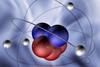
On This Day – Jul 24 : Sir James Chadwick died
He received the Nobel Prize in Physics 1935 for his discovery of the neutron, a subatomic particle with zero electrical charge. Neutrons are found in the nucleus of all elements (except hydrogen) along with protons, which carry a positive charge.
-
 Resource
On This Day – Aug 24 : Ray McIntire was born
He invented foam polystyrene, or Styrofoam. McIntire had been trying to develop a flexible electrical insulator for coating wires. Polystyrene, although a good insulator, was too brittle. He thought he could soften it by adding isobutylene under pressure, but instead made the light foamy substance.
-
 Resource
On This Day – Sep 24 : Georges Claude born
He was the first person to apply an electrical discharge to a sealed tube of neon (Ne) gas and make a neon lamp (the forerunner to modern fluorescent lighting). He is also known for being the first person to demonstrate generating energy by a concept called “ocean thermal energy conversion”.
-
 Resource
On This Day - Oct 24 : Henrik Dam found vitamin K
When Dam fed chickens a diet low in cholesterol, he found that their blood did not clot. However, he discovered that it wasn’t just cholesterol but also a vitamin that they were lacking. He called this Vitamin K, after the German word for coagulation, “koagulation”.
-
 Resource
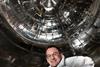
On This Day - Nov 24 : Simon van der Meer was born
He was awarded the Nobel Prize in Physics in 1984 for his contributions to the European Organization for Nuclear Research or CERN project, which led to the discovery of the W and Z subatomic particles – two fundamental constituents of matter.
-
 Resource
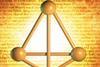
On This Day - Dec 24 : Medical use of radioisotope
American physician and phyicist John Lawrence used phosphorus-32 (32P) to treat a 28 year old woman with chronic leukaemia at Berkeley, California. He became the father of nuclear medicine.
-
 Resource
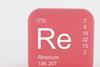
On This Day - Feb 25 : Ida Noddack was born
Noddack co-discovered rhenium (Re) while working with her future husband Walter Noddack. They named the element after the river Rhine. Rhenium is one of the rarest metals on earth and is used in filaments and for catalysts in the chemicals industry.
-
 Resource
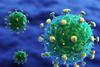
On This Day - Mar 25 : HIV has no latent period
These papers showed that HIV-positive patients who had not developed AIDS still showed high levels of the HIV virus in their lymphatic system, implying that the virus actively replicates even when no symptoms are detected.
-
 Resource
On This Day - Apr 25 : Wolfgang Pauli was born
He is most famous for the Pauli “exclusion principle”, which states that in an atom no two electrons can occupy the same quantum state simultaneously. He was awarded the Nobel Prize in Physics in 1945 for his work.
-
 Resource
On This Day - May 25 : Pieter Zeeman was born
He studied the influence of magnetism on a source of light, and found that each of the lines in the light spectrum split into several other lines. This effect, known as the “Zeeman Effect”, has important applications such as in nuclear magnetic resonance spectroscopy (NMR).
-
 Resource
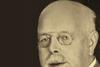
On This Day - Jun 25 : Walther Nernst was born
He was a pioneer in physical chemistry. Nernst is best known for his theories relating to the calculation of chemical affinity, which is the ability of chemicals to form compounds with one another. He won the 1920 Nobel Prize in Chemistry.
-
 Resource
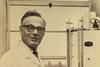
On This Day – Aug 25 : Hans Adolf Krebs was born
He won the 1953 Nobel Prize in Physiology or Medicine for discovering a series of chemical reactions known as the Krebs cycle. This forms part of the process of respiration in living organisms through which energy is generated from food and oxygen (O).