









All RSC Education articles in Non-EiC content – Page 17
-
 Resource
On This Day – Sep 25 : Separation of iron
The method from this English chemist, which used water, ammonia and muriatic acid, was simpler than other popular methods of extracting manganese metal from its ore. Manganese is used in important alloys, and one of its oxides, permanganate, is used in analysis such as redox titrations.
-
 Resource
On This Day - Oct 25 : Marjorie Vold was born
She was one of the top female colloid chemists, writing three major science texts and scores of journal articles despite suffering from multiple sclerosis for the last 35 years of her life. She even continued her chemistry calculations from a hospital bed!
-
 Resource
On This Day - Nov 25 : Adolph Kolbe died
He discovered a method for the electrolysis of the salts of fatty acids, known as Kolbe electrolysis. He also identified the Kolbe synthesis reaction, which is a method of making salicylic acid – the main component of Aspirin.
-
 Resource
On This Day - Dec 25 : William Gregor was born
He discovered the element titanium (Ti), which he originally named manaccanite after the Manaccan valley where he found it. A few years later, it was rediscovered by Martin Klaproth who thought it was a new element and gave it the current name of titanium.
-
 Resource
On This Day - Feb 26 : Otto Wallach died
He devised a systematic analysis method to determine the molecular structure of the terpenes found in fragrant essential oils. Up until this point, few terpenes had been isolated in their pure form and structural information was very limited.
-
 Resource
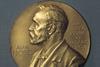
On This Day - Mar 26 : Christian Anfinsen was born
He received half of the Nobel Prize in Chemistry in 1972 for research on ribonuclease and amino acid sequences. He identified the connection between the molecular structure of ribonuclease and its biological function.
-
 Resource
On This Day - Apr 26 : Chernobyl nuclear disaster
The Chernobyl accident was the result of a flawed reactor design that was operated with inadequately trained personnel. The resulting steam explosion and fires released at least 5% of the radioactive reactor core into the atmosphere.
-
 Resource
On This Day - May 26 : Ernest Solvay died
He developed the industrial process to create soda ash (anhydrous sodium carbonate). Solvay’s process uses brine (salt water) and limestone (calcium carbonate) to create large amounts of soda ash, which can be used in glass and soap manufacturing.
-
 Resource
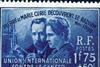
On This Day – Jul 26 : The Curies married
From 1896 the two physicists worked together researching radioactivity until Pierre was tragically run over by a horse-drawn carriage in 1906. In 1898, they discovered the elements polonium (Po) and radium (Ra).
-
 Resource
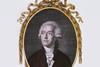
On This Day – Aug 26 : Antoine Lavoisier born
He is known as the founder of modern chemistry. Lavosier named both hydrogen (H) and oxygen (O), and introduced new chemical nomenclature. He also discovered that when matter changes state and shape, it always has the same mass.
-
 Resource
On This Day - Nov 26 : Discovery of niobium
Now known as niobium (Nb), this metal element is very similar to tantalum (Ta), and was in fact confused with it during parts of the 19th century. This lead to it being renamed niobium after the daughter of Tantalus in Greek mythology.
-
 Resource
On This Day - Mar 27 : Paul Lauterbur died
He was awarded half of the Nobel Prize in Medicine in 2003 for the development of magnetic resonance imaging (MRI). MRI scans use nuclear magnetic resonance to see inside the body and have revolutionised medical diagnosis.
-
 Resource
On This Day - Apr 27 : Philip Abelson was born
He proposed the gas diffusion process to separate uranium-235 and uranium-238 needed to develop the atomic bomb. He also co-discovered the element neptunium (Np) with Edwin McMillan.
-
 Resource
On This Day - May 27 : John Bailar was born
He discovered that isomers, compounds with the same chemical composition but different structural formulas, could exist in inorganic compounds. Bailar became recognised as the “father of American coordination chemistry”.
-
 Resource
On This Day - Jun 27 : First nuclear power plant
The plant was located in the city of Obninsk, about 110 km southwest of Moscow in the USSR. It generated around five megawatts of electrical power using nuclear fission.
-
 Resource
On This Day – Jul 27 : John Dalton died
He was a pioneering researcher of modern atomic theory and colour blindness. Dalton discovered that pressures of saturated vapours of all liquids have the same value at boiling point and founded ‘Dalton’s law of partial pressures’.
-
 Resource
On This Day – Aug 27 : Carl Bosch was born
His work transformed agriculture and industry. He co-developed the Haber-Bosch process, a method of fixing nitrogen using high pressure chemistry. Today this consumes more than 1% of the energy on Earth and is responsible for feeding around 30% of its population.
-
 Resource
On This Day – Sep 27 : Ciamician, solar energy
He predicted that humans would one day be able to directly convert sunlight into energy, stored in a ‘fuel’ as an alternative to fossil fuels. Today, photovoltaic solar panels can produce electricity, but scientists are also working towards other methods of harnessing the sun’s power, such as solar fuels that mimic photosynthesis.
-
 Resource
On This Day - Nov 27 : Lars Onsager was born
He was awarded the Nobel Prize in Chemistry in 1968 for his work on a general theory of irreversible chemical processes. This is known as Onsager’s reciprocal relations, which can be described as a universal natural law, and holds great scope and importance in physics and chemistry.
-
 Resource
On This Day - Dec 27 : Louis Pasteur was born
He discovered the role of bacteria in fermentation, proved the germ theory of disease and invented the process of pasteurisation. Pasteur is considered the founder of microbiology.