









All RSC Education articles in Non-EiC content – Page 15
-
 Resource
On This Day – Aug 20 : Plutonium iodate isolated
American nuclear chemists Burris Cunningham and Louis Werner isolated a microgram of plutonium(IV) iodate, the first visible quantity to the human eye. Today, plutonium is widely used in the production of nuclear energy.
-
 Resource
On This Day – Sep 20 : James Dewar was born
His work blurred the line between chemistry and physics. Dewar’s achievements include designing an insulating double-walled flask with a vacuum between two silvered layers of steel or glass – the technology that led to the modern domestic Thermos flask.
-
 Resource
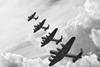
On This Day - Oct 20 : James Chadwick was born
By bombarding the element beryllium (Be) with alpha particles, he discovered a neutral particle in the atom’s nucleus - the neutron. Chadwick subsequently led the UK’s research team investigating the atomic bomb in World War II.
-
 Resource
On This Day - Dec 20 : Jaroslav Heyrovskȳ was born
He was awarded the 1959 Nobel Prize in Chemistry for the development of polarography, an analytical tool that uses a dropping mercury (Hg) electrode to investigate the effects of varying currents and potentials of a compound.
-
 Resource
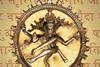
On This Day - Mar 21 : Plutonium was named
Plutonium (Pu) took its name from the dwarf planet Pluto. First discovered by Glenn Seaborg and colleagues as a product of nuclear fission, traces of plutonium were later found in a rock formation by Darleane Hoffmann.
-
 Resource
On This Day - Apr 21: Paul Karrer was born
Karrer was awarded half the Nobel Prize in Chemistry in 1937 for his research into plant pigments, namely yellow carotenoids, flavins, and vitamins A, B2 and E.
-
 Resource
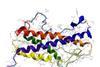
On This Day - May 21 : Bengt Samuelsson was born
He shared the Nobel Prize in Physiology or Medicine in 1982 with Sune Bergström and John Vane for their work on how prostaglandins are formed and metabolised. Prostaglandins are hormone-like substances that participate in a wide range of bodily functions.
-
 Resource
On This Day - Jun 21 : Boron was isolated
The French pair beat the English chemist Humphrey Davy to it by just nine days. Boron (B) is named after one of its compounds, borax, which had been used as a glazing agent for hundreds of years.
-
 Resource
On This Day – Jul 21 : Rudolph Marcus was born
He developed electron transfer theory, which describes the thermodynamics and kinetics of how electrons are transferred between chemicals during a reaction. The theory helps to explain reactions such as oxidation, photosynthesis and cell metabolism.
-
 Resource
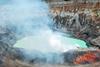
On This Day – Aug 21 : Carbon dioxide cloud
The cloud travelled as far as 25 km from the lake and was moving fast enough to flatten vegetation, including trees. The cloud reached the deep, iron-rich waters of the lake causing a dramatic change of colour from blue to red as the iron (Fe) oxidised.
-
 Resource
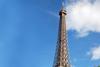
On This Day – Sep 21 : Loius Cailletet born
He was one of the first people to investigate the role of heat in phase changes. He successfully liquefied several gases, including oxygen (O) and hydrogen (H), and installed a 300 m high pressure gauge on the Eiffel Tower!
-
 Resource
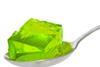
On This Day - Oct 21 : William Mitchell was born
He invented food products such as Pop Rocks, instant Jell-O, Cool Whip and the orange drink, Tang. Whilst working for the General Foods Corporation, he received over 70 patents for his food product inventions.
-
 Resource
On This Day - Nov 21 : Hieronymus Richter was born
He was the co-discoverer of indium (In), an element used to form transparent electrodes in liquid crystal displays in computers, televisions and touch screens.
-
 Resource
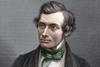
On This Day - Dec 21 : Thomas Graham was born
He is known as “the father of colloid chemistry” and was the founding president of the Chemical Society, which is now the Royal Society of Chemistry (RSC). The RSC’s Cambridge office, Thomas Graham House, is named after him.
-
 Resource
On This Day - Mar 22 : Robert Millikan was born
Famous for using oil droplets to measure the charge of an electron for the first time, Millikan went on to experimentally investigate the photoelectric effect corroborating Einstein’s theories. Millikan was awarded the Nobel Prize in Physics in 1923 for this work.
-
 Resource
On This Day – Jul 22 : Selman Waksman was born
He coined the term ‘antibiotic’ and discovered streptomycin, the first drug that was effective against tuberculosis. He was awarded the Nobel Prize in Physiology or Medicine in 1952 for this work.
-
 Resource
On This Day - Oct 22 : Xerography was performed
Xerography is a dry photocopying technique that is now used in photocopiers and laser printers. It was invented by Chester F. Carlson but the original process was cumbersome, requiring several manual processing steps. It took almost 18 years to become a fully automated process.
-
 Resource
On This Day - Nov 22 : Louis Néel was born
He was awarded the Nobel Prize in Physics in 1970 for his work on the magnetic properties of solids. Néel provided an explanation of the weak magnetism of certain rocks, which then made it possible to study the history of the Earth’s magnetic field.
-
 Resource
On This Day - Dec 22 : Liquid oxygen was made
The experiment was notified to the Academy of Sciences in Paris in a telegram from Pictet in Geneva: “Oxygen liquefied to-day under 320 atmospheres and 140 degrees of cold by combined use of sulfurous and carbonic acid”.
-
 Resource
On This Day - Apr 23 : Max Planck was born
Max Planck was the founder of quantum theory. He came up with the equation E = hν, which related the frequency of light emitted by a body to its energy.