







All RSC Education articles in Non-EiC content – Page 13
-
 Resource
On This Day – Jul 15 : Albert Ghiorso was born
He co-discovered 12 elements while working at the University of California, Berkeley: americium (Am), curium (Cm), berkelium (Bk), californium (Cf), einsteinium (Es), fermium (Fm), mendelevium (Md), nobelium (No), lawrencium (Lr), rutherfordium (Rf), dubnium (Db) and seaborgium (Sg).
-
 Resource
On This Day – Sep 15 : Neil Bartlett was born
He was the first person to produce a compound containing a noble gas. Until Bartlett created xenon (Xe) hexafluoroplatinate in 1962, most scientists believed that the noble gases were too unreactive to form compounds. The discovery opened up a whole new area of study in inorganic chemistry.
-
 Resource
On This Day - Oct 15 : First contraceptive pill
The pill was a steroid hormone, norethindrone, developed by Carl Djerassi and co-workers at Syntex in Mexico City. Around 100 million women worldwide now take contraceptive pills, which are approximately 99% effective against pregnancy.
-
 Resource
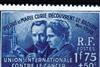
On This Day - Dec 15 : Becquerel was born
He discovered radioactivity from uranium (U) salts and was awarded the Nobel Prize in Physics in 1903 along with Pierre and Marie Curie.
-
 Resource
On This Day - Mar 16 : First liquid fuelled rocket
With a flight time of only 2.5 seconds and reaching a height of 12 metres, the demonstration by American physicist Robert H. Goddard was revolutionary at the time, leading to a new field of rocket propulsion.
-
 Resource
On This Day - Apr 16 : LSD effects discovered
Swiss scientist Albert Hofmann was the first to synthesise, taste and hence learn of the psychedelic effects of lysergic acid diethylamide (LSD).
-
 Resource
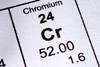
On This Day - May 16 : Nicolas-Louis Vauquelin was born
Vauquelin discovered the elements chromium (Cr) and beryllium (Be). Chromium is a hard, silvery metal used to make stainless steel. Beryllium is used in gears and cogs, particularly in aeroplanes.
-
 Resource
On This Day – Aug 16 : Robert Bunsen died
He famously developed the Bunsen burner, which was an improvement on the laboratory burners in use at the time and is still widely used today. He also investigated emission spectra of heated elements, and co-discovered the elements caesium (Cs) and rubidium (Rb).
-
 Resource
On This Day - Oct 16 : Ether as anaesthetic
After learning that inhaling ether causes unconsciousness, the American dentist William T. G. Morton experimented with it while extracting a tooth from a Boston merchant. Following this success, ether was used as an anaesthetic across the world.
-
 Resource
On This Day - Nov 16 : Americium discovered
This element is named after the Americas. Americium can be produced from intense neutron irradiation of pure plutonium (Pu). It is used in smoke detectors and as a portable source for gamma radiography.
-
 Resource
On This Day - Dec 16 : Johann Ritter was born
He established an explicit connection between galvanism and chemical reactivity. He was the first person to electrolyse water and is among the founders of electrochemistry.
-
 Resource
On This Day - Mar 17 : Carl Jacob Löwig was born
He discovered bromine (Br) while adding chlorine (Cl) and ether to spring water and found a red coloured substance. While Löwig investigated this substance, Antoine Balard published his independent discovery of bromine.
-
 Resource
On This Day - Apr 17 : Chemical naming established
This book presented a logical system for naming chemical substances. Proposed names were based on the origin or function of each element, and led to an international consensus for naming chemicals.
-
 Resource
On This Day - May 17 : Joseph Lockyer was born
While observing a spectrum of the sun during a solar eclipse in 1868, Lockyer noticed a prominent yellow line, which he identified as an unknown solar element. He named this helium (He) after the Greek word for sun.
-
 Resource
On This Day - Jun 17 : Donald James Cram died
He shared the 1987 Nobel Prize in Chemistry with Jean-Marie Lehn and Charles Pedersen for their work on host-guest chemistry, where two or more molecules or ions bond in unique ways due to their structure. This has allowed the synthesis of molecules that mimic the action of enzymes.
-
 Resource
On This Day – Aug 17 : Aldrich Chemical Company
In 1975 Aldrich Chemical Company merged with Sigma Chemical Company to become Sigma-Aldrich Corporation. Today, Sigma-Aldrich operates in 40 countries and employs over 7,500 staff. Its products are used in scientific research, biotechnology, pharmaceuticals and disease diagnosis.
-
 Resource
On This Day – Sep 17 : Le Chatelier died
He is best known for developing Le Chatelier’s principle, which predicts the effect of changing conditions (temperature, pressure, and concentration of reaction components) on the equilibrium of a chemical reaction. His principle says that a system will shift the equilibrium to counteract the change.
-
 Resource
On This Day - Oct 17 : First nuclear power plant
The Calder Hall nuclear power plant in northwest England became the first nuclear power plant to supply commercial amounts of electricity to a public grid. Sellafield nuclear power station now stands on the same site.
-
 Resource
On This Day - Dec 17 : Willard Libby was born
He developed radiocarbon dating and was awarded the Nobel Prize in Chemistry in 1960 “for his method to use carbon-14 for age determination in archaeology, geology, geophysics, and other branches of science”.
-
 Resource
On This Day - Mar 18 : Superconductivity session
Dubbed ‘The Woodstock of physics’, the event held by the American Physics Society at The New York City Hilton lasted over 7 hours and brought together thousands of physicists, showcasing the recent breakthroughs in superconductivity.