






All Resource articles – Page 84
-
 Resource
On This Day – Aug 13 : Discovery of argon
The first noble gas to be discovered was argon, named after the Greek word ‘argos’ (meaning ‘lazy’) because it was completely unreactive. For this work, Sir William Ramsey was awarded the Nobel Prize in Chemistry and Lord Rayleigh the Nobel Prize in Physics in 1904.
-
 Resource
On This Day – Sep 13 : Americium was made
This radioactive metal was first produced by B.B. Cunningham and L.B. Werner. Most americium is produced by bombarding uranium (U) or plutonium (Pu) with alpha particles – one tonne of spent nuclear fuel contains about 100 grams of americium. It has few uses other than in smoke alarms.
-
 Resource
On This Day - Oct 13 : First zinc oxide
The Pennsylvania and Lehigh Zinc Company Mill produced zinc oxide (ZnO) from calamine ores. Zinc oxide is a white powder that is used as an additive to a wide range of products such as paints, plastics, adhesives, fire retardants and foods (nutrients).
-
 Resource
On This Day - Nov 13 : Edward Doisy was born
He shared the Nobel Prize in Physiology or Medicine in 1943 for the isolation and synthesis of vitamin K, which encourages blood clotting and has several applications in medicine. Doisy also developed techniques that helped other scientists’ research sex hormones.
-
 Resource
On This Day - Dec 13 : Charles Coulson was born
He was a pioneer of the application of quantum theory of particle valency to solve many chemical and physical problems, in particular in developing theories for molecular orbitals, dynamics and reactivity.
-
 Resource
On This Day - Mar 14 : George Eastman died
He invented rolled film and created the Eastman Kodak company. Rolled film made photography accessible to everyone and helped found the motion picture industry.
-
 Resource
On This Day - Apr 14 : Nuclear batteries used
NASA’s Nimbus III weather satellite first made use of nuclear batteries, which use emissions from a radioactive isotope to generate electricity. Compared to other batteries they are very expensive, but have a very long life and produce lots of energy for their size.
-
 Resource
On This Day - May 14 : First smallpox vaccination
The English doctor inserted pus from a cowpox pustule into an incision on the arm of eight-year old James Phipps. From then on Phipps was immune to smallpox, one of the most virulent killer diseases of the time.
-
 Resource
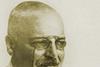
On This Day - Jun 14 : Alois Alzheimer was born
He is recognised for identifying the first published cases of a progressive, degenerative brain disease that was eventually named after him. Today there are over 25 million sufferers of Alzheimer’s worldwide, but no known cure.
-
 Resource
On This Day – Jul 14 : Sir William Perkin died
He synthesised the first artificial dyestuff, called mauve or aniline purple, while trying to synthesize quinine from a coal tar chemical. Perkin commercialised his discovery, developing production methods and uses for the new dye.
-
 Resource
On This Day – Aug 14 : Hans Christian Ørsted born
He discovered that electric currents can create magnetic fields, an effect known as electromagnetism. He was also the first person to isolate aluminium (Al), which he did by reducing aluminium chloride.
-
 Resource
On This Day - Oct 14 : Alfred Nobel first patent
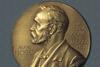
This patent was for the preparation of nitroglycerine, and was the first of his 355 patents. Nobel is most famous for the prizes carrying his name, awarded annually since 1901 for outstanding achievement in physics, chemistry, physiology or medicine, literature and peace.
-
 Resource
On This Day - Nov 14: First fullerene discovered
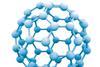
The new forms of the element carbon (C) were discovered by Robert Curl, Richard E. Smalley and Sir Harold W. Kroto. This opened up a new field of chemistry with applications including nanotechnology. They were jointly awarded the Nobel Prize in Chemistry in 1996 for this work.
-
 Resource
On This Day - Dec 14 : Max Planck quantum theory
He presented his theoretical explanation of the spectrum of radiation emitted by an object that glows and introduced the notion of light as quantized energy packets to the German Physical Society.
-
 Resource
On This Day - Mar 15 : Nevil Sidgwick died
He contributed to the valence theory of chemical bonding by explaining the role of valency in covalent bonding, and demonstrated the existence and importance of the hydrogen (H) bond.
-
 Resource
On This Day - Apr 15 : de Marignac died
He was one of the first to suggest the existence of isotopes. He also discovered the element ytterbium (Yb) and co-discovered gadolinium (Gd). Related resources: Gadolinium - Element information Gadolinium podcast Ytterbium - Element information Ytterbium podcast
-
 Resource
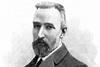
On This Day - May 15 : Pierre Curie was born
Pierre Curie co-discovered polonium (Po) and radium (Ra) with his wife Marie Curie. He was also a pioneer in crystallography, magnetism and radioactivity.
-
 Resource
On This Day – Jul 15 : Albert Ghiorso was born
He co-discovered 12 elements while working at the University of California, Berkeley: americium (Am), curium (Cm), berkelium (Bk), californium (Cf), einsteinium (Es), fermium (Fm), mendelevium (Md), nobelium (No), lawrencium (Lr), rutherfordium (Rf), dubnium (Db) and seaborgium (Sg).
-
 Resource
On This Day – Sep 15 : Neil Bartlett was born
He was the first person to produce a compound containing a noble gas. Until Bartlett created xenon (Xe) hexafluoroplatinate in 1962, most scientists believed that the noble gases were too unreactive to form compounds. The discovery opened up a whole new area of study in inorganic chemistry.
-
 Resource
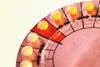
On This Day - Oct 15 : First contraceptive pill
The pill was a steroid hormone, norethindrone, developed by Carl Djerassi and co-workers at Syntex in Mexico City. Around 100 million women worldwide now take contraceptive pills, which are approximately 99% effective against pregnancy.