









All Resource articles – Page 82
-
 Resource
On This Day - Mar 06 : Mendeleev's Periodic Table
Although this was not the first attempt to systematically order the chemical elements, Mendeleev’s table was unique, allowing him to predict undiscovered elements as well as revealing inaccuracies in some of the measured atomic weights.
-
 Resource
On This Day - Apr 06 : Teflon invented
Teflon, which is the trade name for polytetrafluoroethylene (PTFE), was first made by American chemist Roy Plunkett by accident whilst working for DuPont. Teflon’s inert nature and extreme slipperiness has led to it being used in many applications, including non-stick saucepans.
-
 Resource
On This Day - May 06 : Victor Grignard was born
He developed the use of organomagnesium halides, now known as Grignard reagents, as a new method to make carbon-carbon bonds. This important reaction is widely used in synthetic organic chemistry.
-
 Resource
On This Day – Jul 06 : Oil rig destruction
The Piper Alpha was the biggest and oldest oil platform in the North Sea. The fire was initiated by a gas leak, and 167 people died. This was due to inadequate maintenance and safety procedures, and since then significant changes and improvements in these procedures have been made.
-
 Resource
On This Day – Aug 06 : Mars rover landed
It arrived on the Red Planet after a 36-week flight for a two-year investigation. Curiosity is using its onboard chemistry lab (CheMin) to identify and measure the abundance of various minerals (drilled from rocks and scooped from the ground) to see if there really was life on Mars.
-
 Resource
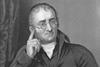
On This Day – Sep 06 : John Dalton was born
He is considered the founder of modern atomic theory because he was the first to propose that matter was composed of particles called atoms. He also discovered that at boiling point all liquids have the same saturated vapour pressure – the foundation for ‘Dalton’s law of partial pressures’.
-
 Resource
On This Day - Oct 06 : Chemical from Coal Facility
The U.S.A uses coal instead of petroleum to produce acetic anhydride and other acetyl chemicals. These are important building blocks in the synthesis of a number of consumer products including plastics, textiles and photographic film.
-
 Resource
On This Day - Nov 06 : Ian Heilbron was born
He investigated the natural synthesis of vitamin A and D, and worked on penicillin. Heilbron later became a scientific advisor to the government, and was knighted in 1946 in recognition of his contributions to academic and public life.
-
 Resource
On This Day - Dec 06 : Nicolas Leblanc was born
He invented a method of making sodium bicarbonate from table salt (also known as sodium chloride, NaCl) that became one of the most important chemical processes of the nineteenth century.
-
 Resource
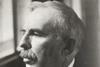
On This Day - Mar 07 : The atomic nucleus revealed
The New Zealand chemist explained that when firing alpha particles at a thin sheet of gold, some particles bounced back. From this he deduced an atom has a hard, dense, positively charged centre: the nucleus. Related resources: Understanding how atoms are made up Royal Institution Christmas Lectures® 2012: ...
-
 Resource
On This Day - Apr 07 : Louis Fieser was born
Fieser is famous for inventing the chemical weapon napalm. He also pioneered the artificial synthesis of Vitamin K, an anti-clotting agent found in the blood, and worked on the development of antimalarial drugs.
-
 Resource
On This Day - May 07 : Arda Alden Green was born
She made many contributions to the field of biochemistry. Green’s most notable research was on the isolation and characterisation of proteins, in particular haemoglobin and the enzymes responsible for bioluminescence. She received the 1958 Garvan Medal, which recognises special service to chemistry by women.
-
 Resource
On This Day - Jun 07 : Robert Mulliken was born
He won the 1966 Nobel Prize in Chemistry for developing the molecular orbital theory. Mulliken carried out the “fundamental work concerning chemical bonds and the electronic structure” used to determine the molecular structure of a compound.
-
 Resource
On This Day – Aug 07 : Atmosphere of Mars
American chemist George Pimentel pioneered the development of rapid-scan infrared spectroscopy techniques. He designed the spectrometer for the Mariner spacecraft that explored Mars in 1969, which detected the compounds. He highly suspected that life had existed on Mars but there has been no such proof.
-
 Resource
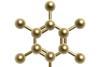
On This Day – Sep 07 : Friedrich Kekulé was born
He was a prominent scientist during the second half of the nineteenth century. He founded the theory of chemical structure and is famous for deducing the six-membered ring structure of benzene.
-
 Resource
On This Day - Oct 07: Niels Bohr atom
He described the atom as a miniature solar system with electrons revolving around a heavy nucleus. He received the 1922 Nobel Prize in Physics for “his services in the investigation of the structure of atoms and of the radiation emanating from them.”
-
 Resource
On This Day - Mar 08 : Otto Hahn was born
He won the Nobel Prize in Chemistry in 1944 for the discovery of nuclear fission in heavy nuclei. He found that when bombarding uranium (U) with neutrons he found evidence of barium (Ba), which could only be explained by splitting of the uranium nucleus in two during bombardment.
-
 Resource
On This Day - May 08 : Thomas Hancock was born
He founded the rubber industry, inventing a machine that could work rubber scraps into blocks. Hancock also worked with Charles Macintosh, Scottish chemist and inventor of a waterproof rubber-impregnated fabric.
-
 Resource
On This Day - Jun 08 : Neptunium discovered
Neptunium (Np) was synthesised by Edwin McMillan and Philip H. Abelson, who bombarded uranium (U) with neutrons to cause nuclear fission. Neptunium is rare in nature and is only made artificially from spent uranium rods in nuclear reactors.
-
 Resource
On This Day – Jul 08 : Jason Cardelli detection
Interstellar space refers to the areas between star systems within a galaxy. It varies hugely in composition, and contains atomic, molecular and ionic particles as well as cosmic radiation. Cardelli used spectroscopy and the scattered-light characteristics to identify the elements within.