









All Resource articles – Page 81
-
 Resource
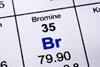
On This Day – Jul 03 : Discovery of bromine
The French chemist was an unknown young laboratory assistant when he discovered the element in seawater, which is a liquid at room temperature. This was independent to Carl Jacob Löwig’s preparation of bromine one year earlier. The word bromine comes from the Greek word bromos, meaning “stench”.
-
 Resource
On This Day – Aug 03 : Platinum catalysis
He realised that a platinum (Pt) sponge could cause the ignition of hydrogen (H) at room temperature by lowering the activation energy. This effect was the precursor to the theory of catalysis, and in 1835 the term “catalyst” was coined by Swedish chemist Jacob Berzelius.
-
 Resource
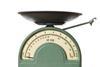
On This Day – Sep 03 : Fritz Pregl was born
He began research on bile acids in 1904. With only tiny yields to study, he pioneered micro analytical techniques and designed a new balance capable of weighing 20 grams to an accuracy of 0.001 milligrams. Pregl was awarded the Nobel Prize in Chemistry 1923 for his efforts.
-
 Resource
On This Day - Oct 03 : Charles Pedersen was born
He shared the 1987 Nobel Prize in Chemistry for the synthesis of crown ethers. These are a group of compounds that can “recognize” each other and choose which other molecules to form complexes, much like the behaviour of molecules found in living organisms.
-
 Resource
On This Day - Nov 03 : Antifouling paint patent
It was made from a mixture of a copper oxide (CuO), tar and naphtha, and offered protection against growth of barnacles and seaweed for twelve months. There are now concerns that copper oxide based antifouling paints are environmental pollutants, and replacements are being introduced.
-
 Resource
On This Day - Dec 03 : Bhopal disaster
A leak of toxic methyl isocyanate gas occurred at the Union Carbide India pesticide plant. It caused almost 4000 deaths, and is considered to be one of the World’s worst industrial catastrophes.
-
 Resource
On This Day - Mar 04 : First carbon dating method
Radiocarbon dating is a method that uses the half-life of carbon-14 to determine the age of carbon-rich materials up to about 60,000 years old. Libby was awarded the Nobel Prize in Chemistry in 1960 for his work.
-
 Resource
On This Day - Jun 04 : French Chemical Society
The Society was originally modeled on the British Chemical Society, the precursor of the RSC. It seeks to foster the communication of new ideas and facts throughout France and across international borders.
-
 Resource
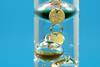
On This Day – Jul 04 : Ernst Beckmann was born
He is known for inventing the Beckmann thermometer – a device used to measure small differences in temperature, rather than absolute temperature. The thermometer typically covers a small range of 5 °C, but it is possible to estimate temperature changes with an accuracy of 0.001 degrees.
-
 Resource
On This Day – Sep 04 : Stanford Moore was born
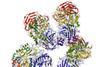
He shared the Nobel Prize in Chemistry with Christian Anfinsen and William H. Stein in 1972 for their work on the structure of ribonuclease enzymes. These enzymes catalyse the degradation of ribonucleic acids (RNA) and are involved in the destruction of RNA viruses.
-
 Resource
On This Day - Oct 04 : Kenichi Fukui was born
His career was devoted to explaining the nature of chemical reactions. He shared the 1981 Nobel Prize in Chemistry for his investigation into the mechanisms of chemical reactions. Specifically, this was for his work on the role of frontier orbitals, which have loosely bonded electrons.
-
 Resource
On This Day - Nov 04 : Oak Ridge nuclear disaster
This was the world’s second nuclear reactor to achieve this status. However, from then on the reactor performed flawlessly. With a self-sustaining reaction, it produced a third of a ton of irradiated uranium (U) a day. The world’s first few grams of plutonium (Pu) were produced in just two months.
-
 Resource
On This Day - Mar 05 : Emmett Culligan was born
He invented the Culligan water softener system, which made water softening available to home users. This system uses minerals called zeolites, which filter calcium (Ca), magnesium (Mg), and other metal cations from hard water.
-
 Resource
On This Day - Apr 05 : Synthesis of morphine
Morphine was first isolated from dried poppy resin in the early 1800s and remains the best drug for relieving severe pain. Morphine is named after Morpheus, the Greek god of dreams.
-
 Resource
On This Day - May 05 : Arthur Schawlow was born
His research focused on optics – in particular lasers and their use in spectroscopy. Schawlow shared the Nobel Prize in Physics in 1981 with Nicolaas Bloembergen and Kai Siegbahn for their contribution to the development of laser spectroscopy.
-
 Resource
On This Day – Jul 05 : George de Hevesy died
He was awarded the 1943 Nobel Prize in Chemistry for his work on radioisotopes and their use as tracers in studying the chemical processes within living systems. He also discovered the element hafnium (Hf) with Dick Coster in 1923.
-
 Resource
On This Day – Aug 05 : Seymour Lipsky was born
He was the inventor of high-performance liquid chromatography (HPLC), which is a technique used to separate, purify and identify molecules. It is a highly sensitive method with a range of applications, such as detecting the presence of performance-enhancing drugs in urine samples.
-
 Resource
On This Day – Sep 05 : Ludwig Boltzmann died
He was best known for his kinetic theory of gas particles. His statistical methods explained how properties of atoms could predict the visible properties such as thermal conductivity and diffusion. This helped to bridge the gap between the thermodynamics of a large system and at a molecular level.
-
 Resource
On This Day - Oct 05 : Dirk Coster was born
He co-discovered hafnium (Hf), an element that was a mysterious blank in the periodic table for many years. Hafnium is used to make control rods for nuclear reactors because it can absorb neutrons.
-
 Resource
On This Day - Nov 05 : 5000 year old beer
It was found at Godin Tepe in the Zagros Mountains of Iran, an important fortress on the Silk Road. Researchers found evidence of wine from around the same period, but it is thought that beer was the most popular beverage in lower Mesopotamia at the time.