









All articles by Nuffield Foundation – Page 10
-
 Class experiment
The fractional distillation of crude oil
Try this class practical or demonstration to simulate the industrial fractional distillation of crude oil. Includes kit list and safety instructions.
-
 Demonstration
A controlled explosion using hydrogen and air
Show how a hydrogen–air mixture can gain explosive properties using a plastic drink bottle in this demonstration. Includes kit list and safety instructions.
-
 Demonstration
Exploding a tin can using methane
Use this demonstration to illustrate how methane can create an explosive mixture with the oxygen in air. Includes kit list and safety instructions.
-
 Class experiment
Rate of reaction of potassium manganate(VII) and oxalic acid
Investigate the effect of surface area or concentration on rate of reaction using oxalic acid in rhubarb and potassium manganate(VII). Includes kit list and safety instructions.
-
 Demonstration
Iodine clock reaction demonstration method
Use this iodine clock reaction demonstration to introduce your students to rates of reaction and kinetics. Includes kit list and safety instructions.
-
 Demonstration
A spontaneous exothermic reaction
Illustrate the reaction between glycerol and potassium manganate(VII) to produce flames and steam in this demonstration. Includes kit list and safety instructions.
-
 Class experiment
Exothermic or endothermic? Classifying reactions
Decide whether various reactions are exothermic or endothermic by measuring temperature change in this practical. Includes kit list and safety instructions.
-
 Class experiment
Identifying the products of electrolysis
Try this class experiment to carry out the electrolysis of various solutions and investigate the products formed. Includes kit list and safety instructions.
-
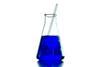 Demonstration
The ‘blue bottle’ experiment
In this demonstration, the redox indicator Methylene blue can be oxidised many times by shaking. Includes kit list and safety instructions.
-
 Demonstration
The thermite reaction between aluminium and iron(III) oxide
Illustrate a highly exothermic thermite reaction resulting in molten iron in this teacher demonstration. Includes kit list and safety instructions.
-
 Class experiment
Displacement reactions between metals and their salts
Learners will investigate competition reactions of metals and determine a reactivity series of the four metals used. Includes kit list and safety instructions.
-
 Class experiment
A thermometric titration
Use this class practical to practise locating end-points in titration by measuring temperature during the reaction. Includes kit list and safety instructions.
-
 Demonstration
Combustion of ethanol
Illustrate the large energy changes that take place during the combustion of alcohols with this spectacular demonstration. Includes kit list and safety instructions.
-
 Demonstration
Colourful reactions using ammonia solution
Turn ammonia solution red, white or blue by adding phenolphthalein, lead nitrate or copper(II) sulfate in this demonstration. Includes kit list and safety instructions.
-
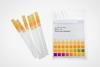 Class experiment
Neutralising an acidic solution
Use this simple practical to illustrate the pH and temperature changes as an acidic solution is neutralised. Includes kit list and safety instructions.
-
 Class experiment
Comparing light- and heavy-duty detergents
Try this set of experiments to compare the effects of light- and heavy-duty detergents with different pH values. Includes kit list and safety instructions.
-
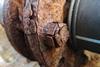 Class experiment
Corrosion in different atmospheric conditions
Try this practical to test the corrosion of metals in dry air, moist air and air polluted by acidic sulfur dioxide. Includes kit list and safety instructions.
-
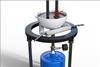 Demonstration
Electrolysis of molten lead(II) bromide
Introduce your students to the study of electrolysis through the production of metallic lead and bromine in this demonstration. Includes kit list and safety instructions.
-
 Demonstration
Making rayon
Use this demonstration to produce rayon fibres in the classroom using cotton wool or filter paper. Includes kit list and safety instructions.
-
 Demonstration
Phenol-methanal polymerisiation
Make Bakelite in class and investigate its properties using phenol, methanal and ethanoic acid in this demonstration. Includes kit list and safety instructions.