









All articles by Nuffield Foundation – Page 9
-
 Demonstration
The ‘breathalyser’ reaction | 16–18 years
Try this demonstration to recreate an early ‘breathalyser’ test, passing ethanol vapour through potassium dichromate. Includes kit list and safety instructions
-
 Demonstration
Generating, collecting and testing gases
Read our standard guidance on generating, collecting and testing gases during practical experiments, including carbon dioxide, hydrogen, oxygen and chlorine.
-
 Class experiment
Comparing heat energy from burning alcohols
Investigate the amounts of heat energy produced by the combustion of different alcohols in this class experiment. Includes kit list and safety instructions.
-
 Demonstration
Thermal decomposition of nitrates: ‘writing with fire’
Make an invisible message ‘glow’ by applying a lighted splint to filter paper treated with sodium nitrate in this demonstration. Includes kit list and safety instructions.
-
 Class experiment
Preparing salts by neutralisation of oxides and carbonates
Try these class experiments to illustrate the production of soluble salts from insoluble metal oxides and carbonates. Includes kit list and safety instructions.
-
 Demonstration
Dyeing three colours from the same dye bath
Show how dyeing involves chemical interactions between dyes and the molecular nature of different fibres in this demonstration. Includes kit list and safety instructions.
-
 Class experiment
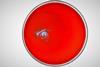
A red–blue oscillating reaction
Use this practical or demonstration to provide a visual illustration of an oscillating reaction and redox equilibria. Includes kit list and safety instructions.
-
 Class experiment
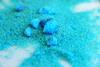
Finding the formula of hydrated copper(II) sulfate
In this experiment students will measure the mass of hydrated copper(II) sulfate before and after heating and use mole calculations to find the formula.
-
 Demonstration
Reacting magnesium with copper(II) oxide
Illustrate reduction, oxidation and the relative reactivity of magnesium and copper(II) oxide in this demonstration. Includes kit list and safety instructions.
-
 Class experiment
Making glass
Try this class practical to make samples of glass using lead oxide, zinc oxide and boric acid. Includes kit list and safety instructions.
-
 Class experiment
Making solder as an alloy of tin and lead
Try this practical to make solder by heating together the metals tin and lead before investigating the alloy’s properties. Includes kit list and safety instructions.
-
 Class experiment
Reacting copper(II) oxide with sulfuric acid
Illustrate the reaction of an insoluble metal oxide with a dilute acid to produce crystals of a soluble salt in this class practical. Includes kit list and safety instructions.
-
 Demonstration
The effect of concentration on equilibrium | Le Chatelier’s principle
Illustrate the reversible reaction between bismuth(III) oxychloride and bismuth(III) chloride in this demonstration. Includes kit list and safety instructions.
-
 Class experiment
PVA polymer slime
In this fun class experiment student will make slime by adding borax solution to PVA. Includes kit list and safety instructions.
-
 Class experiment
What causes iron to rust?
Use this class experiment to help students investigate what conditions are needed for iron to rust. Includes kit list and safety instructions.
-
 Demonstration
The density of carbon dioxide
Illustrate the higher density of carbon dioxide relative to air by pouring it over a lighted candle in this demonstration. Includes kit list and safety instructions.
-
 Demonstration
The combustion of iron wool
Try this quick teacher demonstration to demonstrate the increase in mass as iron wool is heated in air. Includes kit list and safety instructions.
-
 Demonstration
Quantitative electrolysis of aqueous copper(II) sulfate
Use this demonstration to find the value of the Faraday constant from electrolysis of copper(II) sulfate solution. Includes kit list and safety instructions.
-
 Demonstration
Liquefying chlorine gas
Use this demonstration to produce liquid chlorine and compare it with bromine and iodine in their condensed state. Includes kit list and safety instructions.
-
 Demonstration
Extracting iodine from seaweed
Discover how ribbon seaweed (or kelp) can be used as a source of iodine in this demonstration or class experiment. Includes kit list and safety instructions.