








All Resource articles – Page 2
-
 Resource
Gases in the air | Johnstone’s triangle | 11–14 years
Think about the mixture of elements and compounds in air at three conceptual levels
-
 Resource
Elements, compounds and mixtures | Developing understanding | 11–14 years
Secure your learners’ understanding of how elements and compounds are represented in particle diagrams
-
 Resource
Algebra and equations | Maths skills for chemistry
A flexible set of resources, including two full lesson plans, sets of short activities and learner worksheets
-
 Resource
Ratio and proportion | Maths skills for chemistry
Use these lesson plans, short activities and learner worksheets at two stages to build skills and confidence
-
 Resource
Creating graphs | Maths skills for chemistry
Two full lesson plans, sets of short activities and learner worksheets to develop graph drawing skills for science
-
 Resource
Interpreting graphs | Maths skills for chemistry
Lesson plans, short activities and learner worksheets to build skills and confidence in interpreting graphs and data
-
 Resource
Understanding number | Maths skills for chemistry
Resources packs covering unit conversion, significant figures and rounding. Includes lesson plans, short activities and learner worksheets
-
 Resource
Maths skills for chemistry | Key terms support
Language support for maths skills in chemistry, including a key terms list and an accessible glossary
-
 Resource
Properties of elements and compounds | Developing understanding | 11–14 years
Encourage learners to think more deeply about why a compound does not have the same properties as its constituent elements
-
 Resource
Bioethanol | Johnstone’s triangle | 11–14 years
Connect understanding about the macroscopic properties of elements and compounds at a sub-microscopic and symbolic level
-
 Resource
Solubility | Structure strip | 14–16 years
Use scaffolded prompts to support learners to write about solubility with confidence
-
 Resource
Filtration | Developing understanding | 11–14 years
Support learners to develop secure mental models of how filtration can be used to separate mixtures
-
 Resource
Filtering muddy water | Johnstone’s triangle | 11–14 years
Use Johnstone’s triangle to explain how filtration can be used to separate mixtures
-
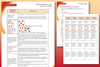 Resource
Representing elements and compounds | Structure strip | 14–16 years
Use scaffolded prompts to support learners to write about representing elements and compounds with confidence
-
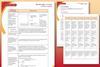 Resource
Chromatography | Structure strip | 14–16 years
Use scaffolded prompts to support learners to write about chromatography with confidence
-
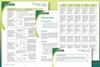 Resource
Separating mixtures | Structure strip | 11–14 years
Use scaffolded prompts to support learners to write about separating mixtures with confidence
-
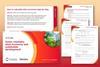 Resource
Green chemistry, atom economy and sustainable development
Link percentage yield and atom economy to sustainability while practising calculations
-
 Resource
Symbols and formulas | Structure strip | 11–14 years
Use scaffolded prompts to support learners to write about symbols and formulas with confidence
-
 Resource
Atoms and molecules | Structure strip | 11–14 years
Use scaffolded prompts to support learners to write about atoms and molecules with confidence
-
 Resource
Scaffolding titration calculations
Use the table method to support learners to answer calculation questions related to titration