







All Resource articles – Page 3
-
 Resource
Amount of substance in moles | Knowledge check | 14–16
Assess learning of amount of substance measured in moles with this higher level worksheet
-
 Resource
Swm y sylwedd mewn molau | Gwirio gwybodaeth | 14–16
Asesu’r dysgu o swm y sylwedd sy’n cael ei fesur mewn molau gyda’r daflen waith lefel uwch hon
-
 Resource
Hafaliadau cemegol cytbwys | Stribed strwythur | 14–16 oed
Defnyddiwch yr awgrymiadau wedi’u sgaffaldio i helpu’r dysgwyr i gymhwyso eu dealltwriaeth o gydbwyso hafaliadau cemegol
-
 Resource
Balanced chemical equations | Structure strip | 14–16 years
Use scaffolded prompts to support learners to write about balanced chemical equations
-
 Resource
Masau adweithio a chyfeintiau nwy | Stribed strwythur | 14–16 oed
Defnyddiwch yr awgrymiadau sydd wedi’u sgaffaldio i gefnogi’r dysgwyr i ysgrifennu am fasau adweithio a chyfeintiau nwy
-
 Resource
Reacting masses and gas volumes | Structure strip | 14–16 years
Use scaffolded prompts to support learners to write about reacting masses and gas volumes
-
 Resource
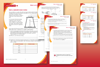
Swm y sylwedd mewn molau | Mewn cyd-destun | 14–16
Rhoi swm y sylwedd sy’n cael ei fesur mewn molau mewn cyd-destun gyda chwestiynau sy’n seiliedig ar arbrofion ymarferol cyffredin
-
 Resource
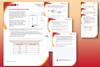
Amount of substance in moles | In context | 14–16
Put amount of substance measured in moles into context with questions based on common practical experiments
-
 Resource
Determining unknown concentration | Johnstone’s triangle worksheets | 14–16 years
Guide learners to connect their thinking about calculating unknown concentrations following a titration
-
 Resource
Concentration of acids | Johnstone’s triangle worksheets | 14–16 years
Learners connect their understanding of dissolved ions, concentration and how chemicals are labelled with this single-page worksheet
-
 Resource
Concentration and moles | Developing understanding | 14–16 years
Support learners to develop secure mental models of how concentration is measured and calculated in mol/dm3
-
 Resource
Word equations | Developing understanding | 11–14 years
Use this worksheet to improve your learners’ understanding of writing and interpreting word equations
-
 Resource
Relative atomic mass of boron | Johnstone’s triangle worksheets | 14–16 years
Use Johnstone’s triangle to help learners think about relative atomic mass and the abundance of different isotopes
-
 Resource
Màs atomig cymharol boron | Taflenni gwaith triongl Johnstone | 14–16 oed
Defnyddiwch driongl Johnstone i helpu’r dysgwyr i feddwl am fàs atomig cymharol boron
-
 Resource
Balanced chemical equations | Knowledge check | 14–16
Ready-to-use worksheets to assess learning of balancing chemical equations, foundation and higher level
-
 Resource
Hafaliadau cemegol cytbwys | Gwirio gwybodaeth | 14–16
Taflenni gwaith parod i’w defnyddio i asesu’r dysgu am gydbwyso hafaliadau cemegol, sylfaen a lefel uwch
-
 Resource
Fertiliser yield | Johnstone’s triangle worksheets | 14–16 years
Help learners calculate the actual and theoretical yield of ammonium sulfate using Johnstone’s triangle
-
 Resource
Yield | Developing understanding | 14–16 years
Part of the Johnstone’s triangle series, this resource includes teacher notes and a student worksheet to help learners understand the difference between actual and theoretical yield
-
 Resource
Sodium and chlorine reaction | Johnstone’s triangle | 11–14 years
Strengthen learners’ understanding of the connection between word equations and chemical reactions
-
 Resource
Interpreting chemical equations for ionic compounds | Developing understanding | 14–16
Help your learners develop mental models of what is represented in balanced chemical equation for ionic compounds with this resource, including teacher notes and a student worksheet