







All Resource articles – Page 38
-
 Resource
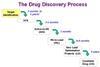
Advanced Medicinal Chemistry
This course material gives real-life examples of drug discovery and information on the drug discovery process through an industrial context, produced by Dr Ray Leslie of NTU and AstraZeneca.
-
 Resource
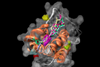
Chemistry's interfaces: nutrition
This C/PBL resource is an introduction to some of the most important aspects of chemical biology. Its introduces students to a number of important chemical structures which play major biological roles within human metabolism.
-
 Resource
Sunscreen and UV light
A fun demo to teach about UV light and the action/importance of sunscreen
-
 Resource
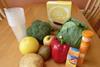
Measuring vitamin C in food
Get your students to test their fruit and vegetables for vitamin C using simple kitchen equipment and household items
-
 Resource
Aspirin book
This book contains eight free-standing activities that can be used singly or as a coherent package in a wide range of teaching and learning situations for both academic and vocational courses.
-
 Resource
Faces of Chemistry – Sun lotion
Learn from scientists at Croda about how the chemistry behind sun lotions helps protect our skin from damaging ultraviolet radiation.
-
 Resource
Chemistry in your cupboard: Gaviscon
Link the post-16 topics of acid and base neutralisation, weak acids, bonding and carboxylic acids to the topic of antacids. Learn about a range of real life contexts for these chemical ideas through written material, and questions to encourage learning and test understanding.
-

-
 Resource
Chemistry in your cupboard: Nurofen
Link the post-16 topics of bonding and solubility, isomerisation and reactions of organic functional groups to the topic of analgesics. Learn about a range of real life contexts for these chemical ideas through written material, and questions to encourage learning and test understanding.
-
 Resource
Chemistry in your cupboard: Dettol
Link the post-16 topics of phenols, bonding and acids and bases to the topic of antiseptics.
-
 Resource
Molecules against malaria
This medicinal chemistry case study is designed to introduce students to the development of antimalarial 4-aminoquinolines and the early stages of drug discovery and development. It focuses on antimalarial 4-aminoquinolines (4-AQs) and involves an introduction to malaria, its causes, societal impact and the need for new drugs. It then presents ...
-
 Resource
Challenging Medicines: Physiochemical Properties - Practicals
Practical experiments associated with the handouts for Physiochemical Properties. Investigating the dissolution, pKₐ and rates of hydrolysis of everyday tablets are covered.
-
 Resource
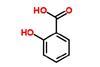
Challenging Medicines: Analysing Medicines - Practicals
Experiments that involve the colorimetric analysis of medicines and can be applied to other activities.
-
 Resource
Challenging Medicines: Body Chemistry
Medicines and the development of pharmaceutical drugs have the potential to help us take on the challenge of human health - Improving and maintaining accessible health, including disease prevention.
-
 Resource
Challenging Medicines: Introduction/Pedagogical Overview
Medicines and the development of pharmaceutical drugs have the potential to help us take on the challenge of human health - Improving and maintaining accessible health, including disease prevention.
-
 Resource
Challenging Medicines: Physiochemical Properties
These resource sheets look at the different physiochemical properties of medicines. Pharmacokinetic processes, dissolution, ionisation and dissociation are all covered here.
-
 Resource
Challenging Medicines: Making Medicines - Practicals and PPT
These resources show the extent to which everyday medicines can be made in the classroom. Using straightforward processes milk of magnesia and ear drops can all be made.
-
 Resource
Updated Periodic Table wallchart
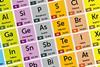
Newly updated for 2017, including the four new elements! Display this two-sided periodic table poster in your classroom. On one side, a Visual Elements version, with fascinating element artwork by Murray Robertson. On the other side is a bold colour-coded version, emphasising readability and clarity. The wallchart is available in ...
-
 Resource
A model of mass spectrometry
Use this modelling activity to explore your students’ understanding of the process of fragmentation in mass spectrometry.
-
 Resource
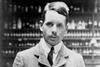
On This Day - Nov 23 : Henry Moseley was born
He developed a law concerning the characteristic X-rays that are emitted by atoms, and thus allowed atomic numbers to be defined. Until this point, these numbers in the periodic table were simply an element’s place, rather than being associated with a physical property.