






All Resource articles – Page 77
-
 Resource
Challenging Plants: Phytomanagement
As well as improving the appearance of our environment, plants have much to offer in terms of phytoremediation (in its many forms), phytoextraction and the potential of using plants to mine metals. This resource is designed to help students realise this potential knowledge and understand the key underpinning scientific ...
-
 Resource
ChemTube3D: Organic Chemistry Reactions
This site contains interactive 3D animations for some of the most important organic reactions covered during an undergraduate degree.
-
 Resource
On This Day - Oct 30 : Linus Pauling Nobel Prize
He received the award for his research into the nature of the chemical bond. He subsequently received the Nobel Peace Prize in 1962 for campaigning against the use of nuclear weapons, becoming the first and only person to be awarded two undivided Nobel Prizes.
-
 Resource
On This Day - Apr 28 : Atom split
Their experiment divided the nucleus at the centre of the atom by using quantum mechanical tunneling, and transformed lithium (Li) into helium (He) and other elements. Related resources: Lithium - Element information Lithium podcast Helium - Element information Helium podcast
-
 Resource
ChemTube3D: Organic Structure and Bonding
This site contains interactive 3D animations for some of the most important organic reactions and structures covered during an undergraduate degree.
-
 Resource
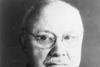
On This Day - Jan 23 : Otto Diels was born
He was awarded the 1950 Nobel Prize in Chemistry alongside his student, Kurt Alder, for the discovery and development of the cycloaddition synthesis known as the Diels-Alder reaction. This reaction is widely used in chemical synthesis.
-
 Resource
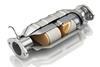
Faces of Chemistry – Catalysts
Find out from scientists at Johnson Matthey how catalytic converters reduce harmful emissions produced by vehicles.
-
 Resource
Faces of Chemistry – Hair colourant
Learn about the chemistry of hair dyes from Procter and Gamble scientists.
-
 Resource
Faces of Chemistry – Crop protection
Discover how crop protection products from Syngenta help to increase yield and produce healthier crops.
-
 Resource
Sewage Pollution: A Case Study
A laboratory investigation of sewage pollution based around a case study. Students analyse for various so-called biomarkers in soil samples and assess for likely sources of contamination.
-
 Resource
Open Education Resource Quality Evaluation
This is a quality checklist for evaluators to fill in when assessing if an Open Education Resource is of a high enough quality to share, produced with support from the Higher Education Academy and JISC.
-
 Resource
On This Day - Jun 11 : Carbon dioxide discovered
Black noticed that upon heating, calcium carbonate (CaCO3) produced a gas that was denser than air and could not sustain fire or animal life. He called this gas ‘fixed air’, but we now know it as carbon dioxide (CO2).
-
 Resource
On This Day - Oct 27 : Spectroscope was invented
A spectroscope is a prism-based device which separates light into its different wavelengths. Gustav Kirchhoff initially used it to study the spectral “signature” of various chemical elements, allowing the identification of a new element if a new spectrum was observed.
-
 Resource
On This Day - Nov 20 : Francis Aston died
He was awarded the Nobel Prize in Chemistry in 1922 for his development of the mass spectrograph, a device that separates atoms or molecular fragments of different mass and measures those masses with remarkable accuracy.
-
 Resource
On This Day - Dec 07 : First thermosetting plastic
“Bakelite” (polyoxybenzylmethylenglycolan- hydride) takes its name from its inventor, the Belgian chemist Leo Hendrik Baekeland.
-
 Resource
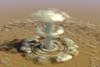
On This Day - Nov 01 : First hydrogen bomb test
Named “Ivy Mike”, the blast released approximately the same amount of energy as ten million tons of tri-nitro-toluene (TNT). It produced a blinding white fireball stretching 4 km across, and left a huge underwater crater that was almost 2 km wide and 50 m deep.
-
 Resource
On This Day - Oct 26 : Arthur Kornberg died
He shared the 1959 Nobel Prize in Physiology or Medicine for discovering the mechanism of how deoxyribonucleic acid (DNA) replicates in biological systems, and many of the enzymes and building blocks required along the pathway. These findings were fundamental to our understanding of genetics.
-
 Resource
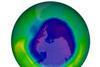
On This Day – Sep 16 : Montreal Protocol
The treaty agreed that the production and consumption of compounds that depleted ozone (O3) in the stratosphere, such as chlorofluorocarbons (CFCs), were to be phased out. The ozone layer is expected to recover by 2050 if agreements are kept.
-
 Resource
On This Day – Sep 14 : Ferid Murad was born
He shared the 1998 Nobel Prize in Physiology or Medicine with Robert F. Furchgott and Louis J. Ignarro for their discoveries involving nitric oxide as a signal molecule for the cardiovascular system. Nitric oxide is a potent vasodilator that causes relaxation of smooth muscle cells.
-
 Resource
On This Day – Sep 01 : Francis William Aston born
Aston developed the mass spectrometer, a device that separates molecular fragments of different mass and measures them with remarkable accuracy. Using the spectrometer, he discovered that neon had two isotopes, 20Ne and 21Ne, and was awarded the 1922 Nobel Prize for this work.