








All Atoms and bonds articles – Page 11
-
 Resource
ChemTube3D: Organic Structure and Bonding
This site contains interactive 3D animations for some of the most important organic reactions and structures covered during an undergraduate degree.
-
 Resource
On This Day - Oct 31 : Robert Mulliken died
He was awarded the 1966 Nobel Prize in Chemistry for his work on chemical bonds and describing the electronic structure of molecules using the molecular orbital method. His research still leads this field.
-
 Resource
Structure and Bonding
Knowledge of structure and bonding can help explain the properties of materials. All the properties of a particular substance depend upon the elements present and how they are bonded to each other. This programme is designed to develop students understanding of structure and bonding as well as developing thinking ...
-

-
-
 Feature
Chemical Bonding
A masterclass in teaching the topic of bonding, basing chemical explanation on physical forces
-
 Soundbite
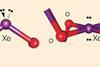
Xenon dioxide
Simon Cotton takes a look at those compounds that find themselves in the news or relate to our everyday lives.
-
 Exhibition chemistry
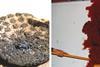
Nitrogen triiodide - a sensitive, contact explosive
Create a beautiful cloud of vapour mixed and gas with this safe contact explosive demonstration
-
 The Mole
Hot particles: could you blow up the Vatican with antimatter?
On screen chemistry with Jonathan Hare
-
 Feature
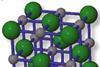
Investigating Crystal Structures
Sixthformers are introduced to Madelung constants as a way of investigating ionic crystal structures
-
 Lesson plan
Atoms and atomic structure: a ‘similar and different’ activity | 16-18 years
Help students consolidate their ideas about atoms and atomic structure, working in pairs to identify key concepts, using this lesson plan for 16–18 year olds.
-
 Lesson plan
Atoms: size, scale and nanoscience | 14-16 years
Explore the scale and size of atoms and their relation to elements, introducing students to nanoscience in this lesson plan with activities for 14–16 year olds.
-
 Lesson plan
Linking structure, bonding and substance properties | 16-18 years
Check students’ understanding of how properties of substances depend on their structure and bonding using this lesson plan with activities for 16–18 year olds.
-
 Lesson plan
Plastics and polymers: their structure and properties | 16-18 years
Explore how the properties of polymers depend on their structure and different types of intermolecular bonds using this lesson plan for 16–18 year olds.
-
 Lesson plan
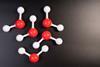
Particle models: gas, liquid, solid | 11-14 years
Help your students develop their understanding of gases, liquids and solids using the particle model in this lesson plan with activities for 11–14 year olds.
-
 Lesson plan
Understanding the structure of atoms | 14–16 years
Check your learners’ understanding of atomic structure using self assessment in this lesson plan with activities
-
 Lesson plan
What are hydrogen bonds? | 16-18 years
Help students explore hydrogen bonding and discover where hydrogen bonds are found using this lesson plan with activities for 16–18 year olds.
-
 Lesson plan
How do atoms form the ions in ionic compounds? | 16-18 years
Check students’ understanding of why atoms form ions, and how ionic compounds form by ionic bonding, using this lesson plan with activities for 16–18 year olds.
-
 Lesson plan
What do atoms look like? | 16-18 years
Introduce your students to the scanning tunnelling microscope (STM) as a tool for investigating atoms in this lesson plan with activities for 16–18 year olds.
-
 Lesson plan
What happens to particles in chemical reactions? | 11-14 years
Explore what happens to atoms and molecules when new materials are made in chemical reactions, using this lesson plan with activities for 11–14 year olds.