






All Resource articles – Page 49
-
 Resource
SME videos: Dr. Matthew Tozer
This resource forms part of a collection of videos that aims to provide undergraduate students with insights into what it is like to work for a small or medium-sized enterprise (SME).In these videos Matthew Tozer explains what it is like to work for Peakdale Molecular. He gives us an indication ...
-
 Resource
Waste to wealth videos: Martin Freer
This resource forms part of a collection of videos that aims to provide undergraduate students with insights into what it is like to work in the nuclear industry.In these videos Martin Freer explains what it is like to work in the nuclear industry. He describes some of the issues in ...
-
 Resource
SME videos: Kristina Paraschiv
This resource forms part of a collection of videos that aims to provide undergraduate students with insights into what it is like to work for a small or medium-sized enterprise (SME).In these videos Kristina Paraschiv explains what it is like to work for an SME. She explains some of the ...
-
 Resource
SME videos: Dr. Catherine O'Leary-Steele
This resource forms part of a collection of videos that aims to provide undergraduate students with insights into what it is like to work for a small or medium-sized enterprise (SME).In these videos Catherine O’Leary-Steele explains what it is like to work for LHASA. She gives us an indication of ...
-
 Resource
SME videos: David Williamson
This resource forms part of a collection of videos that aims to provide undergraduate students with insights into what it is like to work for a small or medium-sized enterprise (SME).In these videos David Williamson explains what it is like to work for both an SME and a multinational company. ...
-
 Resource
Naproxen videos: Dr. Matthew Tozer
This resource forms part of a collection of videos that aims to provide undergraduate students with insights into what it is like to work for a small or medium-sized enterprise (SME).In these videos Matthew Tozer explains what it is like to work for Peakdale Molecular. He gives us an indication ...
-
 Resource
The 2011 International Year of Chemistry Experiment
Worksheets and data from the 2011 mass participation experiment. Measure the acidity (pH) and salinity of your local water.
-
 Resource
On This Day – Aug 04 : Nicolas-Jacques Conté born
He developed a method for making pencil leads, by mixing powdered graphite with clay and firing the mixture in a kiln. This method is still used to make pencils today. Until this point, pencil leads were made from pure graphite sticks that could only be imported to France from Cumbria in the UK. By varying the ratio of clay and graphite powder, the hardness of the pencil lead could also be changed.
-
 Resource
On This Day - Nov 15 : Chlorine declared element
It was previously thought that chlorine was a compound rather than an element, named oxymuriatic acid, until the British chemist and inventor presented his discovery to the Royal Society.
-
 Resource
Ion-exchange resin and water
Evaluate the advantages and disadvantages of a selection of resins and decide which one(s) would be best for producing pure water from seawater on a life raft.
-
 Resource
Identifying six unknown solutions
Devise experiments to label six numbered solutions correctly using chemicals and apparatus in the laboratory.
-
 Resource
Chemical and physical properties of pheromones
Help learner’s to understand what pheromones are, and how they are used by animals such as moths.
-
 Resource
Thermodynamic quantities in a reaction
Calculate the thermodynamic quantities for a reaction using the standard enthalpy of neutralisation (strong acid and strong base) and any other information.
-
 Resource
The thickness of titanium atoms in paint
Discover the thickness of a film of paint, estimating how thick it is by titanium atoms/ions.
-
 Resource
On the acid trail: discovering a 'weak' acid
Using titration and plot pH against volume to discover more about a weak, monoprotic acid.
-
 Resource
Making copper
Learners develop their own scientific methods to make copper metal starting from copper(II) nitrate crystals.
-
 Resource
The best catalyst to decompose hydrogen peroxide
Develop learner’s ideas of catalysis with this open-ended problem using hydrogen peroxide.
-
 Resource
Jets of liquids: the effect of charged plastic on water
Polar covalent bonds, and their affects on water are explored in this open-ended problem.
-
 Resource
Helping an industrial chemist
Devise a method for making a copper catalyst dispersed on an aluminium oxide support.
-
 Resource
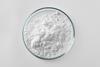
Identifying three unknown white solids
Devise experiments to label three white solids correctly by using chemicals and apparatus in the laboratory.