









All Resource articles – Page 50
-
 Resource
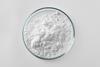
Identifying three unknown white solids
Devise experiments to label three white solids correctly by using chemicals and apparatus in the laboratory.
-
 Resource
Amino acids and hair growth
Discover how quickly human hair grows, and develop learner’s understanding of amino acids too.
-
 Resource
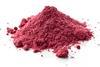
What compound? Identify and analyse
Learners can devise their own testing system to identify the nature of a mystery compound.
-
-
 Resource
H⁺ ions in water
Allow learners the chance to develop their own testing methods to identify H+ ions in samples of water.
-
 Resource
Finding the right ionic compound
Devise a procedure to identify four solids and then use this to carry out the identification.
-
 Resource
Identifying four unknown solutions
Allow learner’s the opportunity to devise their own testing protocols to identify chloride ions in four solutions.
-
 Resource
Find the pattern - alcohols
Consider data on the densities of six primary alcohols and solve four problems based on those data.
-
 Resource
Find the pattern - metals
Consider data on the specific heat capacities for some metals and solve three problems related to those data.
-
 Resource
Find the chloride
Devise experiments to determine which of five solids is the chloride by using chemicals and apparatus in the laboratory.
-
 Resource
Which detergent is best?
Explain two observations related to the production of a jelly-like solid when two detergents were used in combination.
-
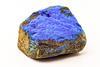 Resource
Cobalt complexes
Devise structures for cobalt complexes given, decide how to distinguish between the four complexes, and identify some properties that are the same for all four complexes.
-
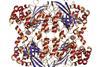 Resource
Catalase enzyme reactions
Using four distinct questions, with open-ended methods, to explore catalysts and enzymes.
-
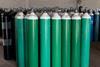 Resource
Empty space in gaseous argon
How much ‘empty space’ is in a sample of gaseous argon? Students use their knowledge of Avogadro’s number and the concept of atomic size to find out.
-
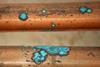 Resource
Carbon and copper oxide
Create tests to identify carbon and copper oxide, using knowledge of acids, redox reactions, and metal oxides.
-
 Resource
Measuring CO2 from reactions
Use chemicals and apparatus, devise experiments and determine the amount of carbon dioxide that can be obtained from a mixture of two solids
-
 Resource
Reacting aluminium foil with acid
React aluminium foil and hydrochloric acid with a range of catalysts to discover which serves the reaction best.
-
 Resource
Defining a ‘weak’ acid
Starting from its Ka (or pKa) value, learners calculate as much information as you need to show what is meant by ‘weak’ in weak acid.
-
 Resource
Detecting copper in black solids
Devise experiments to identify a black solid sample by using chemicals and apparatus in the laboratory.
-
 Resource
Identifying five unknown white solids
Learners are provided with five mystery white solids, and need to devise their own experiments to identify each.